
Top Stories

LiveLawBiz: Corporate Legal News Daily Round-Up: September 02, 2026
IBC NCLT Indore Admits Insolvency Plea Against Satiate Agri Over ₹6.27 Crore DefaultCorporate Guarantee Continues Despite Transfer Of Mortgaged Property To New Owner: NCLT MumbaiNCLAT Delhi Keeps Appeal Against Dr Subhash Chandra's ₹6.5 Cr Repayment Plan Pending, Lists It For Oct 7NCLT Indore Admits Hinduja Leyland Finance's ₹117.28 Crore Insolvency Plea Against Owais MetalNCLT Hyderabad Says IBC Section 7 Default Amount Not A Ceiling On CIRP, Upholds ₹73.98 Cr. ClaimIPRMadras High Court Allows...
Supreme Court Dismisses Revenue SLPs In Samsung India's Transfer Pricing Case Over 609 Days Gross Delay
The Supreme Court on 31 August dismissed the Income Tax Department's Special Leave Petitions (SLPs) against the Delhi High Court's judgment in Samsung India Electronics Pvt Ltd's transfer pricing dispute, citing unexplained delays of 609 days and 457 days while keeping the questions of law open. A Division Bench of Justices J.B. Pardiwala and K. Vinod Chandran dismissed the petitions on the ground of delay, finding no satisfactory explanation from the Revenue for the gross delays. The Court...
NCLAT Delhi Keeps Appeal Against Dr Subhash Chandra's ₹6.5 Cr Repayment Plan Pending, Lists It For Oct 7
Today, the National Company Law Appellate Tribunal (NCLAT), New Delhi, kept appeals filed by financial creditors against the repayment plan of Essel Group Chairman Dr Subhash Chandra pending. A Bench of Officiating Chairperson Justice Yogesh Khanna with Technical Members Ajai Das Mehrotra and Barun Mitra posted the matter for 7 October. Solicitor General Tushar Mehta, appearing for the financial creditors, informed the Bench about the background to the reference made to the President of the...
Supreme Court Says Delay In Tax Deposit Not 'Failure To Pay', Quashes Penalty On Saudi Airlines
On 1 September, the Supreme Court held that the penalty under Section 38(3) of the Finance Act, 1979 for “failure to pay” Foreign Travel Tax cannot be imposed merely because the tax was deposited after the prescribed deadline. A Bench of Justices J.B. Pardiwala and Ujjal Bhuyan allowed an appeal filed by Saudi Arabian Airlines against a Bombay High Court judgment which upheld a penalty imposed on the airline for delayed deposit of Foreign Travel Tax (FTT). The judges held: “Failure to pay...

LiveLawBiz: Corporate Legal News Daily Round-Up: September 01, 2026
IBC Supreme Court Issues Notice On Plea Against NCLAT Ruling Allowing ED Action During IBC MoratoriumNCLAT New Delhi To Hear Appeal Against Subhash Chandra's ₹6.5 Cr Repayment Plan TomorrowBREAKING | New 5-Member Bench Of NCLT Delhi Stays Order Approving Subhash Chandra's ₹6.25 Cr Repayment PlanNCLT Kochi Waives Meetings For Vallabhdas Kanji's Amalgamation With Three Wholly-Owned SubsidiariesNCLT Delhi Refers Subhash Chandra's ₹6.5 Cr Plan To 5-Member Bench After No Majority, Hearing TodayIPR...
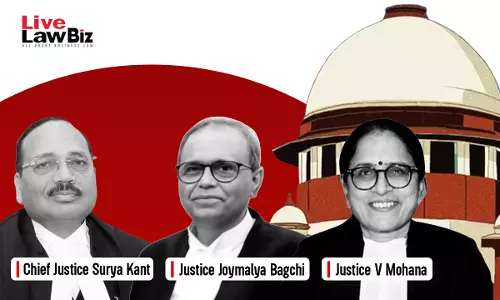
Supreme Court Directs Nimmagadda Prasad To Furnish Additional ₹200 Cr. Security In RAKIA Decree Case
On Tuesday, 1 September, the Supreme Court directed Nimmagadda Prasad (associated with the respondent entities) and other respondents to furnish an additional Rs. 200 crore as security in proceedings for enforcement of a foreign decree obtained by the Ras Al Khaimah Investment Authority (RAKIA). A Three-Judge Bench comprising Chief Justice Surya Kant with Justices Joymalya Bagchi and V. Mohana upheld the Telangana High Court's finding that a statement made by IQuest Enterprises before the...

LiveLawBiz Company Law Monthly Digest: August 2026
SUPREME COURTSupreme Court Dismisses NSEL Plea For Joint Trial In Two CBI Cases Over 2013 Payment CrisisThe Supreme Court on Wednesday dismissed National Spot Exchange Ltd.'s (NSEL) challenge to the Bombay High Court's March 27, 2026 judgment. The Bombay High Court had refused to direct a joint trial in two CBI cases arising from the alleged 2013 NSEL payment crisis.Case Title : National Spot Exchange Limited vs The Central Bureau of Investigation Bank Securities and Fraud Cell Case Number : ...

India's “Abeyance” Of Indus Waters Treaty With Pakistan Impermissible: Permanent Court of Arbitration
On 31 August 2026, the Permanent Court of Arbitration at The Hague, held that India's decision to keep the 1960 Indus Waters Treaty “in abeyance” did not suspend or terminate the Treaty. It remains fully in force and India remains bound by its obligations under it. A five-member Court comprising Professor Sean D. Murphy (Chair), Professor Wouter Buytaert, Professor Jeffrey P. Minear, Judge Awn Shawkat Al-Khasawneh and Dr Donald Blackmore delivered the decision. It observed: “....the Court...
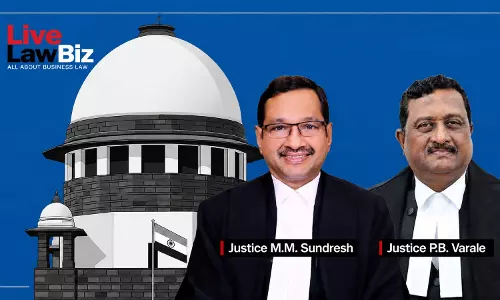
Supreme Court Refuses To Interfere With Bombay HC Order Allowing HDFC Bank & Ex-Trustee Intervention In Lilavati Case
The Supreme Court on 31 August refused to interfere with the Bombay High Court's order permitting HDFC Bank Ltd. and former Lilavati trustee Rajesh Mehta to intervene in proceedings concerning allegations of extortion, fabrication and corruption linked to recovery proceedings before the Debt Recovery Tribunal, Mumbai. A Bench of Justices M.M. Sundresh and Prasanna B. Varale dismissed the plea filed by Prashant Mehta and other trustees, noting that the writ and interim applications were listed...
Supreme Court Stays Swiss Company's Patent Suit Against Techfab Before Himachal Pradesh High Court
The Supreme Court on Tuesday, 1 September stayed further proceedings before the Himachal Pradesh High Court in a patent infringement suit filed by Swiss company Geobrugg AG against Techfab (India) Industries Ltd. over the manufacture and sale of high-tensile wire mesh products sold under the “TECCO” brand. A Bench of Justices K.V. Viswanathan and Arun Palli issued notice returnable on 2 November and directed the parties to complete their pleadings in the meantime. During the hearing, the judges...
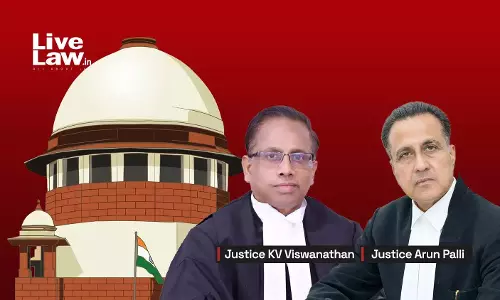
Supreme Court Issues Notice On Plea Against NCLAT Ruling Allowing ED Action During IBC Moratorium
Today, the Supreme Court issued notice on a plea by Value Wise Consultancy Private Limited, the liquidator of Siddhi Vinayak Logistics Ltd, challenging a National Company Law Appellate Tribunal (NCLAT), Delhi judgment which held that the Insolvency and Bankruptcy Code (IBC) moratorium does not stop the Enforcement Directorate (ED) from taking action under the Prevention of Money Laundering Act (PMLA). A Division Bench of Justices K.V. Viswanathan and Arun Palli issued notice, returnable on 16...
NCLAT New Delhi To Hear Appeal Against Subhash Chandra's ₹6.5 Cr Repayment Plan Tomorrow
Today, the National Company Law Appellate Tribunal (NCLAT), New Delhi, agreed to hear at 10:30 am tomorrow, an appeal by creditors against approval of Dr Subhash Chandra's Rs. 6.5 crore repayment. Officiating Chairperson Justice Yogesh Khanna with Technical Members Ajai Das Mehrotra and Barun Mitra noted the reference of the matter to a new five-member Bench of the National Company Law Tribunal (NCLT). Solicitor General Tushar Mehta, appearing for the creditors, told the NCLAT that the NCLT...