
Tax
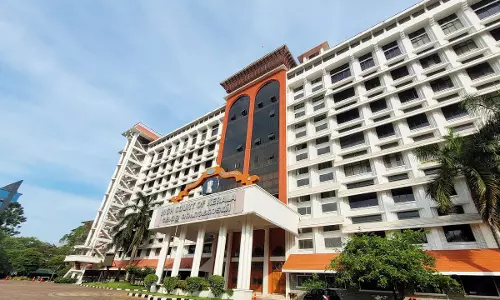
Absence Of Formal Demand Notice For Property Tax During Pendency Of Litigation Does Not Absolve Assessee's Obligation To Pay: Kerala High Court
The Kerala High Court stated that absence of a formal demand notice for property tax during pendency of litigation does not absolve assessee's obligation to pay such tax. The Division Bench of Justices A.K. Jayasankaran Nambiar and P.M. Manoj stated that “The liability to pay the tax once assessed is on the assessee and in a situation where the assessee continuously pays the tax based on the assessment that is conducted, the mere fact that the Corporation did not choose to issue a...
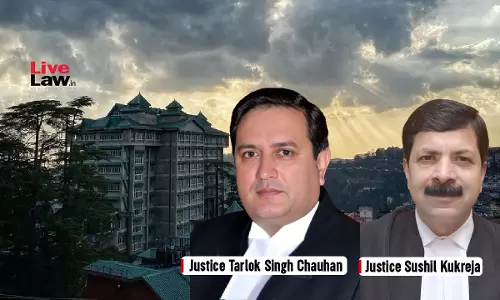
Notice U/S 148 Of Income Tax Act Can't Be Issued Without Giving Proper Reasons: Himachal Pradesh High Court
Himachal Pradesh High Court held that a notice under Section 148 of Income Tax 1961 for initiation of reassessment proceedings, can't be issued by the assessing officer without giving proper reasons.“Section 148 enables the Assessing Officer to initiate reassessment proceedings where income chargeable to tax is believed to have escaped assessment”. Justice Tarlok Singh Chauhan & Justice Sushil Kukreja : “The Assessing Officer needs to realise that notice under Section 148 does have...
![[Income Tax] Delhi HC Larger Bench To Decide On Retrospective Applicability Of Extended Limitation For Reassessment In Cases Involving Foreign Assets](https://www.livelawbiz.com/h-upload/2024/12/05/500x300_574687-delhi-high-court.webp "[Income Tax] Delhi HC Larger Bench To Decide On Retrospective Applicability Of Extended Limitation For Reassessment In Cases Involving Foreign Assets")
[Income Tax] Delhi HC Larger Bench To Decide On Retrospective Applicability Of Extended Limitation For Reassessment In Cases Involving Foreign Assets
A larger bench of the Delhi High Court will decide whether Section 149(1)(c) of the Income Tax Act 1961, inserted vide a 2012 amendment to provide an extended period of reassessment for cases involving foreign assets, applies retrospectively.Section 149(1)(c) prescribes that reassessment notice in respect of any income in relation to any asset located outside India, which had escaped assessment, is not proscribed for a period of 16 years from the end of the assessment year in which such income...
Assessee Is Permitted To Rectify GSTR 3B On Par With Contents Of GSTR 1: Patna High Court
The Patna High Court stated that the assessee is permitted to rectify GSTR 3B on par with contents of GSTR 1. The Division Bench of Justices P.B. Bajanthri and S.B. PD. Singh observed that in the government, there is no system of rectification of any return once it is filed. However, the assessee had submitted application to rectify GST 3B on par with the GSTR 1 relating to certain total taxable value, total integrated tax, total CGST, total SGST. He had committed error insofar as...

Tax Weekly Round-Up: May 21 - June 01, 2025
SUPREME COURTS.27 Customs Act Or Doctrine Of Unjust Enrichment Won't Apply To Refund Of Bank Guarantee : Supreme Court Allows Patanjali PleaCase Title: M/S PATANJALI FOODS LIMITED (FORMERLY KNOWN AS M/S RUCHI SOYA INDUSTRIES LTD.) VERSUS UNION OF INDIA & ORS.Case no.: CIVIL APPEAL NOS. 3833-3835 OF 2025The Supreme Court has held that Section 27 of the Customs Act, which requires a person seeking refund of duty to show that the burden was not passed on to the customer, is not applicable when...
Open Terrace/Portico Excluded While Computing Built-Up Area To Determine Eligibility For Deduction U/S 80-IB Of IT Act: Telangana High Court
The Telangana High Court stated that open terrace/portico excluded while computing build-up area for determining eligibility for deduction under section 80-IB of Income Tax Act. The Bench consists of Justices P. Sam Koshy and Narsing Rao Nandikonda was addressing the issue of whether the terrace / balcony that is in the form of open to sky or portico / porch area without walls could be added while computing the built-up area for the purpose of determining the eligibility for deduction...
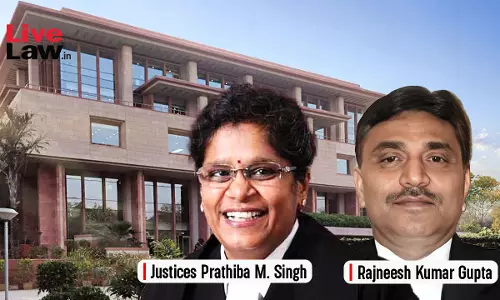
S.161 CGST Act | Rectification Order Must Be Reasoned, Adverse Order Can Be Passed Only After Hearing Party: Delhi High Court
The Delhi High Court has made it clear that an order in rectification proceedings must be reasoned, passed after affording an opportunity of hearing to the party.A division bench of Justices Prathiba M. Singh and Rajneesh Kumar Gupta made the observation while dealing with a petition against rejection of Petitioner's application seeking rectification of impugned demand orderPetitioner pointed out that in terms of the proviso 3 to Section 161 of the Central/Delhi Goods and Services Tax Act, 2017...

Allahabad High Court Rejects Patanjali's Plea Against ₹273.5 Crore GST Penalty
The Allahabad High Court has directed continuation of proceedings under Section 122 of the Central Goods and Services Tax Act, 2017 against M/s Patanjali Ayurved limited's 3 plants even though proceedings under Section 74 of the Act have been dropped against them.The bench of Justice Shekhar B. Saraf and Justice Vipin Chandra Dixit held “Under the present GST regime, persons who are not liable to pay tax under Sections 73/74 of the CGST Act may very well be liable for penalties as described in...
Actual Figures Can Be Considered To Determine Service Tax Payable By Assessee If Books Of Accounts Show Higher Figures Than Statutory Returns: CESTAT
The New Delhi Bench of Customs, Excise, and Service Tax Appellate Tribunal (CESTAT) has stated that actual figures can be considered for determining service tax payable by assessee if books of accounts show higher figures than statutory returns. The Bench of Justices Binu Tamta (Judicial) and P.V. Subba Rao (Technical) has observed that, “If the books of accounts show higher figures than the statutory returns the actual figures can be considered for determining the service tax payable...
No Exporter Has Obligation To Either Anticipate Or Conform To Views Of DRI In Classifying Goods In Shipping Bills: CESTAT
The New Delhi Bench of Customs, Excise, and Service Tax Appellate Tribunal (CESTAT) has stated that no exporter has an obligation to either anticipate or to conform to views of DRI in classifying goods in shipping bills. The Bench of Justice Dilip Gupta (President) and P.V. Subba Rao (Technical) has observed that, “no exporter has any obligation to anticipate any views of DRI, audit or preventive officers regarding the classification of the goods or to conform to them. The exporter...
No Equity In Taxation Law: Himachal Pradesh High Court On Tax Liability Of Auction Purchaser
Himachal Pradesh High Court held that an auction Purchaser is liable to pay the outstanding taxes on vehicles acquired through auction. It stated that there is no equity in taxation law and equity would only come into play in case there is no law operating in the field.Justice Tarlok Singh Chauhan & Justice Sushil Kukreja: “It is more than settled that there is no equity in taxation law and further more equity would only come into play in case there is no law operating in the field. Here,...
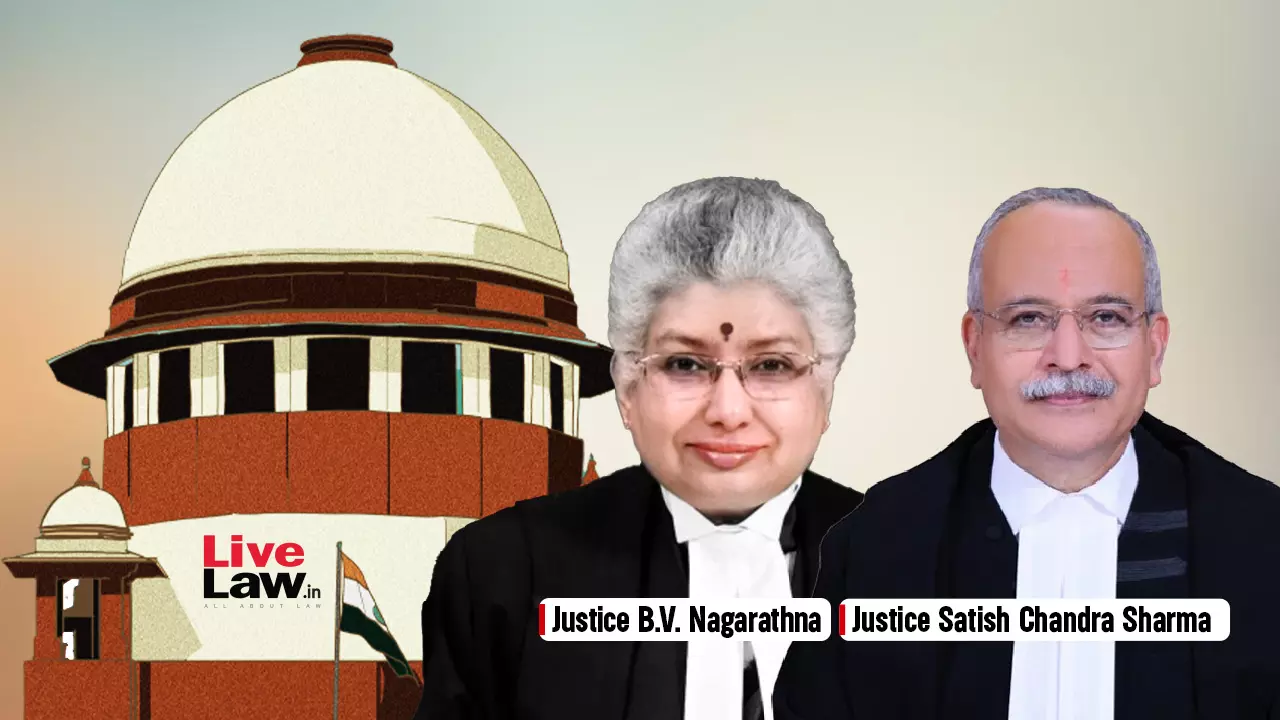
Circular Clarifying Previous Notifications On Fiscal Duty Has Retrospective Effect : Supreme Court
The Supreme Court recently held that a circular/notification issued by the revenue department, clarifying or explaining a fiscal regulation, has to be given retrospective effect.In the facts of the case at hand, the Court held that a Circular dated 17.09.2010 issued by the Central Board of Excise and Customs (CBEC) had to be given retrospective effect as it clarified certain previous notifications on customs duty.It was opined that, being explanatory in nature, the Circular could not be...