
Supreme Court
Supreme Court Refuses To Interfere With Relief To RSRTC In ₹16 Crore Service Tax Dispute
The Supreme Court has refused to interfere with a tribunal ruling that granted major relief to Rajasthan State Road Transport Corporation (RSRTC) in a long-running service tax dispute involving demands exceeding ₹16 crore over allegations that it operated as a “tour operator” and failed to pay tax on certain other services. A bench of Justice Dipankar Datta and Justice Satish Chandra Sharma dismissed an appeal filed by the Principal Commissioner of CGST and Central Excise, Jaipur, against a...

Supreme Court Asks Delhi HC To Dispose Patanjali-Ashav Arbitration Dispute Over Ruchi Soya Deal
The Supreme Court recently asked the Delhi High Court to take up for disposal the pending arbitration dispute between Patanjali Ayurved Ltd and Ashav Advisory LLP over a share transaction linked to the acquisition of Ruchi Soya Industries. A Bench of Justices Pamidighantam Sri Narasimha and Alok Aradhe requested the High Court to decide the pending petitions at the next date of hearing, scheduled for July 28. “We had earlier recorded in our order dated 07.01.2026 that Section 34 objections...

Supreme Court Refuses To Vacate Stay On FIR Against WinZO, Director Over Alleged BOT Use To Defeat Players
The Supreme Court on Monday (May 18) refused to interfere with the Punjab and Haryana High Court's order staying further proceedings in an FIR against WinZO Pvt Ltd and its director over allegations that the gaming platform used “BOTs” to cheat users. It requested the High Court to endeavour to decide the matter by June 15, 2026. A Bench of Justices M.M. Sundresh and Nongmeikapam Kotiswar Singh said there was force in the submission that courts ordinarily should not stall investigations....
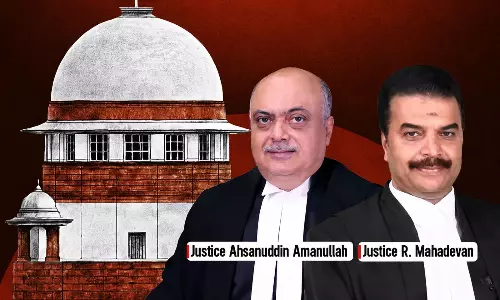
Banks 'Casual' In Granting Big Loans, Small Borrowers Face 'Borderline Harassment': Supreme Court
The Supreme Court on Tuesday criticised banks for what it described as a casual approach in sanctioning large loans to bigger entities while subjecting ordinary borrowers seeking small personal loans to stringent conditions and tedious procedures that may, in some cases, amount to “borderline harassment." A Bench of Justices Ahsanuddin Amanullah and R. Mahadevan clarified that it was not advocating any easing of lending norms, saying those matters were best left to the Reserve Bank of India and...
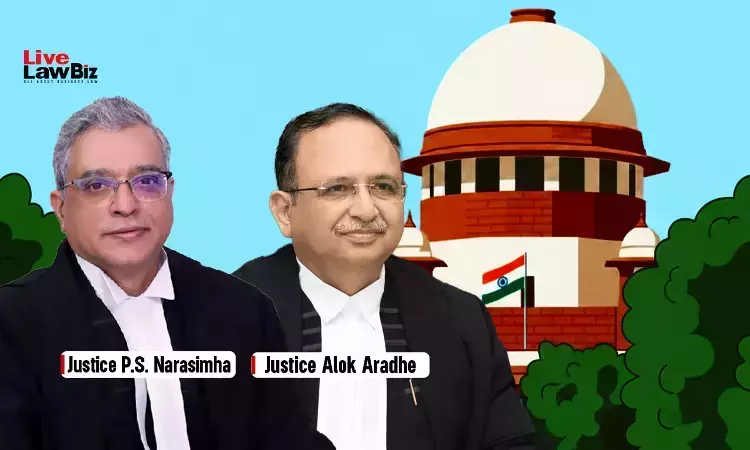
Supreme Court Says Alleged 'Hallucinated' Citations By NCLT-NCLAT In Essel Infraprojects Case Under Examination
The Supreme Court on Tuesday said allegations that the NCLT and NCLAT relied on allegedly fake citations in insolvency proceedings against Essel Infraprojects Ltd were already under administrative examination and had been referred to a committee. The court also reserved judgment in the appeal filed by the company's suspended director. A Bench of Justices P.S. Narasimha and Alok Aradhe made the observation while hearing the appeal filed by suspended director Pooja Ramesh Singh against orders...
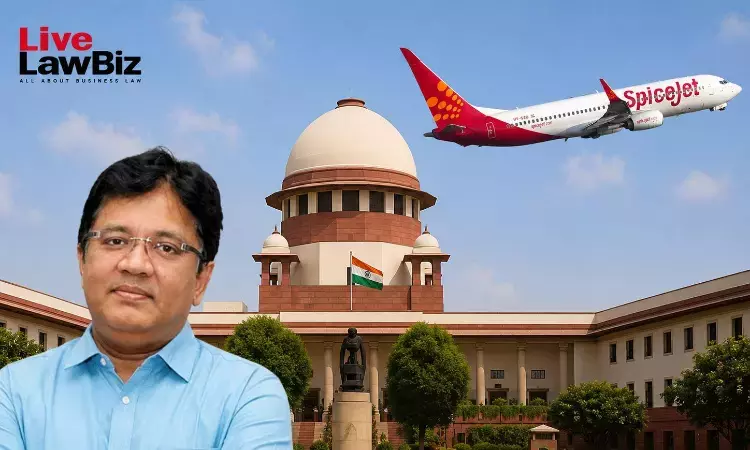
West Asia Crisis: Supreme Court Lets SpiceJet Move Delhi HC Over ₹144 Crore Deposit Order In Dispute With Kalanithi Maran
The Supreme Court on Tuesday allowed SpiceJet Limited and its chairman Ajay Singh to approach the Delhi High Court to seek modification of a direction requiring a cash deposit of ₹144.51 crore in the long-running arbitration dispute with Kalanithi Maran and Kal Airways Private Limited. The airline cited the ongoing West Asia crisis and said it expected additional funding under the Centre-backed emergency credit guarantee scheme for airlines.A Bench of Justices P.S. Narasimha and Alok Aradhe,...
Supreme Court Issues Notice On IT Dept. Appeal Over Relief To Vedanta For TDS Default On Non-Resident Payments
The Supreme Court on Monday issued notice on an appeal filed by the Income Tax Department against a Madras High Court ruling that had partly quashed tax proceedings against Vedanta Ltd. The case concerns its alleged failure to deduct tax on payments made to its overseas group entity. The Madras High Court had, on August 29, 2025 partly ruled in Vedanta's favour. It held that the tax department could not uniformly apply a seven-year limitation benchmark across all assessment years. Observing...
Supreme Court Seeks Union's Stand On Customs' Power To Question AIFTA Benefit Claims Despite Valid Origin Certificates
The Supreme Court on Monday sought the Union Government's stand in a dispute where importers have challenged customs authorities' jurisdiction to question preferential duty claims under the ASEAN-India Free Trade Agreement (AIFTA) despite valid Certificates of Origin issued by the exporting country. The Court also directed that no final adjudication order be passed in the matter for now. A Bench of Justices K.V. Viswanathan and Manmohan was hearing special leave petitions filed by importers,...
Supreme Court Refuses Banmeet Singh Bail In Money Laundering Case Linked To Alleged Dark Web Drug Trafficking
The Supreme Court on Thursday refused to interfere with the Uttarakhand High Court's order denying bail to alleged dark web drug trafficking accused Banmeet Singh in a money laundering case, but allowed him to seek bail again if the trial is delayed for reasons not attributable to him. “We do not find any ground to interfere with the impugned order passed by the High Court. However, liberty is given to the petitioner to renew the prayer for bail in the event that the trial does not proceed and...
Supreme Court Refuses Flipkart Relief In MARQ Trademark Dispute, Gives 8 Weeks To Clear Stock
The Supreme Court on Friday refused to interfere with orders restraining Flipkart from using the 'MARQ' trademark in its dispute with Marc Enterprises, but gave the company eight weeks to sell off existing products bearing the markThe Delhi High Court on April 10, 2026 had dismissed Flipkart's appeal and upheld the injunction in favour of Marc Enterprises. It held that “MARC” and “MARQ” were phonetically, structurally, and visually similar and likely to cause confusion among consumers.A Bench of...
Supreme Court Stays ₹400 Crore GST Demand Proceedings Against Kubera Fantasy, Awaits Gameskraft Ruling
The Supreme Court on Friday stayed further proceedings arising out of a nearly ₹400 crore GST demand raised by the Directorate General of GST Intelligence (DGGI) against Kubera Fantasy Pvt Ltd over allegations that its online fantasy sports platform amounted to betting/actionable claims liable to 28% GST. A Bench of Chief Justice Surya Kant and Justice Joymalya Bagchi adjourned the matter to await the Supreme Court's decision in DGGI (HQS) v. Gameskraft Technologies Pvt. Ltd where the court is...
States Cannot Levy Local VAT On Inter-State Sales Even If Sale Is Deemed To Occur Within The State: Supreme Court
The Supreme Court on Friday held that a state cannot impose its own Value-Added Tax (VAT) on a transaction that qualifies as an inter-state sale merely because the Central Sales Tax Act deems the sale to have taken place within that state for the limited purpose of identifying which state may collect tax. A bench of Justice J.K. Maheshwari and Justice Atul S Chandurkar held that where the statutory provision defining an inter-state sale conflicts with the provision determining the deemed...