
Supreme Court

Supreme Court To Examine If It Can Invoke Article 142 To Enable Arbitral-Style Dispute Resolution Where Existing Remedies Fail
The Supreme Court on Tuesday issued notice on applications filed by an intervenor raising the question of whether, in exceptional cases involving complex disputes where existing remedies are incapable of producing effective and expeditious resolution, the top court can create a court-supervised dispute resolution mechanism with arbitral characteristics. The question particularly concerns matters involving State instrumentalities. A Bench of Justices Prashant Kumar Mishra and N V Anjaria issued...
Supreme Court Refuses To Interfere With HC Ruling Allowing JSW Steel's Rs 47.47 Crore Electricity Duty Refund
The Supreme Court on Tuesday refused to interfere with a Bombay High Court ruling directing Maharashtra authorities to refund Rs 47.47 crore in electricity duty to JSW Steel, upholding the company's claim to exemption till August 2019 under the State's incentive scheme. A Bench of Justices B.V. Nagarathna and Ujjal Bhuyan dismissed the State of Maharashtra's special leave petitions challenging the April 2 judgment. “We have heard learned senior counsel for the petitioners and learned senior...
Supreme Court Refuses To Interfere With Delay Condonation In Income Tax Dept's Appeal Against IFUNA
The Supreme Court on Monday refused to interfere with a Delhi High Court order that condoned the Income Tax Department's delay in filing and re-filing its appeal against Indian Federation of United Nations Association (IFUNA). The delay was 154 days in filing the appeal and 112 days in re-filing it.The Delhi High Court had on March 24, 2026 condoned the delay observing that though the delay was substantial and not properly explained, a “lenient view in the interest of justice” was required A...
Supreme Court Dismisses IT Dept's Appeal Against Pernod Ricard In Advertising Expense Tax Dispute Over Delay
The Supreme Court on Tuesday dismissed the Income Tax Department's challenge to a Delhi High Court ruling in favour of Pernod Ricard India Pvt Ltd. It declined to interfere with the judgment that had held AMP and brand-building expenses could not be disallowed in the absence of evidence showing an arrangement with the foreign associated enterprise. The top court declined to entertain the Revenue's plea on account of a 384-day delay in filing the appeal. A Bench of Justices J.B. Pardiwala and...
Supreme Court Issues Notice In DMRC Plea Against ₹45 Crore Service Tax Demand On Upfront Lease Premium
The Supreme Court on Tuesday issued notice on an appeal filed by Delhi Metro Rail Corporation Ltd (DMRC) challenging a CESTAT ruling that upheld a service tax demand of over ₹45 crore. The demand relates to upfront fees received under long-term lease arrangements for property development linked to the Delhi Metro project.A Bench of Justices Pamidighantam Sri Narasimha and Alok Aradhe issued notice and agreed to hear the case on merits."Issue notice on the Civil Appeal as well as on the...
Supreme Court Dismisses Appeal Against NCLAT Order Clearing NSE In Co-Location Abuse Of Dominance Case
The Supreme Court on Tuesday upheld the NCLAT's order clearing the National Stock Exchange in the co-location access abuse of dominance case, refusing to interfere with the tribunal's finding that no prima facie case of anti-competitive conduct was made out. The NCLAT had held that mere dominance does not amount to abuse and found no material showing denial of market access or appreciable harm to competition.“Merely being a dominant player is not bad in itself, unless it has resulted into...
Supreme Court Sets Aside HC Ruling In Birla Corp AGM Vote Dispute; Says Majority Trustees Can Authorise Voting
The Supreme Court on Tuesday set aside a Calcutta High Court ruling that had held that once an e-vote is cast in the Annual General Meeting (AGM) of Birla Corporation Ltd., it could not subsequently be invalidated through later communications. The High Court had also held that the first vote cast on behalf of the societies must prevail. A Bench of Justices Vikram Nath and Sandeep Mehta held that the Division Bench erred in concluding that trustees could bind the societies only if all trustees...
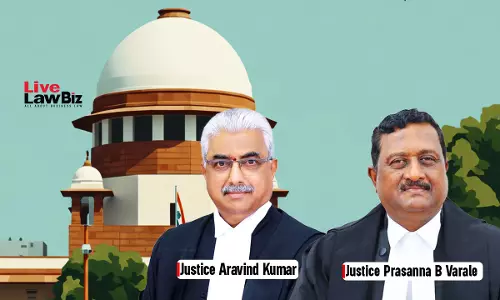
Reliance Industries' n-Hexane Import Cannot Be Classified As Motor Spirit Merely For Low Flash Point: Supreme Court
The Supreme Court has ruled in favour of Reliance Industries Ltd. in its long-running customs classification dispute, holding that imported n-Hexane cannot be treated as motor spirit merely because its flash point is below 25°C. The court held that the Customs Department failed to prove that the product satisfied all conditions required for such classification, including suitability for use as fuel in spark ignition engines. A bench of Justice Aravind Kumar and Justice Prasanna B. Varale...
Supreme Court Refuses To Interfere With Relief To Karnataka Bank In HTM Investment Income Tax Dispute
The Supreme Court on Monday declined to interfere with Karnataka Bank Ltd's tax relief in a dispute over deduction for diminution in the value of its held-to-maturity (HTM) investments, which are securities that banks buy with the intention of holding until maturity rather than trading. A Bench of Justices Manoj Misra and Manmohan dismissed the Revenue's special leave petition against the Karnataka High Court's August 2025 judgment that had upheld relief granted to the bank. “We do not find a...
Supreme Court Questions Whether Bank Of India Alone Can Face Octroi Prosecution After Officials Get Relief
The Supreme Court on Friday questioned whether criminal proceedings for alleged octroi violations can continue against Bank of India after the Bombay High Court quashed proceedings against its senior officials while allowing the case against the bank to continue. The issue arose while the Court was hearing the Bank of India's plea challenging the Bombay High Court's December 8, 2025 judgment. The High Court had quashed proceedings before the Judicial Magistrate First Class (JMFC), Pune, against...
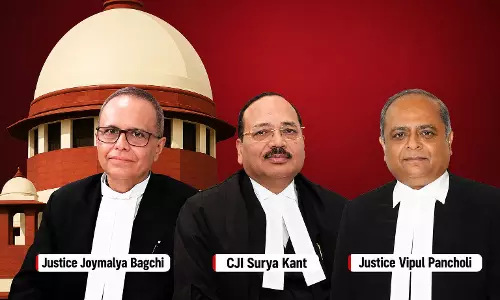
Supreme Court Orders No Coercive Steps In Plea Seeking Bar On NI Act Proceedings During Personal Insolvency
Another plea has been filed in the Supreme Court seeking a declaration that proceedings under the Negotiable Instruments Act and the Payment and Settlement Systems Act cannot continue against personal guarantors once the interim moratorium under the Insolvency and Bankruptcy Code is triggered.The plea has been filed by Karan Bhatia, suspended director of Uttam Cylinders Pvt Ltd and a personal guarantor for the company's loans. A Bench of Chief Justice Surya Kant, Justice Joymalya Bagchi and...
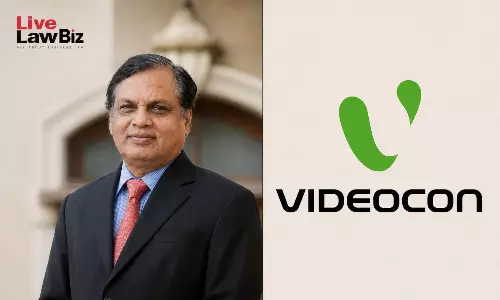
Venugopal Dhoot Moves Supreme Court Against NCLAT Order Excluding Videocon Foreign Oil Assets From VIL CIRP
Videocon founder Venugopal Dhoot has moved the Supreme Court against an NCLAT ruling refusing to bring the group's foreign oil and gas assets into the insolvency resolution process of Videocon Industries Ltd.The matter is yet to be listed by the Supreme Court. The NCLAT on May 14, 2026 noted that Dhoot himself had earlier requested lenders in 2016 and 2017 to separate Videocon Industries from the foreign oil and gas business. It said this was done to “protect the oil and gas assets of the group...