
Supreme Court & High Courts
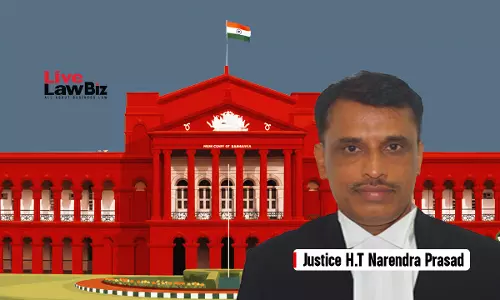
Arbitration Clause Requiring Fresh Mutual Consent Is Not Binding: Karnataka High Court
The Karnataka High Court has refused to appoint an arbitrator in a dispute between Riemen Solution Private Limited and Swiggy Limited, holding that a contractual clause making arbitration conditional on fresh mutual consent does not constitute a binding arbitration agreement.“The Court can neither delete these words from the Agreement, nor rewrite the bargain between the parties by converting a conditional reference to arbitration into an unconditional one,” Justice H T Narendra Prasad held...
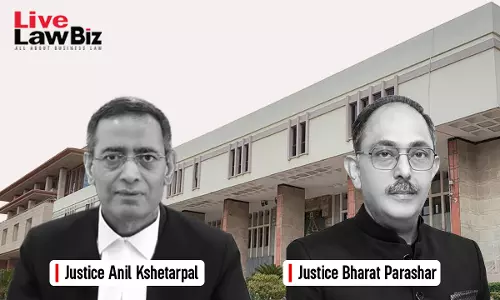
Directors Cannot Be Held Liable For Company Debt Merely By Their Designation: Delhi High Court
The Delhi High Court has restored a ₹23.39 lakh arbitral award against Vanilla India Producer Company Limited while upholding the setting aside of the award against its four directors. The court held that directors cannot be made personally liable for a company's contractual debt merely because of their positions in the company.A Division Bench of Justice Anil Kshetarpal and Justice Bharat Parashar observed, “The LSA having held that the Directors were not personally liable, nevertheless...

Karnataka High Court Closes Morgan Securities' Contempt Plea Against BPL Over Alleged Property Encumbrance
The Karnataka High Court has closed a contempt petition filed by Morgan Securities and Credits Private Limited against BPL Limited and its directors over the alleged violation of a 2020 order restraining the company from alienating or encumbering its properties.A Division Bench of Justice Jayant Banerji and Justice Tara Vitasta Ganju found that Morgan Securities had failed to produce documentary evidence of a breach. The court observed that the petitioner had not established that any of BPL's...

Delhi High Court Protects Actor Vijay Deverakonda's Personality Rights Against AI Deepfakes
The Delhi High Court has granted Telugu actor Vijay Sai Deverakonda an ex parte ad interim injunction against the unauthorised use of his name, image, voice, and other identifiable attributes, including through AI-generated content and deepfakes.Justice Vikas Mahajan ordered 94 listed links taken down and domains locked, and directed the government to have the sites blocked. The Court said Deverakonda's stature “inherently grants him proprietary rights over his personality and associated...

Bombay High Court Allows Colgate To Submit Six Renewed Trademark Certificates In 1996 Suit Against Anchor
The Bombay High Court has allowed Colgate-Palmolive to introduce six renewed trademark registration certificates as evidence in its 1996 infringement suit against Anchor Health and Beauty Care Private Limited, holding that the documents cannot be considered irrelevant to the dispute.Justice Somasekhar Sundaresan observed that “Colgate has paid a disproportionate price for its attorneys' failure to have tabled the six LPCs on July 10, 2019”. The court declined to impose costs on the...
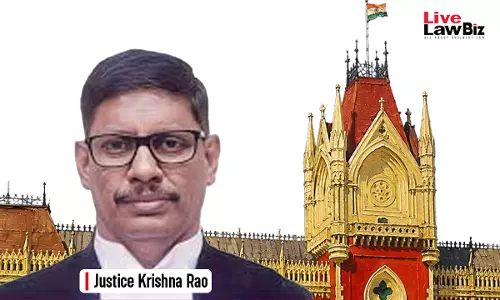
Calcutta High Court Declines To Hear Plea Alleging Torture By DRI Officials, Says Matter Falls Under Revenue Bench
A Calcutta High Court bench has declined to hear a plea alleging that Directorate of Revenue Intelligence (DRI) officials tortured three individuals during interrogation and forced them to execute an affidavit and declaration. The court held that the main challenge concerned customs summons and fell under the roster dealing with revenue matters.“Considering the above and going through the summons and the averments made in the petition, this court finds that the petitioners have mainly challenged...
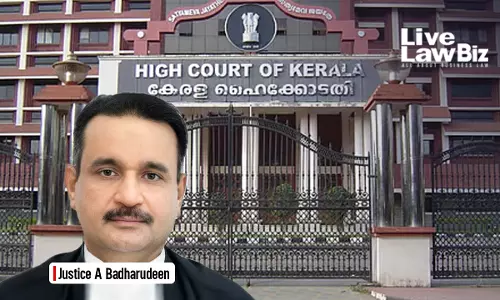
Cheque For Time-Barred Debt Can Still Invite Prosecution If Dishonoured: Kerala High Court
The Kerala High Court has recently held that issuing a cheque towards repayment of a time-barred debt is not legally prohibited and its dishonour can attract prosecution under Section 138 of the Negotiable Instruments Act, 1881.“When a cheque is issued towards a time-barred debt by reviving the period of limitation, merely for the reason that the cheque was issued towards a time-barred debt does not make a prosecution under Section 138 of the NI Act impermissible,” Justice A. Badharudeen...
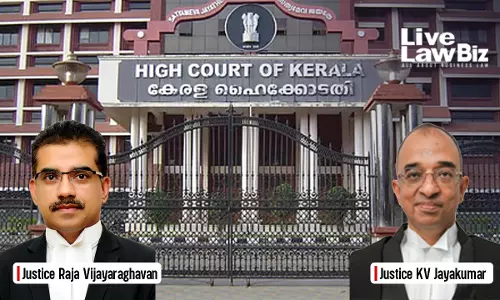
Supplier Cannot Automatically Recover GST From Recipient Without Contractual Basis: Kerala High Court
The Kerala High Court has held that a supplier's statutory obligation to pay Goods and Services Tax (GST) does not automatically entitle the supplier to recover the tax separately from the recipient of the service.“The liability of a supplier to discharge the tax payable under the statute and the question as to whether the supplier is entitled to pass on the burden of such tax to the recipient are distinct and separate matters," the court ruled"However, the right to collect tax from the...
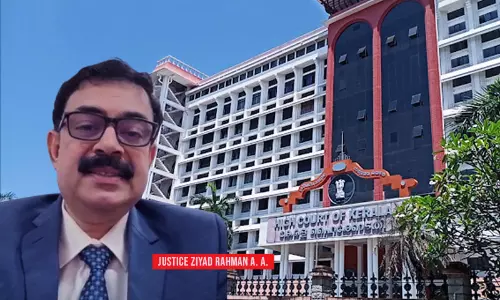
Kerala High Court Quashes GST Notice Issued Before Audit Findings Were Finalised
The Kerala High Court has held that a GST show cause notice issued on the basis of preliminary audit observations, before the audit findings attain finality, cannot be sustained. The court also held that tax authorities must consider a taxpayer's reply to discrepancies before finalising the audit findings.Justice Ziyad Rahman A.A. was hearing a petition filed by The Alleppey Company Ltd., challenging a GST show cause notice issued despite its requests for additional time to respond to audit...
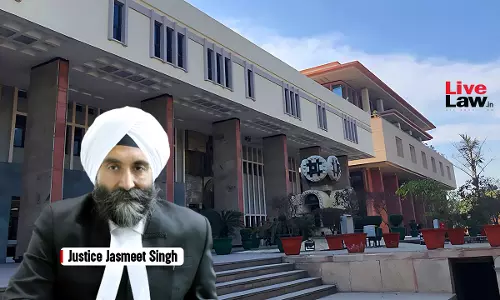
Banks Are Custodians, Cannot Assume Coercive Powers Over Customers' Transactions: Delhi High Court
The Delhi High Court has ruled that banks cannot impose account restrictions or assume coercive powers to investigate customers' banking transactions without legal authority.“The Bank is a custodian of funds for individuals/entities and after being satisfied by the KYC documents permits the opening of an account. Thus, the Bank cannot be permitted to put any banking restrictions on the same and assume coercive powers to investigate banking transactions of its customers and to interdict them in...
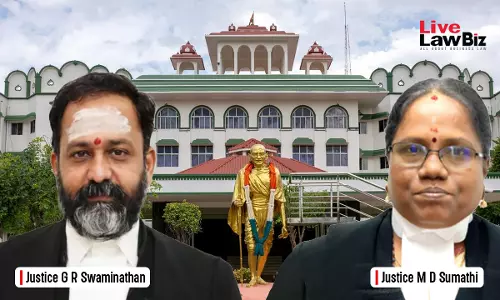
SARFAESI Possession Orders Must Be Kept On Hold For 45 Days If DRT Challenge Is Planned: Madras High Court
The Madras High Court has held that an order authorising a secured creditor to take possession of a borrower's secured property must be kept in abeyance for 45 days if the creditor is informed that steps are being taken to challenge the order before the Debts Recovery Tribunal (DRT).“We are therefore of the view that an order passed under Section 14 of the SARFAESI Act will have to be kept in abeyance for a period of 45 days when it is brought to the notice of the secured creditor that steps are...