
Dishonoured Cheque Alone Not Enough To Prove Offence Under Section 138 NI Act: Kerala High Court
Shilpa Soman
11 Nov 2026 4:33 PM IST
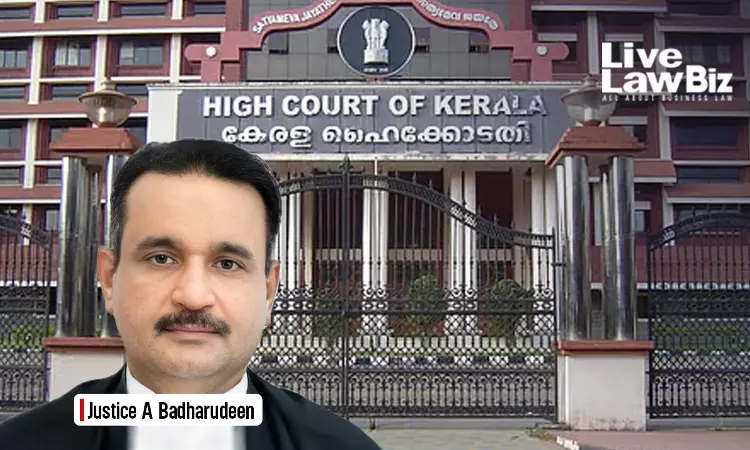
On 11 November, the Kerala High Court held that mere production of a dishonoured cheque does not discharge the complainant's initial burden of proof under Section 138 of the Negotiable Instruments Act, 1881. The complainant must establish the underlying transaction that gave rise to the alleged legally enforceable debt.
Justice A Badharudeen dismissed an appeal filed by A.M. Gopalan, Managing Director of Sree Gokulam Chit and Finance Company, challenging the acquittal of Aboobacker in a cheque dishonour case. The Bench held:
“…non-production of the statements of accounts showing entitlement of the said amount from the accused, despite non-production of the other documents relating to the chitty transaction, would become fatal to the complainant.”
The complainant had alleged that the accused subscribed to a chitty with a sala of Rs. 3 lakh and obtained the prize amount through an auction on 1 September 2006. It claimed that the accused subsequently defaulted on instalment payments, leaving an outstanding liability of Rs. 1,83,611.
According to the complainant, the accused issued a cheque for the outstanding amount, which was dishonoured for want of sufficient funds. The accused allegedly failed to repay the amount despite receiving a statutory notice.
The accused, however, contended that he had issued the cheque in blank as security when joining the chitty and that it was not issued towards any legally enforceable debt.
The Magistrate acquitted the accused, holding that he had probabilised his defence. Challenging the acquittal, the complainant approached the High Court.
Before the High Court, the complainant argued that the trial court ought to have accepted the testimony of its power of attorney holder to establish the chitty transaction and execution of the cheque. The accused opposed the appeal, arguing that the complainant had failed to produce the chitty documents or account statements to establish the alleged outstanding liability.
The Court noted that the cheque was dated 1 August 2006, whereas the complainant claimed that the accused had obtained the chitty prize amount through an auction on 1 September 2006. It also found that the complainant had failed to produce documents establishing the transaction and the outstanding liability.
It further observed that the power of attorney holder could not specify the exact amount remitted by the accused towards the chitty or the dates on which he had defaulted without referring to the accounts. He was also unable to state when the accused had issued the cheque.
On the complainant's initial burden of proof, the Bench observed:
“The initial burden cast upon the complainant includes proof of the transaction which ushered the issuance of the cheque. It could not be said that mere tendering of the cheque by itself is sufficient to find discharge of the initial burden on the part of the complainant, unless the transaction is fully established in a convincing manner, liable to be accepted by a court of law.”
Accordingly, the High Court dismissed the appeal and upheld the acquittal.
For Appellant: Advocate Mahesh V Ramakrishnan
For Respondents: Senior Public Prosecutor Sajeev P.K, Advocates M Manju, K Pradeepan (Vengalam), K.P Pradeepan, K.R Ranjith and R. Sudhish