
DRT | Recovery Officer Must Release Attached Property Not Held By Debtor In Own Right: Allahabad HC
Upasna Agrawal
25 Nov 2026 9:32 PM IST
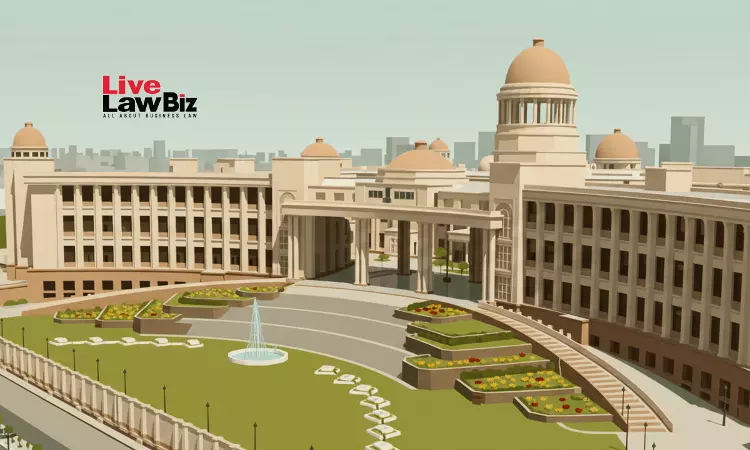
The Allahabad High Court at Lucknow has held that a Recovery Officer acting under the Recovery of Debts Due to Banks and Financial Institutions Act, 1993, is obliged to investigate an objection raised against attachment or sale and must release the property where he is satisfied that the defaulter was not in possession of it in his own right.
The court noted that Section 29 of the Act incorporates the Second Schedule to the Income Tax Act, 1961, into recovery proceedings.
Justice Irshad Ali held
“Rule 11(1) obligates the Recovery Officer to investigate any objection raised against attachment or sale. Under Rule 11(4), if the Recovery Officer is satisfied that the property was not in the possession of the defaulter in his own right, the officer is mandated to release the property from attachment.”
The High Court examined whether the Recovery Officer in the present case had exceeded his authority by releasing third-party property from attachment despite the DRT and DRAT's findings. it observed,
“The DRT and DRAT misdirected themselves in holding that the Recovery Officer travelled beyond the recovery certificate. The recovery certificate directed recovery against the borrower and the assets belonging to them. It did not and could not authorize the sale of properties belonging to third parties who were complete strangers to the debt. The investigation into whether the judgment debtor had an attachable interest is the core purpose of Rule 11.”
The proceedings arose out of a credit facility granted on 25.03.1998 by the Gorakhpur branch of the State Bank of India to M/s Trikone Rubber Industries Pvt. Ltd. Trikone Leisure Resorts Ltd. is said to have stood guarantor and created an equitable mortgage over land at Village Anaura, District Lucknow, resting on a sale deed dated 26.03.1996 registered at Mumbai.
Learning that the land was being auctioned, the previous owners filed objections dated 16.10.2003 before the Recovery Officer, Debts Recovery Tribunal, Allahabad, asserting ownership on registered sale deeds and mutation in the revenue records. Adjoining landowners filed similar objections, having been directed by the High Court on 20.11.2003 in Writ Petition No. 5613 (M/B) of 2003 to raise them before the Recovery Officer, who was to decide them in accordance with law.
The joint auction purchasers then withdrew by an application dated 10.05.2004, stating that the records showed the borrowers had no saleable right, title or interest in the properties, and sought a refund. By order dated 31.05.2004 the Recovery Officer allowed the objections, set aside the auction and released the property from attachment. That order was set aside in appeal on 06.08.2007 on the view that he had wrongly interpreted Rule 11 and exceeded his jurisdiction by travelling beyond the decree.
The Debts Recovery Appellate Tribunal dismissed the appeal of adjoining landowners Sri Dharmendra Kumar and Smt. Nita Kumar on 26.04.2011, and on 10.04.2012 the Recovery Officer confirmed the auction sale in favour of respondent nos. 3, 4 and 5, the very purchasers who had withdrawn. Petitioners, who bought the land by registered sale deeds in 2010 and 2011 and claimed to be strangers to the loan transaction, challenged all three orders.
The Bank contended that the Recovery Officer could not go behind the decree and was not the proper forum to decide ownership or the creation of a mortgage. Rule 11, unlike Order XXI Rule 58(2) of the Code of Civil Procedure, did not authorise him to decide questions of right, title and interest in attached property, and Rule 11(6) left such questions to the civil court, it submitted, relying on Tax Recovery Officer II v. Gangadhar Vishwanath Ranade.
It also submitted that the properties had been attached on 03.01.2003 and the attachment executed on the spot with announcements on loudspeakers and drum beating without objection, showing that the petitioners were not then in possession.
The Court held that the Appellate Tribunal had misapplied Tax Recovery Officer II v. Gangadhar Vishwanath Ranade. That decision bars the officer from adjudicating a transfer by the defaulter to be void, but affirms that he may attach only property in the possession of the defaulter in his own right.
“Where the defaulter possesses neither title nor physical possession, the property cannot be attached.”
“The drum beating on 03.01.2003 over open agricultural land did not confer physical possession on the Bank or extinguish the rights of the lawful tenure holders.”
Under Rule 11(6), the Court held, the remedy of the party against whom an order under Rule 11 is made is to institute a civil suit, and it was for the Bank to file one if it disputed the finding that its mortgagor was not the owner.
On the confirmation of the auction, the Court noted that the joint purchasers had applied on 10.05.2004 under Order XXI Rule 91 of the Code of Civil Procedure, expressly conceding that the judgment debtors had no saleable interest, and had taken a full refund of their deposit. Once the auction was set aside and the bid amount refunded in 2004, the 2003 auction proceedings stood extinguished.
“The action of the Recovery Officer in 2011–2012, summoning the erstwhile auction purchasers nearly eight years later to re-deposit the obsolete 2003 consideration and confirming the auction sale on 10.04.2012, was illegal, collusive, and an abuse of power. It is unsustainable in law.”
Holding the confirmation of sale dated 10.04.2012 to be a nullity and the order of 31.05.2004 to have been fully warranted, the Court allowed the writ petition, quashed the three impugned orders, restored the order dated 31.05.2004 and issued mandamus restraining the respondents from interfering with the petitioners' possession. The Bank was left at liberty to proceed against the personal assets and other lawful properties of the borrowers and guarantors.
For Petitioner: Advocates Gaurav Mehrotra, Sandeep Dixit, Santosh Kumar Tripathi, Utsav Mishra
For Respondent: Advoctes Anurag Srivastava, Alok Kumar Gupta, Amar Mani Tiwari, Bhanu Prakash Dubey, P. Agarwal, Pradeep Agrawal, Sudeep Kumar