
DEBT RECOVERY LAWS
SARFAESI Rights Cannot Override Lessor's Right To Re-Enter Leased Land For Breach: Madras High Court
The Madras High Court on 29 July held that enforcement powers available to a secured creditor under the Securitisation and Reconstruction of Financial Assets and Enforcement of Security Interest (SARFAESI) Act cannot override a lessor's contractual right to cancel a lease and resume possession of industrial land for breach of lease conditions. A Division Bench comprising Chief Justice Arvind Dharmadhikari and Justice G. Arul Murugan dismissed Karur Vysya Bank's petition challenging the State...

Housing Finance Companies Can't Invoke SARFAESI For Secured Debt Below ₹20 Lakh: Calcutta High Court
The Calcutta High Court has recently held that Tata Capital Housing Finance Ltd. as a housing finance company could not invoke the SARFAESI Act, as the secured debt was below the ₹20 lakh threshold prescribed under a Central Government notification. It accordingly set aside the enforcement measures initiated by the lender.Justice Smita Das De ruled that Tata Capital Housing Finance lacked jurisdiction to invoke the SARFAESI Act in the present case. The court observed, "In view of the above, this...

Effect of Part Payments On Dishonoured Cheques Cannot Be Decided In Revision Against Summoning Order: Delhi High Court
The Delhi High Court has ruled that whether dishonoured cheques continued to represent a legally enforceable debt after the drawer made admitted part payments is a disputed question of fact that must be decided at trial. Justice Madhu Jain observed that the issue depends on the evidence led by the parties and cannot be conclusively determined while exercising revisional jurisdiction against a summoning order. "Whether, in view of the admitted part payments, the statutory requirement under...
SARFAESI Auction Purchaser Can't Be Treated As Unauthorised Occupant Under State Eviction Law: MP High Court
The Madhya Pradesh High Court, Gwalior Bench, has dismissed a writ petition filed by the M.P. Industrial Development Corporation Ltd. (MPIDC). The court held that an auction purchaser under the SARFAESI Act cannot be treated as an unauthorised occupant under the M.P. Lok Parisar (Bedakhali) Adhiniyam, 1974 merely because disputes later arise over transfer of leasehold rights or liability for earlier dues.Justice Milind Ramesh Phadke observed, "Its possession, therefore, cannot be equated with...
NI Act Notice Not Invalid Merely Because Postal Acknowledgment Signature Differs From Cheque: Kerala High Court
The Kerala High Court has recently ruled that once a complainant shows that a legal demand notice in a cheque bounce case was sent to the accused's correct address, a trial court cannot treat the notice as invalid merely because the signature on the postal acknowledgment card differs from the signature on the dishonoured cheque.Justice A. Badharudeen said allowing such an approach would make it easy for accused persons to avoid liability. "If such a procedure is recognized in law, clever accused...
Denying Auction Purchasers Writ Remedy To Enforce S.14, SARFAESI Orders Would Be 'Travesty of Justice': Bombay High Court
The Bombay High Court has held that auction purchasers under the SARFAESI Act can invoke the writ jurisdiction to seek enforcement of orders passed by a Magistrate under Section 14 of the Act.Holding that auction purchasers have the locus to seek such relief, a division bench of Justices Manish Pitale and Shreeram V. Shirsat said refusing to entertain such petitions would erode public confidence in the rule of law."If the writ Court shuts its doors to the auction purchasers like the petitioners,...
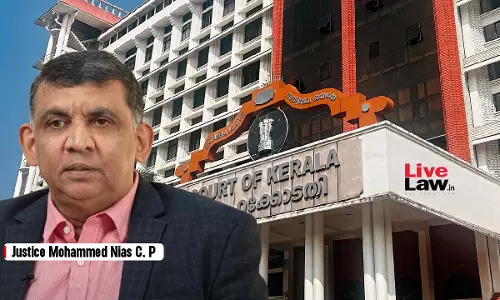
Can A Mere Signature On A Cheque Trigger Presumption Of A Legally Enforceable Debt? Kerala High Court Explains
The Kerala High Court has recently held that signing, issuance and execution of a cheque are distinct legal concepts. It observed that the statutory presumptions under Sections 118(a) and 139 of the Negotiable Instruments Act, 1881 arise only when execution of the cheque is admitted or proved.Justice Mohammed Nias C.P. made the observation while setting aside a trial court judgment dismissing a money recovery suit. The Court remanded the matter for fresh consideration.“When courts say that...

Sole Proprietor's Family Members Can't Be Held Vicariously Liable U/S 141 NI Act: Calcutta High Court
The Calcutta High Court on 29 July held that vicarious liability under Section 141 of the Negotiable Instruments Act cannot be imposed on family members of a sole proprietor merely by alleging that they are partners of the proprietorship concern. Justice Uday Kumar quashed the criminal proceedings against Prakash Sharma, who was prosecuted under Sections 138 and 141 of the NI Act in connection with the dishonour of two cheques allegedly issued by S.R. Telematics. He held: "Section 141 of the...
Acquittal In Cheque Bounce Case Doesn't Bar Civil Recovery Suit On Same Cheque: Kerala High Court
The Kerala High Court on 29 July held that an acquittal in proceedings under Section 138 of the Negotiable Instruments Act, 1881 (dishonour of cheque for insufficiency of funds) does not prevent a civil court from deciding a recovery suit based on the same cheque, as findings recorded in criminal proceedings do not bind civil courts. A Bench comprising Justice Mohammed Nias C.P. allowed Prameela Varghese's appeal, set aside the Trial Court's decree directing her to pay the cheque amount with...
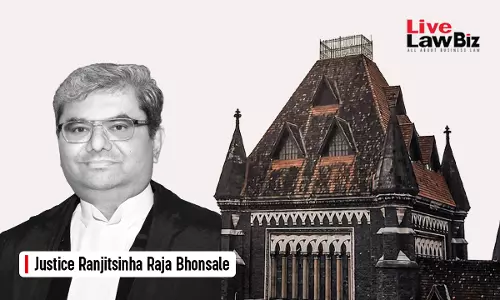
Legal Heir Can't File Cheque Bounce Case Without Being Payee Or Holder In Due Course: Bombay High Court
The Bombay High Court on 29 June held that a legal heir of a deceased payee cannot maintain a complaint under Section 138 of the Negotiable Instruments Act, 1881 (which provides for criminal liability for cheque dishonour) merely by virtue of succession. Justice Ranjitsinha Raja Bhonsale quashed three complaints filed by Nandini Ashok Rao against Dr. Sagar Raghunath Phatkare, holding that she was neither the payee nor the holder in due course of the dishonoured cheques and therefore could not...
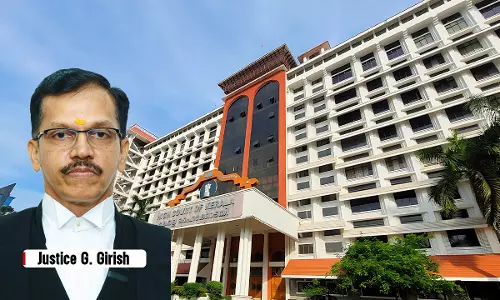
Kerala High Court Allows Handwriting Test Of Disputed Cheques In PTB Chits Cheque Dishonour Cases
The Kerala High Court on 29 June held that an accused facing prosecution for cheque dishonour under Section 138 of the Negotiable Instruments Act, 1881 cannot be denied an opportunity to seek expert handwriting examination of a disputed cheque when the complainant specifically claims that the accused personally filled the cheque entries.Justice G. Girish considered petitions filed by PTB Chits Private Limited and its directors challenging orders of the Judicial First Class Magistrate Court,...

Mere Denial Cannot Rebut Presumption Of Legally Enforceable Debt In Cheque Dishonour Cases: Supreme Court
The Supreme Court has recently ruled that an accused cannot rebut the statutory presumption arising from a dishonoured cheque by merely denying liability. Dismissing an appeal against a Karnataka High Court order remanding a cheque dishonour case for fresh consideration, the court observed that an accused must explain the circumstances in which the cheque was issued and how it came into the complainant's possession. It also noted that proving the complainant lacked the financial capacity to...