
Repayment Schedule, Interest On Outstanding Dues Cannot Convert Operational Debt Into Financial Debt: NCLT Bengaluru
Mohd.Rehan Ali
16 Nov 2026 9:51 AM IST
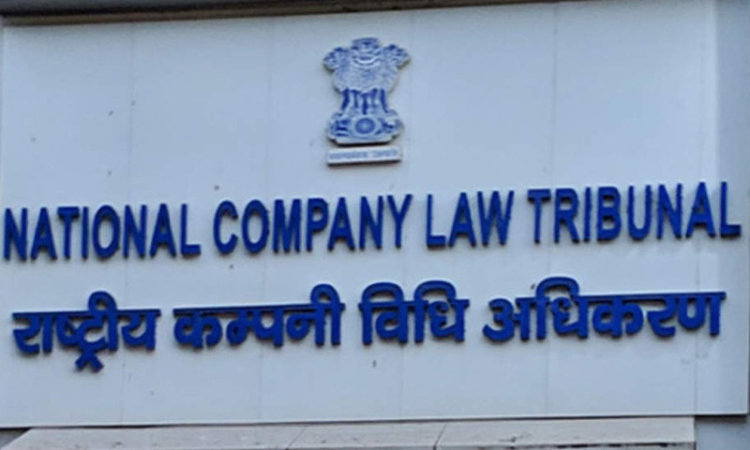
The National Company Law Tribunal (NCLT), Bengaluru Bench, has held that a repayment schedule and interest stipulation in subsequent agreements cannot, by themselves, convert operational debt into financial debt under the Insolvency and Bankruptcy Code
The nature of a debt must be determined by examining the underlying transaction and whether it meets the statutory requirements for a financial debt.
A bench of Judicial Member Sunil Kumar Aggarwal and Technical Member Radhakrishna Sreepada observed:
“The character of a debt is determined by the nature of the underlying transaction and the statutory requirements and a subsequent agreement recording or acknowledging the existing liability, providing a repayment schedule or stipulating interest for delayed payment cannot transform an Operational Debt into a Financial Debt.”
The tribunal was hearing an application filed by V.V.S.R. Anjaneyulu Vattem, erstwhile promoter and suspended director of Sri Balaji Cement and Power Limited. He challenged the classification of P.D. Enterprises as a financial creditor and its inclusion in the Committee of Creditors (CoC) with a 69.73% voting share.
P.D. Enterprises supplied coal to the corporate debtor from FY 2016-17 onwards and arranged transportation through Siva Sai Transport for separate payments. The outstanding dues accumulated to ₹13.27 crore.
In October 2020, the parties executed two memorandums of understanding recording the dues and a repayment schedule.
P.D. Enterprises later claimed ₹47.36 crore as a financial creditor. The RP admitted the claim after considering the memorandums, a mortgage deed and documents recording the outstanding balance and interest.
The tribunal held that the dues arose from coal supplies and transportation services. The subsequent agreements, mortgage and interest stipulation did not establish a disbursement against consideration for the time value of money, as required under the IBC.
Relying on Amrit Kumar Agrawal v. Tempo Appliances Pvt. Ltd., it reiterated that a mere obligation to pay does not constitute financial debt.
It also found the RP's initial view that the creation of a second charge amounted to commercial borrowing and novation of the original liability to be flawed.
The tribunal set aside P.D. Enterprises' classification as a financial creditor and its inclusion in the CoC. It directed the RP to reconstitute the CoC and submit a report within two weeks. The reconstituted CoC may revisit its previous deliberations and take remedial steps, if necessary.
For Applicant: Ch. Srinivasulu
For Respondent: J.V.L Bharati