
Contractual Invocation Of Personal Guarantee Must Precede IBC Demand Notice: NCLT Kolkata
Mohd.Rehan Ali
16 Nov 2026 11:49 AM IST
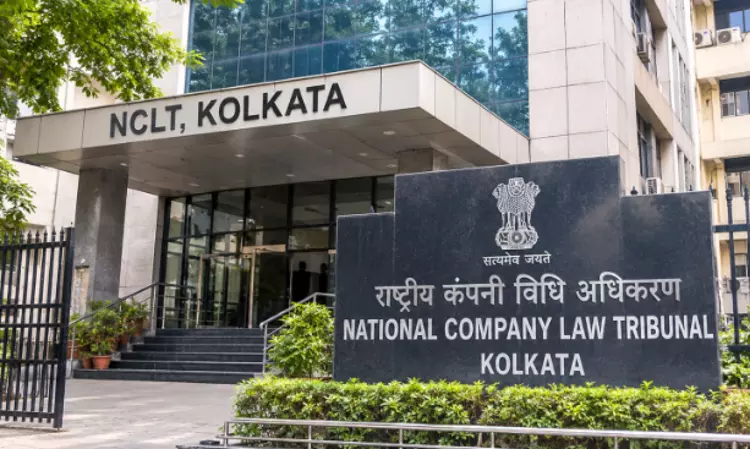
The National Company Law Tribunal (NCLT), Kolkata Bench, has held that a creditor must first invoke a personal guarantee in accordance with the terms of the guarantee deed before issuing a statutory demand notice under the Insolvency and Bankruptcy Code (IBC).
A demand notice in Form B issued under the IBC cannot, by itself, constitute invocation of the guarantee.
The bench comprising Judicial Member Labh Singh and Technical Member Rekha Kantilal Shah observed that invocation of the guarantee is a mandatory requirement before a creditor can issue a demand notice under Rule 7(1) of the Insolvency and Bankruptcy (Application to Adjudicating Authority for Insolvency Resolution Process for Personal Guarantors to Corporate Debtors) Rules, 2019.
“Thus, invocation of the guarantee is a mandatory requirement against the personal guarantor before issuing of notice in Form B under Rule 7(1), and only after such invocation can the statutory requirement of serving the demand notice arise in Form B under Rule 7(1) before filing of Application under Section 95(1),” the tribunal held.
The tribunal was hearing a petition filed by the State Bank of India (SBI) seeking to initiate insolvency resolution proceedings against Rajesh Sonthalia, a personal guarantor of Enfield Solar Energy Limited.
SBI claimed that ₹97.28 crore was outstanding as on May 31, 2025, comprising ₹49.38 crore in principal and ₹47.90 crore in accrued interest.
The tribunal held that SBI had to invoke the guarantee before issuing a statutory demand notice. It relied on an NCLAT ruling that a Form B notice cannot itself constitute invocation. SBI's argument that its May 25, 2022 notice fulfilled Clause 25 of the August 14, 2013 guarantee deed was rejected.
The tribunal rejected this argument after examining Clauses 2 and 25 of the deed. Clause 2 required the guarantor to pay the outstanding amounts upon demand by the lenders, while Clause 25 prescribed how a demand for payment or notice under the guarantee was to be served.
“The word 'any' used in clause 25 is with respect to service of any such demand notice issued in terms of clause 2 thus Form-B cannot be said to be any demand notice issued as contemplated in clause 2 of the Deed of the Guarantee,” the tribunal observed.
It further held that SBI had failed to comply with Clause 2 by making a demand for payment in accordance with the guarantee deed. The bank had also failed to produce a separate notice invoking the guarantee against Sonthalia.
Consequently, the tribunal held that Sonthalia did not fall within the definition of a guarantor under Rule 3(1)(e) to whom a demand notice under Rule 7(1) could be issued. It dismissed SBI's Section 95 petition as not maintainable.
The tribunal clarified that it had not examined the other objections raised against admission of the application, as it had rejected the petition on the preliminary issue concerning the validity of the demand notice.
For the Financial Creditor: Advocates Aparajita Rao, Nabanita Dutta
For the Personal Guarantor: Advocates Pankaj Agarwal, Adv. and Soham Saha
For the Resolution Professional: Advocate M. Snehasish Chakraborty