
Income Tax Reassessment Invalid Without Mandatory Notice, Taxpayer's Participation No Cure: Supreme Court
Rajnandini Dutta
29 Oct 2026 8:00 AM IST
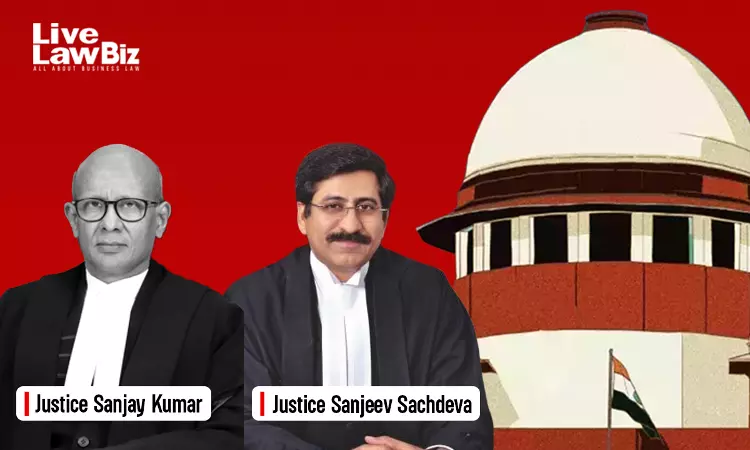
The Supreme Court has held that the Income Tax Department cannot complete reassessment proceedings without issuing a mandatory notice under Section 143(2) of the Income Tax Act, 1961.
A taxpayer's participation in the proceedings cannot make up for the absence of such a notice, the court ruled.
A bench of Justice Sanjay Kumar and Justice Sanjeev Sachdeva observed that Section 292BB of the Act can protect the department against certain objections concerning the service of a notice. However, it cannot cure a situation where the notice was never issued.
“The Assessing Officer cannot undertake the proceedings of reassessment under Section 143(3), read with Section 147 of the Act, unless a notice under Section 143(2) of the Act has been issued to the Assessee. Mere participation of the Assessee in the assessment proceedings, in the absence of a notice under Section 143(2) of the Act, does not confer jurisdiction on the Assessing Officer to frame an assessment under Section 143 (3) of the Act,” the court held.
The ruling arose from income tax reassessment proceedings involving Orissa Mining Corporation Ltd. and another taxpayer for different assessment years. The department had completed their original assessments before reopening them again.
The Income Tax Department later reopened the assessments under Section 147 and issued notices under Section 148, but did not issue the mandatory notices under Section 143(2).
The taxpayers challenged the reassessment orders, but the Commissioner of Income Tax (Appeals) rejected their objections, citing their participation in the proceedings. The Income Tax Appellate Tribunal set aside the reassessments, and the High Court upheld its decisions.
Before the Supreme Court, the department argued that Section 292BB could cure the defect. The provision protects the department against certain objections to the service of notices when an assessee participates in the proceedings. However, the court held that it cannot apply when a notice was never issued.
The court also clarified that an assessee can ask the department to treat an earlier return filed under Section 139 as the return in response to a reopening notice under Section 148. This does not dispense with the requirement to issue a notice under Section 143(2).
It further held that a letter under Section 142(1) cannot substitute for the mandatory notice. The top court accordingly dismissed the department's appeals.
For Appellant: Additional Solicitor General N. Venkataraman, Senior Advocate Nisha Bagchi, Advocates Madhulika Upadhyay, Sudarshan Lamba, Venkataraman Chandrashekhara Bharathi and Raj Bahadur Yadav.
For Respondents: Senior Advocate Ashok Panigrahi, Advocates Shubhranshu Padhi, Subhas Chandra Das, Jay Nirupam, D. Girish Kumar and Pranav Giri.