
Gujarat HC Quashes Reassessment, Holds No Escaped Income Exists Where MAT Liability Is Unchanged
Arvind Tiwari
16 Jun 2026 6:23 PM IST
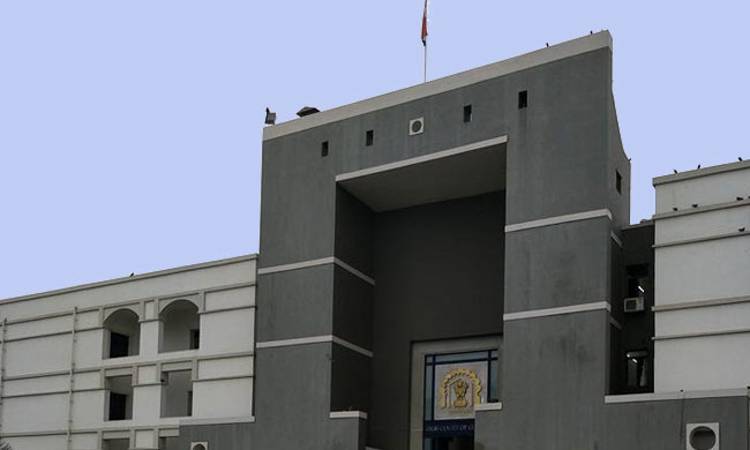
The Gujarat High Court has quashed reassessment proceedings initiated against Pandesara Infrastructure Limited for Assessment Year 2020-21.
The court found that the proposed recomputation of depreciation would not result in any income chargeable to tax escaping assessment. It also noted that the company's liability under the Minimum Alternate Tax (MAT) regime would remain unchanged.
A Division Bench of Justice A.S. Supehia and Justice Vaibhavi D. Nanavati allowed the writ petition challenging a notice issued on 28 June 2025. The petition also questioned the consequential order passed on the same date.
“there would be no escapement of income chargeable to tax.”, the court noted.
Pandesara Infrastructure Limited provides waste effluent management services to industries in Pandesara, Surat. It filed its return declaring Nil income after claiming a deduction under Section 80IA(4)(i).
The company also offered book profit of ₹23.50 crore for taxation under MAT. Its return was selected for scrutiny through CASS. An assessment order accepting the returned income was passed on 30 August 2022.
The reopening proceedings arose from the Revenue's allegation that the company had claimed depreciation at 10 per cent on buildings and 15 percent on plant and machinery. According to the Revenue, depreciation at 40 per cent was applicable to those assets. On that basis, the Revenue alleged escapement of income amounting to ₹15.91 crore.
Before the Court, the company contended that claiming depreciation at the lower rates had actually increased its business income. It argued that if depreciation were recomputed at 40 per cent, business profits would reduce.
The deduction available under Section 80IA(4)(i), which was equal to 100 per cent of eligible profits, would also reduce proportionately. Consequently, the total income would continue to remain Nil. The company further pointed out that the tax paid on book profit under MAT would remain unaffected.
The Revenue argued that the reassessment proceedings were based on material indicating that depreciation had been claimed at 10 per cent and 15 per cent instead of 40 per cent. According to the Revenue, the claim directly affected the computation of income under the head "Profits and Gains of Business or Profession".
It also contended that the mere availability of depreciation details during the original assessment did not establish that the Assessing Officer had formed a conscious opinion on the issue.
After examining the record, the Bench noted that it was not disputed that the company had offered a higher income to tax by claiming depreciation at 10 per cent and 15 per cent instead of 40 per cent. The Court observed that allowing depreciation at the higher rate would reduce income chargeable under the head "Profits and Gains from Business and Profession". In those circumstances, no income chargeable to tax could be said to have escaped assessment.
The Bench also noted that the company's computation of book profit under the MAT provisions had been accepted during the original scrutiny proceedings. It further observed that the alleged depreciation issue had no bearing on the determination of book profit.
While examining the validity of the reopening, the Court relied on its earlier decisions in India Gelatine and Chemicals Ltd. v. ACIT and Moto Tiles (P.) Ltd. v. ACIT.
Referring to Moto Tiles, the Bench noted that where an assessee continues to be assessed on the same book profit under the MAT provisions despite the proposed addition, there is insufficient material to form a belief that income chargeable to tax has escaped assessment.
The Court also considered the nature of the reopening exercise undertaken in the present case.
“All the depreciation details were already available with the assessing officer in the detailed scrutiny, the subsequent re-opening of assessment is premised on mere change of opinion.”, it noted.
Holding that the requirements for invoking reassessment jurisdiction were not satisfied, the Bench quashed the order passed on 28 June 2025. The notice issued on the same date was also set aside. The writ petition was accordingly allowed.
For Petitioner: Tushar Hemani, Senior Counsel assisted by Ms. Vaibhavi K. Parikh
For Revenue: Karan G. Sanghani