
Gujarat High Court Grants ₹1 Crore Tax Refund To Charitable Trust After Exemption Was Omitted
Arvind Kumar Tiwari
2 Sept 2026 4:55 PM IST
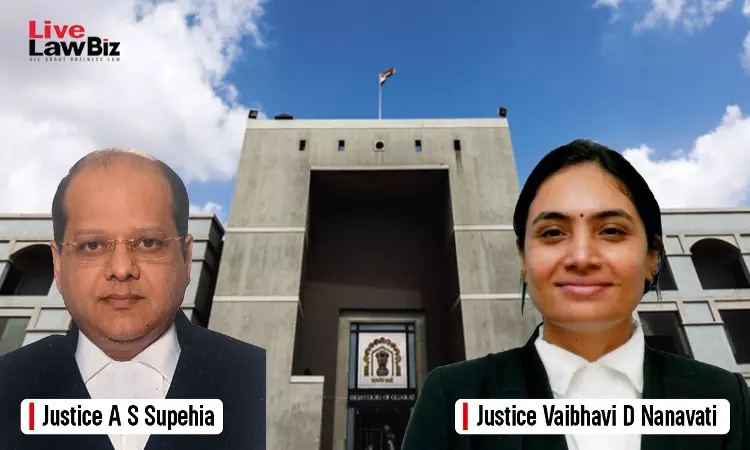
The Gujarat High Court on 25 August quashed the rejection of the revision application filed by Sheth Shree Karshandas Halu Dharamshala Jamnagar and held that the public charitable trust was entitled to exemption under Section 11(1A) of the Income-tax Act.
A Division Bench comprising Justices A.S. Supehia and Vaibhavi D. Nanavati held that a bona fide omission to claim a statutory tax benefit in the original return can be corrected through revisional proceedings under Section 264 of the Act. The Court observed:
“It is open to the revisional authority to look into the deductions which might be claimed by the assessee for the first time. It is further held that even if the return as submitted by the assessee is accepted by the Assessing Officer and if thereafter the assessee comes to know about some mistake committed, where either he was eligible for more deduction or had paid more tax, he can approach the revisional authority, and in such an event, it is open to the revisional authority to exercise its jurisdiction under section 264 of the Act.”
Sheth Shree Karshandas Halu Dharamshala Jamnagar, a public charitable trust, had sold its Dharamshala property at Jamnagar for Rs. 4.87 crore and subsequently invested the entire sale proceeds in a two-year FDR with Canara Bank.
While filing its return for assessment year 2012-13, the Trust inadvertently failed to claim the exemption available under Section 11(1A), which provides tax exemption on capital gains where a charitable or religious trust fulfils the prescribed conditions for investment of the sale proceeds. Instead, it included the capital gains in its taxable income and paid excess tax of Rs. 1,00,27,295.
The Court noted that the Trust had fully disclosed the capital gains and paid the resulting tax. There was no allegation of suppression of material facts. The omission arose because the auditor had failed to claim the exemption in the return.
After becoming aware of the excess tax liability, the Trust approached the revisional authority under Section 264 seeking correction of the mistake. The Commissioner rejected the revision application.
The Revenue also relied on alleged non-compliance with conditions attached to the Charity Commissioner's sanction for sale of the property and questioned the Trust's charitable activities.
The High Court, however, held that these considerations could not be imported to deny an exemption specifically governed by Section 11(1A), particularly when the sale proceeds had been invested in the prescribed manner. It held:
“In our opinion, the only facet which is required to be considered is whether the petitioner is entitled to exemption under Section 11(1A) of the Act read with Instruction No.883 since it had invested the sale proceeds in the FDR with scheduled Bank beyond the period of six months. The provision of Section 11(1A) of the Act are standalone provision, and cannot be interjected with the provision of 36(1)(a) of the Gujarat Public Trust Act, 1950 for denying capital gains exemption.”
The Bench further noted that the Trust continued to hold valid registration under Section 12A and had disclosed the relevant particulars in its returns. It found that the Commissioner had failed to examine whether the Trust was substantively entitled to the exemption and had instead focused on the fact that the Trust had originally offered the capital gains to tax.
It also held that such an approach was inconsistent with the purpose of revisional jurisdiction under Section 264, which enables the revisional authority to correct a genuine mistake resulting in a taxpayer being over-assessed.
Accordingly, the Court quashed the order rejecting the Section 264 application, held the Trust entitled to exemption under Section 11(1A) and directed the Revenue to refund the excess tax of Rs. 1,00,27,295 with applicable interest under Section 244A. The refund was directed to be processed within four weeks.
Counsel for the Petitioner: Dhinal A. Shah, Advocate
Counsel for the Respondents: Aman Mir, Senior Standing Counsel