
INCOME TAX
CCDs Cannot Be Treated As Equity For Disallowing Interest: ITAT Mumbai Deletes ₹76.45 Crore TP Addition
The Mumbai Bench of the Income Tax Appellate Tribunal (ITAT) has deleted a transfer pricing adjustment of ₹76.45 crore made on interest paid by EBIXCASH World Money Limited on compulsorily convertible debentures (CCDs). The tribunal held that precedents consistently recognise CCDs as debt instruments and that interest paid on them cannot be disallowed by treating them as equity. “We find that the grounds of appeal raised by assessee is in fact covered by a series of decisions of Tribunal and...

Non-Production Of Bills, Vouchers Not A Valid Reason To Deny Additional Depreciation On Tanks: ITAT Ahmedabad
The Income Tax Appellate Tribunal (ITAT) has held that non-production of bills and vouchers could not be a valid reason to deny additional depreciation where the tax department had accepted the asset as plant and machinery and allowed normal depreciation on it. A division bench of Judicial Member T.R. Senthil Kumar and Accountant Member Narendra Prasad Sinha upheld the relief granted to Gulbrandsen Private Limited while deciding the Revenue's appeals for Assessment Years 2012-13 and 2013-14. ...
Taxpayer Can't Be Absolved Of Earlier Lapses Because Final Notice Went To Different Email: ITAT Ahmedabad
The Income Tax Appellate Tribunal (ITAT) in Ahmedabad has held that a taxpayer who was aware of ongoing appellate proceedings cannot avoid the consequences of earlier non-compliance merely because the final notice was sent to a different email address. A division bench of Judicial Member T.R. Senthil Kumar and Accountant Member Narendra Prasad Sinha made the observation while allowing an appeal filed by Arvind Mevalal Panchal for statistical purposes against an order of the National Faceless...
Depreciation Cannot Be Claimed On Goodwill Arising From Unsigned & Unregistered Agreement: ITAT Delhi
On 10 June, the Delhi Bench of the Income Tax Appellate Tribunal (ITAT) held that depreciation cannot be claimed on goodwill arising from an unsigned and unregistered business transfer agreement. Judicial Member Madhumita Roy and Accountant Member Amitabh Shukla dismissed the appeal filed by Straumann Dental India LLP for Assessment Year 2017-18 and upheld the disallowance of depreciation of Rs 16.16 crore claimed on goodwill. The Tribunal examined the Business Transfer Agreement and observed...
Ten-Year Block For Non-Searched Person To Be Computed From Receipt Of Seized Material, Not Search Date: ITAT Delhi
The Delhi Bench of the Income Tax Appellate Tribunal (ITAT) has held that, in the case of a person who was not subjected to a search, the relevant assessment block must be computed with reference to the date on which the jurisdictional Assessing Officer records satisfaction after receiving the seized material and not with reference to the date of the search conducted on a third party. A bench of Judicial Member Sudhir Kumar and Accountant Member Naveen Chandra dismissed two appeals filed by the...
Indexed Cost Of Construction Must Be Allowed Where Building Details Form Part Of Sale Deed: ITAT Chennai
The Chennai Bench of the Income Tax Appellate Tribunal (ITAT) has held that a taxpayer cannot be denied the benefit of indexation on the cost of construction where details relating to the building are already available in the registered sale deed and form part of the material on record. A coram of Judicial Member Manu Kumar Giri and Accountant Member Gagan Goyal allowed an appeal filed by Ramatas Revathi. "The benefit of indexation of cost is a statutory consequence flowing from section 48 of...
Section 68 Addition Unsustainable Where Identity and Creditworthiness Are Proven: ITAT New Delhi
The Delhi Bench of the Income Tax Appellate Tribunal (ITAT) on 5 June held that an addition under Section 68 of the Income Tax Act cannot be sustained merely because share subscribers disclosed relatively low income in their income tax returns, where the taxpayer establishes their identity, creditworthiness, and the genuineness of the transactions. Judicial Member Raj Kumar Chauhan and Accountant Member Renu Jauhari dismissed the Revenue's appeal and upheld the Commissioner (Appeals)' decision...
ITAT Delhi Quashes Antriksh Group Assessments Over Mechanical Search Assessment Approval
The Delhi Bench of the Income Tax Appellate Tribunal (ITAT) has recently reiterated that approval required before search assessments are finalised must reflect independent application of mind and cannot be accorded mechanically through a common approval covering multiple assessees and assessment years. Holding that the approval granted in the present case suffered from non-application of mind, the Tribunal quashed assessments framed against various entities and individuals belonging to the...
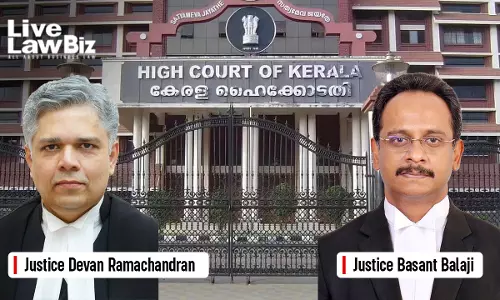
Kerala HC Directs CIT To Reconsider Registration Of Trust From 2021, Examines CBDT Circular 7/2024
On 4 June, the Kerala High Court directed the Commissioner of Income Tax (Exemptions) to reconsider a Atma Bodhodaya Sangham Sree Subhananda Trust's claim for registration under Section 12A of the Income Tax Act with effect from 1 April 2021, after examining the applicability of CBDT Circular No. 7/2024 on rectification of defective exemption applications. A Division Bench of Justices Devan Ramachandran and Basant Balaji set aside the orders of the Income Tax Appellate Tribunal (ITAT) and the...
Standardized Cybersecurity Software Offerings Are Not Taxable As Fees For Technical Services: ITAT Delhi
On 5 June, the Delhi Bench of the Income Tax Appellate Tribunal (ITAT) held that consideration received from the sale of standard cybersecurity software licences, subscriptions, and related support services does not qualify as Fees for Technical Services (FTS), as FireEye Ireland Limited did not render any customised technical or consultancy services. Judicial Member Vikas Awasthy and Accountant Member Renu Jauhari partly allowed the appeals filed by FireEye Ireland Limited for Assessment Years...
IMAX's Five-Day Site Visit, 17-Day Installation Period Do Not Create Permanent Establishment In India: ITAT Delhi
The Delhi Bench of the Income Tax Appellate Tribunal (ITAT) has recently held that IMAX Corporation, Canada, did not have either a fixed place Permanent Establishment (PE) or an installation/supervisory PE in India. The tribunal held that a five-day site inspection visit and subsequent installation activities lasting only 17 days did not satisfy the conditions prescribed under the India-Canada Double Taxation Avoidance Agreement (DTAA). Since no PE existed in India, the Tribunal held that no...
Jet Lite's Defence In FBT Proceedings Cannot Be Treated As Furnishing Inaccurate Particulars: ITAT Delhi
The Delhi Bench of the Income Tax Appellate Tribunal (ITAT) has upheld the deletion of penalties exceeding ₹7.6 crore imposed on Jet Lite (India) Ltd. in a fringe benefit tax (FBT) disputeThe tribunal held that the assessee had sought to justify its case against the fringe benefit assessment and that this could not be treated as furnishing inaccurate particulars. A bench of Judicial Member Satbeer Singh Godara and Accountant Member Manish Agarwal dismissed the Revenue's appeals against orders...