
INCOME TAX

Gujarat High Court Quashes Reassessment After Escaped Income Falls Below ₹50 Lakh
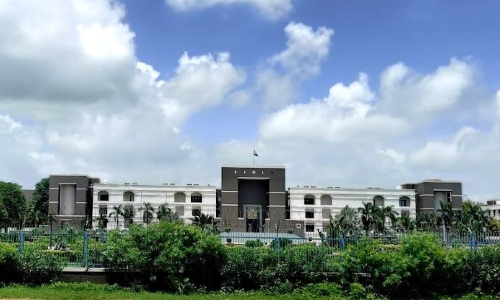
The Gujarat High Court has quashed reassessment proceedings against Touch Comm Tech Private Limited after finding that the alleged escaped income fell below ₹50 lakh, making the reopening time-barred. A division bench of Justice A.S. Supehia and Justice Vaibhavi D. Nanavati allowed the company's writ petition and set aside the order passed under Section 148A(d) along with the consequential reassessment notice. “Thus, it appears that in order to bring the assessment within the ambit of...
Survey-Based Reassessment Not Excluded From Settlement Under Vivad Se Vishwas Scheme: Gujarat High Court
The Gujarat High Court has recently held that reassessment proceedings based on survey material are not excluded from the Direct Tax Vivad Se Vishwas Scheme, 2024. The court observed that the revenue cannot import a restriction that does not appear in the statute. The Direct Tax Vivad Se Vishwas Scheme, 2024, was introduced by the Centre to reduce pending income-tax litigation by allowing eligible taxpayers to settle disputes and bring appeals to an end. A division bench of Justice A.S....
High-Value Bank Transactions Alone Cannot Justify Reassessment: Gujarat High Court
The Gujarat High Court recently held that high-value transactions reflected in bank accounts, without any material showing that income had escaped assessment, cannot by themselves justify reopening an assessment. The court consequently quashed reassessment proceedings initiated against O3 Developers Pvt. Ltd. A division bench of Justice A.S. Supehia and Justice Vaibhavi D. Nanavati set aside reassessment notices and consequential orders issued against the company for AY 2019-20 and AY 2021-22. ...
ITAT Delhi Upholds ₹18 Lakh Tax Deduction Claim On Ernst & Young's CSR Donations
Ernst & Young Services Private Limited has succeeded before the Delhi bench of the Income Tax Appellate Tribunal in a dispute over a tax deduction claimed on donations made as part of its Corporate Social Responsibility (CSR) spending. The tribunal dismissed the Income Tax Department's appeal and upheld the deduction. A bench of Judicial Member Yogesh Kumar U.S. and Accountant Member Manish Agarwal was considering the Department's challenge to relief granted to the company. The dispute...

Employee Secondment Payments To EY US Satisfy 'Make Available' Test, Taxable As FTS: Delhi High Court
The Delhi High Court on thursday held that payments made by Indian entities to a foreign company for the secondment of employees can be taxed as Fees for Technical Services (FTS) under the India-US Double Taxation Avoidance Agreement (DTAA) if the arrangement satisfies the "make available" test by transferring technical knowledge, skill, or experience to the Indian entity.A Division Bench of Justices V. Kameswar Rao and Vinod Kumar allowed appeals filed by the Revenue against Ernst & Young...
Appellate Officer Cannot Ignore Assessing Officer's Findings Without Contrary Material: ITAT Ahmedabad
The Income Tax Appellate Tribunal (ITAT) at Ahmedabad has held that findings recorded by an Assessing Officer in a remand report cannot be disregarded by the Commissioner (Appeals) without any material to the contrary. The court observed that where the Assessing Officer, after verification, accepted that a taxpayer's land had been used for agricultural purposes and that the conditions for claiming exemption were met, those findings could not be ignored without contrary evidence. A bench of...

Cash Loan Given In Breach Of Income Tax Act Can Still Be Recovered: Madras High Court
The Madras High Court at Madurai has held that a cash loan advanced in breach of the Income Tax Act does not become illegal merely for that reason, and the lender can still seek recovery of the money. A bench of Justice G.R. Swaminathan and Justice R. Poornima was dealing with a case in which P. Palanikumar claimed to have lent ₹25 lakh in cash instead of through an instrument as contemplated under Section 269SS of the Income Tax Act. The bench held that while the Income Tax Department was...

ITAT Delhi Quashes Proceedings Against Indeed Fincap Over Common, Vague Satisfaction Note
The Delhi Bench of the Income Tax Appellate Tribunal (ITAT) has quashed assessment proceedings initiated against Indeed Fincap Pvt. Ltd. after finding that the tax department relied on a common satisfaction note covering multiple assessment years without identifying assessment year-specific incriminating material. A coram of Judicial Member Vimal Kumar and Accountant Member S. Rifaur Rahman dismissed the Revenue's appeal against an order of the Commissioner of Income Tax (Appeals), which had...

ITAT Mumbai Upholds Relief To Chillies and Garlic After AO Treated Consignment Sales As Agent's Own Turnover
The Mumbai Bench of the Income Tax Appellate Tribunal (ITAT) has upheld the deletion of an addition made on alleged undisclosed sales in the case of Chilles & Garlic Commission Co. after finding that the Assessing Officer had wrongly treated consignment sales handled by the commission agent as the taxpayer's own turnover.A bench of Judicial Member Amit Shukla and Accountant Member Arun Khodpia observed that the Assessing Officer had proceeded on a misconceived understanding of the taxpayer's...

Interest Received By American Express India Branch From Head Office, Overseas Branches Not Taxable: ITAT Mumbai
The Mumbai Bench of the Income Tax Appellate Tribunal (ITAT) has held that interest received by the Indian branch of American Express Bank from its Head Office and overseas branches is not taxable in India. The Tribunal found that the transactions were between different parts of the same entity and therefore attracted the principle that a person cannot make a profit from oneself. A bench of Vice President Saktijit Dey and Accountant Member Prabhash Shankar was hearing cross-appeals relating...
Reassessment Without Section 143(2) Notice Lacks Jurisdiction, Cannot Be Sustained: ITAT Kolkata
On 16 June, the Kolkata Bench of the Income Tax Appellate Tribunal (ITAT) held that reassessment proceedings initiated without issuance of the mandatory notice under Section 143(2) of the Income Tax Act are void ab initio, as the requirement goes to the root of jurisdiction and cannot be treated as a curable procedural lapse. Accountant Member Rajesh Kumar and Judicial Member Pradip Kumar Choubey set aside the reassessment against Star Tradecom Private Limited and quashed the consequential...

Tax Reassessment Beyond 4 Years Invalid Without Failure To Disclose Material Facts: Bombay High Court
On 16 June, the Bombay High Court held that the Income Tax Department cannot reopen an assessment after four years when the taxpayer has already disclosed all material facts fully and truly and allowed a writ petition filed by Chennai Container Terminal Private Limited.A Division Bench of Justices B.P. Colabawalla and Firdosh P. Pooniwalla set aside the notice issued under Section 148 of the Income Tax Act, the order rejecting objections, and the consequential show cause notice and draft...