
Delhi High Court Affirms ITAT View That Excise Duty Refund Under Kutch Incentive Scheme Is Capital Receipt
Kapil Dhyani
16 Feb 2026 9:08 PM IST
The Delhi High Court has upheld an order of the Income Tax Appellate Tribunal (ITAT) holding that excise duty refund received by Jindal SAW Ltd. under the Kutch district incentive scheme is a capital receipt and not taxable as income.
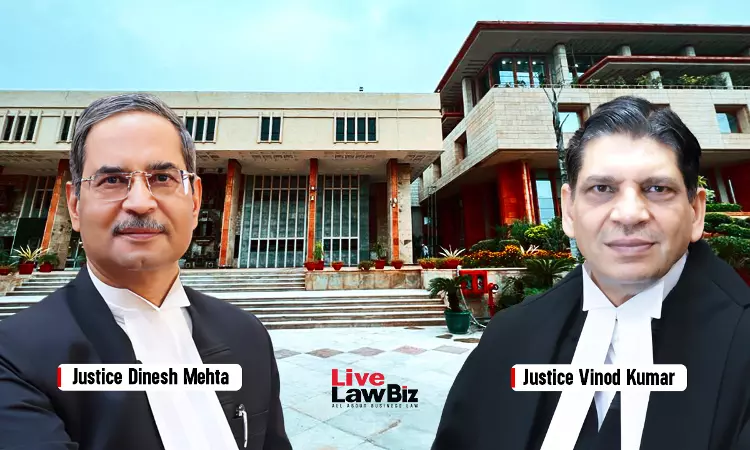
While dismissing the Income Tax Department's appeal, the Division Bench of Justices Dinesh Mehta and Vinod Kumar agreed with ITAT's view that the refund was granted under the Incentive Scheme 2001 for Economic Development of Kutch District, notified by the Government of Gujarat in the aftermath of the devastating 2001 earthquake, issued by the Government of Gujarat in Novermber 2011 after the earthquake in the Kutch area.
The Revenue had challenged the ITAT's order contending that the assessee itself had treated the excise duty refund of about ₹59.68 crore as a revenue receipt in its return of income and therefore could not later claim it as a capital receipt.
It was also argued that even if the subsidy was treated as capital in nature, it ought to be reduced from the block of assets for the purpose of depreciation.
Rejecting these contentions, the High Court noted that the issue was squarely covered by the Supreme Court's decision in CIT v. Ponni Sugars & Chemicals Ltd. (2008), which laid down that the decisive test is the purpose of the subsidy.
If the incentive is linked to capital investment and aimed at industrial growth, it assumes the character of a capital receipt, irrespective of the form or timing of disbursement.
The Court observed that under the Kutch incentive scheme, the excise duty refund was not granted to reimburse the cost of any specific plant or machinery. Rather, the Court observed that the subsidy was independent of the cost of any asset and that the only correlation with assets was that an industry was required to make a particular investment.
In this backdrop the Bench held,
“since the subsidy which the respondent-assessee had received under the scheme of 2001 was in the nature of capital receipt independent of the cost of any asset, the only correlation with the asset was in the sense that an industry was supposed to make a particular investment. Otherwise, there was no nexus with the excise duty paid with the cost of the cost of a particular machine.”
The Court added that unless the subsidy is directly linked to the cost of purchase of the particular asset, the same cannot be reduced from the block of assets.
“We have this view because, the subsidy was not in the nature of capital investment subsidy and it was in the form of reimbursement of the excise duty paid by the unit,” it said and dismissed Revenue's appeal.
For Appellant: Advocate Gaurav Gupta, SSC with Shivendra Singh, JSC, Yojit Pareek JSC & Surya Jindal
For Respondent: Advocates Rohit Jain, Saksham Singhal and Tavish Verma