
High Courts

RTO Cannot Demand Pre-Liquidation Motor Vehicle Tax From IBC Auction Purchasers: Bombay High Court
On 22 April, the Bombay High Court, allowing a writ petition filed by My Ideal Transport, held that Regional Transport Offices (RTOs) cannot demand pre-liquidation Motor Vehicle Tax (MVT) dues from auction purchasers of vehicles sold during liquidation under the Insolvency and Bankruptcy Code, 2016 (IBC). A Division Bench of Justices Manish Pitale and Shreeram V. Shirsat reiterated that statutory authorities must lodge their claims before the liquidator and have them resolved under the IBC's...
Telangana High Court Holds IBC Moratorium Cannot Defeat Arbitral Proceedings, Allows Kaizen Power Appeal
The Telangana High Court on 15 April set aside a Commercial Court order that had vacated interim protection granted to Kaizen Power Limited in relation to its lease dispute with the Andhra Pradesh Industrial Infrastructure Corporation (APIIC). A Division Bench of Justices Moushumi Bhattacharya and Gadi Praveen Kumar held that the Commercial Court proceeded on an erroneous understanding of the effect of the IBC moratorium and allowed the appeal, directing that arbitration proceedings be resumed...

Madhya Pradesh HC Stays Arrest In Recovery Case Arising From RERA Order Against Insolvency-Bound Developer
The Madhya Pradesh High Court at Jabalpur has recently stayed the execution of an arrest warrant in recovery proceedings arising from a RERA order against a real estate developer undergoing insolvency, noting that enforcing civil jail despite a subsisting moratorium would cause serious prejudice.A bench of Justice Sanjeev S. Kalgaonkar observed, “The petitioner would be seriously prejudice, if the order regarding civil jail is executed in furtherance of the warrant of arrest despite there...
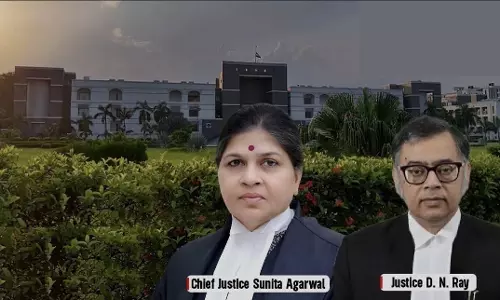
Lease Termination, Eviction During IBC Moratorium Of Gujarat Hydrocarbons And Power SEZ Invalid: Gujarat HC
The Gujarat High Court has dismissed an appeal by Gujarat Industrial Development Corporation and upheld the quashing of its decision to terminate a lease and evict Gujarat Hydrocarbons and Power SEZ Ltd during insolvency proceedings. The court held that both the termination of the lease and the eviction action were “non est, illegal and bad in law” as they were taken during the moratorium period. “Given the object of Section 14(1) of the IBC' 2016, in the facts of the present case, neither the...
IBC Offences Triable Only By Special Court Where Company's Registered Office Is Located: Madhya Pradesh HC
The Madhya Pradesh High Court has held that offences under the Insolvency and Bankruptcy Code, 2016 can be tried only by the Special Court having jurisdiction over the place where a company's registered office is situated, ruling that a Gwalior court lacked inherent jurisdiction to entertain a complaint against a company whose registered office is in New Delhi.“From the bare reading of section 436 it is clear that offences shall be triable only by the Special Court established under section 435...
IBC Auction Purchaser Not Liable For Past Electricity Dues: Telangana HC Sets Aside ₹2.64 Lakh Demand
The Telangana High Court has recently set aside a demand raised against an auction purchaser under the Insolvency and Bankruptcy Code, holding that such a purchaser cannot be made liable for electricity dues of the previous owner where the claim was not part of the insolvency process, and further that a demand raised after nearly 16 years is barred by limitation. Justice Renuka Yara, allowing the writ petition, emphasised that once the resolution process concludes, undisclosed statutory dues...
Public Announcement Under IBC Sufficient, Individual Notice Not Required: Allahabad High Court
The Allahabad High Court on 24 April, held that under the Insolvency and Bankruptcy Code, 2016, individual notice to each creditor is not required and that a public announcement under Section 15 of the Code constitutes sufficient notice to corporate creditors. A Bench comprising Justices Ajit Kumar and Swarupama Chaturvedi, while allowing a petition by South East U.P. Power Transmission Company Limited (and a connected petition by Tata Steel Limited) further held that creditors must exercise...
IBC Overrides Electricity Act In Conflict, Pre-CIRP Dues Cannot Be Enforced: Allahabad High Court
The Allahabad High Court on 24 April, held that the Insolvency and Bankruptcy Code, 2016 (IBC), being a later law, prevails over the Electricity Act, 2003 in case of inconsistency. The Bench of Justices Ajit Kumar and Swarupama Chaturvedi allowed the writ petition and held that Section 238 of the IBC gives the Code overriding effect over other statutes, including sector-specific laws. It held: “The legislative intent is thus to create a self-contained and comprehensive framework where all...
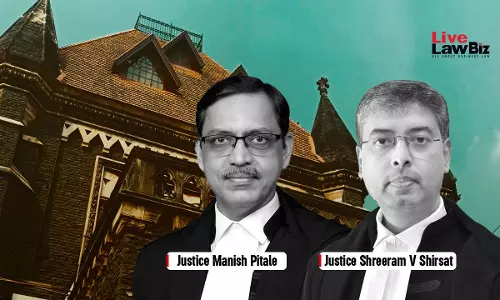
Bombay HC Pulls Up NCLT Mumbai Registry Over Scrutiny Lapse In Personal Guarantor Insolvency Plea
The Bombay High Court on Tuesday pulled up the Mumbai Registry of the National Company Law Tribunal (NCLT) for failing to follow mandatory procedures while scrutinising a personal guarantor insolvency petition under the Insolvency and Bankruptcy Code. A division bench of Justices Manish Pitale and Shreeram V. Shirsat held that the Registry did not comply with Rule 28 of the NCLT Rules and prior directions issued by the High Court in Bank of Baroda vs. Union of India. “It is obvious that the...
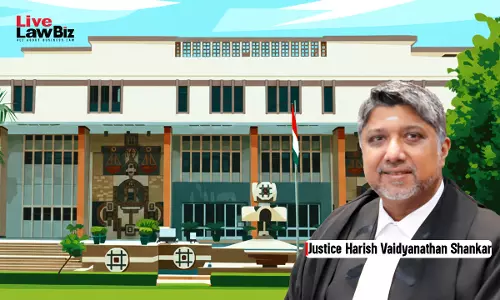
Section 101 IBC Moratorium Temporary, Creditors Free To Recover After Expiry: Delhi High Court
The Delhi High Court on 13 April held that the moratorium under Section 101 of the Insolvency and Bankruptcy Code, 2016 (IBC) in personal insolvency is temporary and time-bound, and once it ceases, creditors regain the right to pursue recovery and execution proceedings. Justice Harish Vaidyanathan Shankar made this observation while allowing continuation of execution proceedings in Vistra ITCL (India) Ltd. v. Pranav Ansal & Anr., where the decree holder sought to recover an arbitral award...
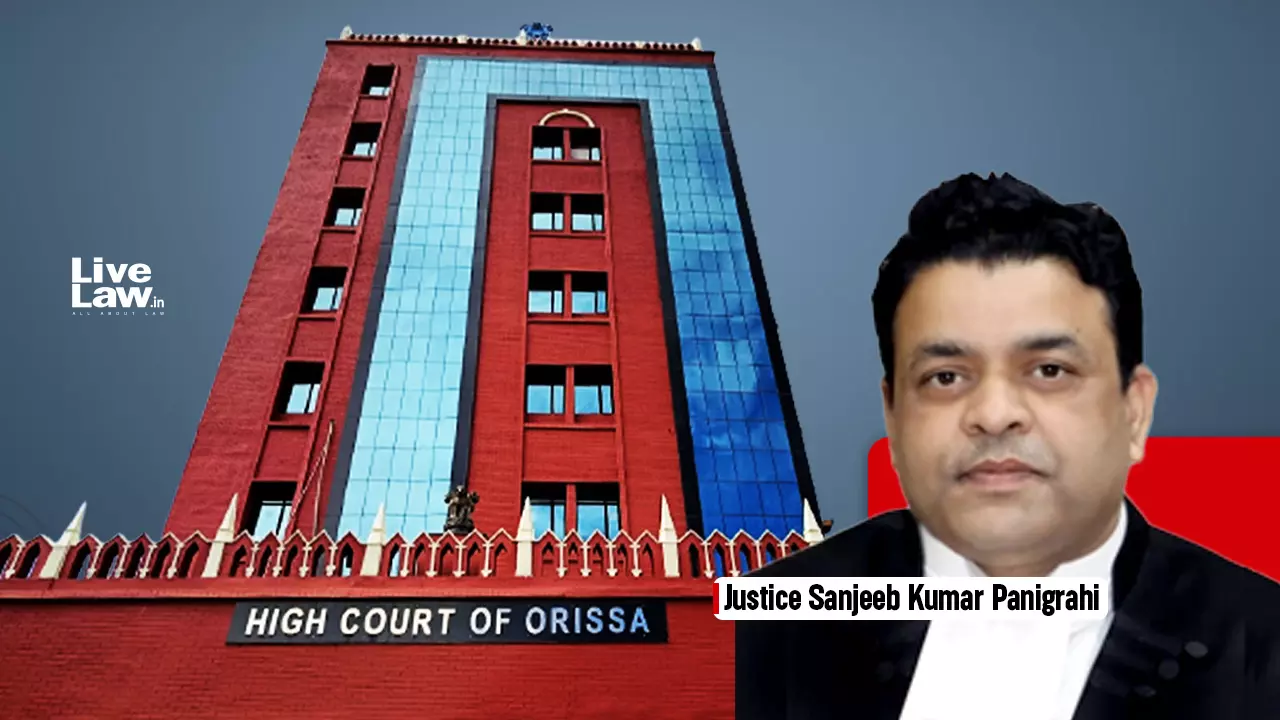
Failure To Deposit EPF Dues On Time Is A Penal Offence, Later Payment Irrelevant: Orissa High Court
The Orissa High Court has held that subsequent payment of employees' provident fund dues does not extinguish criminal liability for prior default, and such payment cannot be a ground to quash criminal proceedings. A Single-Judge Bench of Dr Justice Sanjeeb K Panigrahi, by order dated 13 March, refused to quash criminal proceedings against the former director of Cosboard Industries Pvt. Ltd. He held: “The offence committed by the petitioner is grave endangering the Right to pension and...
SARFAESI Enforcement Cannot Be Invoked After Debt Is Extinguished Under IBC: Orissa High Court
The Orissa High Court has held that Section 31 of the SARFAESI Act cannot operate as an independent source of enforcement power once a resolution plan under the Insolvency and Bankruptcy Code extinguishes the underlying debt.Section 31 excludes certain secured assets and transactions from the Act's enforcement mechanism, meaning SARFAESI recovery powers do not apply to them.A Single Judge Bench of Justice Sanjeeb K. Panigrahi allowed a writ petition by Sree Metaliks Limited, Keonjhar against the...