
Denying Borrower Access To DRT To Challenge SARFAESI Possession Measures Violate Article 300A: Rajasthan HC
Shilpa Soman
17 Sept 2026 6:39 PM IST
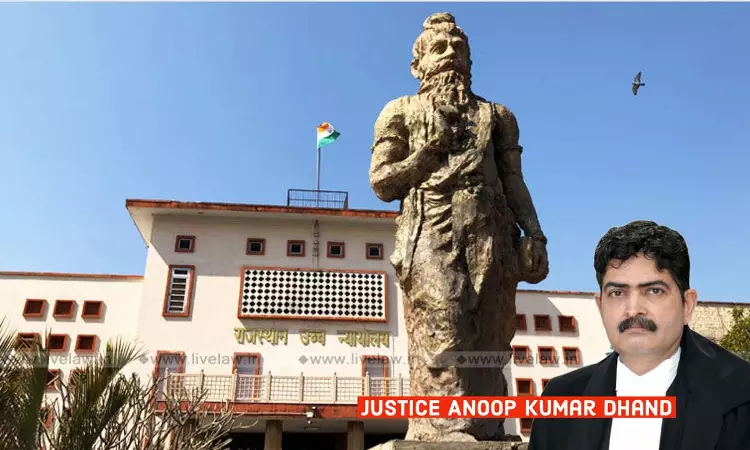
The Rajasthan High Court has held that denying a borrower an opportunity to approach the Debt Recovery Tribunal (DRT) while challenging steps taken by a bank to obtain physical possession of mortgaged property could amount to ignoring the borrower's constitutional right to property under Article 300A.
“To deny the borrower an opportunity to access or approach the DRT while questioning the steps taken by the secured creditor to get physical possession of the mortgaged assets, would tantamount to ignoring the Constitutional Right available to him/her under Article 300A of the Constitution of India,” Justice Anoop Kumar Dhand observed.
The court made the observation while setting aside a Debt Recovery Appellate Tribunal (DRAT), Delhi order that had rejected a borrower's appeal on limitation. It restored the appeal and directed the DRAT to decide it on merits.
The case concerned Rishu Chaudhary, who had borrowed money from Indian Overseas Bank. Her loan account was declared a non-performing asset on December 31, 2016. The bank then issued a demand notice on January 1, 2017 and subsequently took measures under Section 13(4) of the Securitisation and Reconstruction of Financial Assets and Enforcement of Security Interest (SARFAESI) Act on April 17, 2017.
Section 13(4) allows a secured creditor to take measures to enforce the security offered for a loan after the borrower fails to comply with a demand for repayment. Section 14 deals with assistance from the District Collector or Magistrate in taking possession of the secured property.
The District Collector and Magistrate, Alwar passed an order under Section 14 on October 8, 2018. Chaudhary's counsel submitted that the order was passed in her absence and that she was unaware of it until the bank communicated it to her by email on October 25, 2018. She approached the DRT on November 29, 2018 with an application under Section 17, which provides a remedy to a person aggrieved by measures taken by a secured creditor under Section 13(4).
The DRT rejected the application as time-barred. The DRAT subsequently rejected Chaudhary's appeal on the ground of delay in approaching the DRT.
The high court relied on the Supreme Court's decisions in Authorised Officer, Indian Overseas Bank v. Ashok Saw Mill and Kanaiyalal Lalchand Sachdev v. State of Maharashtra.
In Ashok Saw Mill, the Supreme Court held that the DRT can examine actions taken by a secured creditor after the Section 13(4) stage.
In Kanaiyalal Lalchand Sachdev, the Supreme Court held that action under Section 14 constitutes a continuance of proceedings under Section 13(4) and falls within the scope of Section 17. It further held that limitation has to be calculated from the date of the last action against which the aggrieved person approaches the DRT.
In the present case, the high court noted that the last communication to Chaudhary was made on October 25, 2018. She filed her application before the DRT on November 29, 2018.
“Hence, there is no delay on the part of the petitioner in approaching the DRT,” Justice Dhand held.
The court further held that the provisions of Section 17 and the limitation prescribed under it should be construed liberally.
“The law should not be harsh against the defaulter-borrower. In the case of default in repaying the borrowed amount to the bank, the Bank itself is the claimant, the judge and the executioner. The only remedy available to the defaulter-borrower is to approach the DRT by way of filing an application under Section 17 of the SARFAESI Act,” Justice Dhand observed.
The court further observed that the borrower's access to the DRT assumes importance when the secured creditor seeks physical possession of mortgaged assets. Denying that opportunity, it held, would affect the constitutional right protected under Article 300A.
The high court held that the DRAT should not have rejected the appeal on the technical ground of limitation. “The DRAT instead of rejecting the appeal of the petitioner, on a technical count of delay in approaching the DRT and limitation, ought to have proceeded to decide the appeal on its merits,” the court observed.
The court quashed and set aside the DRAT's June 4, 2026 order and restored the appeal to its original number. The parties have been directed to appear before the DRAT on September 22, 2026.
The tribunal has been directed to decide the appeal as early as possible, preferably within four weeks thereafter. It must decide the matter on merits without being influenced by the observations made by the high court.
For Petitioner: Advocates S.S Hora, Ishan Khandelwal and Himanshu Agarwal
For Respondent: Advocates Anurag Kalawatia, Anjali Sharma, Suhani Bardia and Ganesh Sharma