
Punjab & Haryana High Court Mandates CIN, DIR-12 For Cheque-Bounce Complaints Against Companies
Shilpa Soman
7 Sept 2026 6:20 PM IST
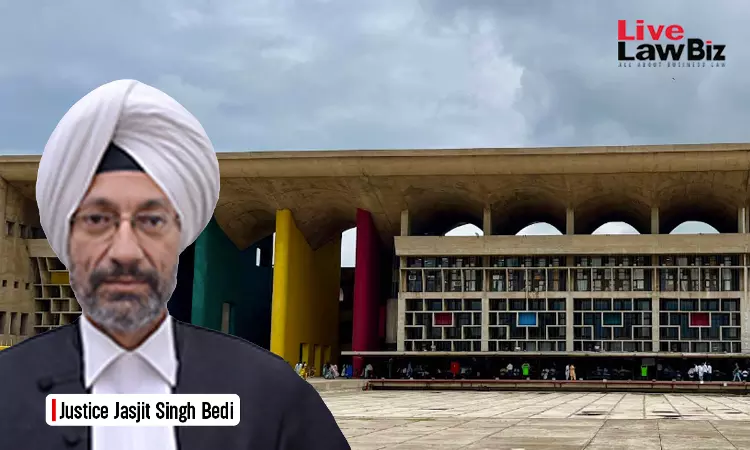
The Punjab and Haryana High Court has recently directed that, from now on, cheque-bounce complaints against companies must carry the company's Corporate Identification Number (CIN) and a certified copy of Form DIR-12.
The documents must help establish that the persons being arraigned were actually responsible for the company's affairs when the cheque was issued or dishonoured.
The CIN is the company's unique identification number. The court wants it to be taken from the Ministry of Corporate Affairs' records to verify the company's identity and status.
Form DIR-12 records appointments of directors and key managerial personnel and changes in those positions. The certified copy will allow courts to check whether the people being prosecuted held the relevant positions when the cheque was issued or dishonoured.
The requirement is intended to help courts verify who was actually responsible for the company's affairs when the cheque was issued or dishonoured.
Justice Jasjit Singh Bedi issued the direction while quashing a cheque-bounce complaint against Deepak Aggarwal. The court observed that people who had ceased to be directors, or had never held the relevant position, were sometimes being wrongly arraigned in such cases.
Therefore, in order to prevent such mishaps, the court directed that “every complainant filing a complaint under Section 138 NI Act against a company shall mandatorily annex to the complaint (i) the Corporate Identification Number (CIN) of the accused company” and “(ii) a certified copy of Form DIR-12”.
The complaint was filed by Rajinder Earthmover Filling Station Private Limited against A2Z Waste Management (Ludhiana) Limited and people described as its directors, officers and authorised signatories.
The complainant alleged that the company owed it money for municipal solid waste collection and transportation work. Two authorised signatories issued a cheque for ₹4.05 crore, which was later dishonoured.
Aggarwal was described in the complaint as the company's Joint Managing Director. He contended that he had never held that position or been a director, employee or authorised signatory of A2Z Waste Management. He maintained that he was instead associated with A2Z Green Waste Management Limited, a separate company. He also argued that the complaint did not specify any role played by him in A2Z Waste Management's affairs and that the statutory notice was not served on him.
The complainant argued that whether Aggarwal was an officer of the company was a factual issue that should be decided at trial. The court rejected this contention after examining the Ministry of Corporate Affairs records, which showed that Aggarwal was not a director of A2Z Waste Management. The complainant did not dispute those records.
The court also found that no role had been attributed to Aggarwal in the complaint or during the hearing. It observed, “It is pertinent to mention here that neither has the role of the petitioner been spelt out in the complaint nor during the course of the hearing of the present case. Therefore, non-compliance of the directions issued in Sudeep Jain and Anil Chanana (supra) have caused irreparable harm to the petitioner.”
Section 138 of the Negotiable Instruments Act deals with cheque dishonour. Section 141 sets out when people connected with a company can also be held responsible for the offence.
Relying on Supreme Court precedents, it observed that a Managing Director or Joint Managing Director is presumed to be in charge of and responsible for the company's business by virtue of the position.
The court further noted that a director or officer who signed the dishonoured cheque can be held liable without a separate averment that he was in charge of the company's business.
For other officers, the complaint must set out their position and duties and their role in the issuance and dishonour of the cheque, including the basis for alleging consent, connivance or negligence.
The court ultimately quashed the complaint and consequential proceedings against Aggarwal alone. It found that he had never been in charge of or responsible for A2Z Waste Management's business.
The court then issued the new requirements for future complaints. It noted that inadequate verification of a company's status can result in people being wrongly prosecuted even though they had ceased to be directors or had never held the relevant position.
It directed District and Sessions Judges to ensure compliance and ordered,
“The District & Sessions Judge of each District is directed to ensure that complaints under Section 138/141 NI Act against corporate accused are not registered without the aforesaid documents being annexed thereto, save and except where the complainant satisfies the Court, by way of a specific averment on affidavit, that such documents are not available despite due diligence, in which event the Magistrate shall record reasons before proceeding to take cognizance. This direction shall apply prospectively to all complaints filed under Section 138/141 NI Act from the date of this judgment.”
For Petitioner: Senior Advocate Kunal Dawar, Advocates Mayank Aggarwal, Shruti Mandhotra and Saurav Bajaj
For Respondents: Advocate Sahil Soi