
State Liquor Regulation Doesn't Bar CCI Probe Into Anti-Competitive Conduct: Madhya Pradesh High Court
Shilpa Soman
21 Sept 2026 3:55 PM IST
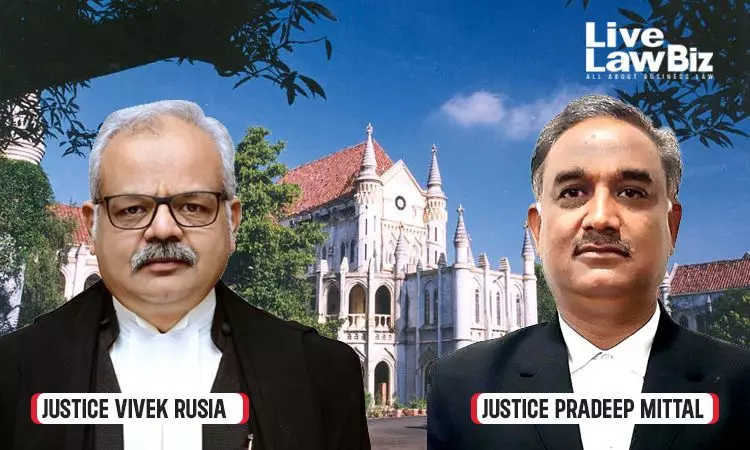
The Madhya Pradesh High Court on 17 September held that the State's power to regulate liquor under the Madhya Pradesh Excise Act, 1915 does not conflict with the Competition Commission of India's (CCI) jurisdiction to investigate anti-competitive conduct under the Competition Act, 2002.
A Division Bench of Justices Vivek Rusia and Pradeep Mittal dismissed a batch of writ petitions filed by distilleries and bottling units operating in Madhya Pradesh, challenging CCI proceedings, including its order directing the Director General to investigate alleged anti-competitive conduct. The judges held:
“The jurisdiction vested in the State Government is not trumped by CCI exercising the power under the Act of 2002 enacted by the Union of India under the residuary vested in the Union under Entry 97 of List-I of the Seventh Schedule of the Constitution. There is absolutely no conflict between 2002 Act and MP Excise Act. The CCI is not exercising any parallel or concurrent jurisdiction in the matter of distilleries, manufacture, sale of country as well as foreign liquor.”
Petitioners manufacture and supply country liquor in Madhya Pradesh through tenders floated by the State Excise Department under the Madhya Pradesh Excise Act and the rules framed under it.
The CCI proceedings originated from a Comptroller and Auditor General of India (CAG) audit report for 2016-17, which noted that the same distilleries were repeatedly emerging as L-1 bidders in the same districts with narrow price variations. The report indicated possible collusive bidding or market allocation.
Based on an untabled copy of the report, the CCI formed a prima facie view that there had been bid-rigging and horizontal market sharing and directed the Director General to investigate eight distilleries.
The Director General subsequently conducted an investigation, including examining State Excise officials and carrying out search and seizure operations, before submitting a report running to more than 1,200 pages.
The petitioners raised preliminary objections to the CCI's jurisdiction, its reliance on the CAG report and the redaction of the investigation report. After the CCI rejected the objections and decided to proceed with the inquiry, the petitioners approached the High Court.
Before the Division Bench, the petitioners argued that regulation of intoxicating liquor falls exclusively within the State's powers under Entries 8 and 51 of List II of the Seventh Schedule to the Constitution. They therefore contended that the CCI could not interfere with transactions governed by the State's excise framework.
The judges rejected the contention, holding that the Madhya Pradesh Excise Act and the Competition Act operate in different fields and serve different purposes. They noted that the Competition Act does not seek to regulate the State's licensing, manufacture, sale or excise policy concerning intoxicants. They held:
“The CCI is established only to examine and eliminate practices having adverse effect on competition and promote and sustain competition, protect interest of consumers and ensure freedom of trade and to act as a quasi judicial authority.”
Further, the Bench further observed that while the State regulates liquor licensing, there was no independent authority under the Excise Act to examine the impact of such conduct on competition or consumer interests. It therefore held that the CCI operates in a distinct field and that the Competition Act does not implicitly repeal the State's powers under the Excise Act. It noted:
“It is an exclusive domain of the CCI to find out whether the particular agreement will have an appreciable adverse effect on competition within the relevant market in India. For this purpose, the CCI is to take into consideration the provisions in the Competition Act. The CCI is experienced in conducting competition analysis under the Competition Act.”
On the petitioners' challenge to the reliance on the CAG report, the Court observed that the CCI had not treated the report as conclusive proof of a contravention. Instead, it had treated the report as information warranting an inquiry by the Director General. It observed:
“…the CCI has passed an order under section 26(1) of the Act directing the Director General to conduct enquiry in the matter within its power under sections 19 & 26 of the Act. As on today, the CAG report has been taken as received information for the purpose of enquiry into alleged contravention of the provisions of the Act.”
The Bench also noted that the CCI had not passed any final order and that the petitioners had participated in the proceedings before the Commission. It further noted that a statutory appellate remedy would be available against a final order of the CCI.
Accordingly, the High Court declined to interfere with the ongoing proceedings and dismissed the petitions, permitting the CCI to proceed with its inquiry under Section 26 of the Competition Act.
For Petitioners: Senior Advocate Piyush Mathur, Advocate Amit Dubey, Mallikarjun Khare, Sameer Kumar Shrivastava, Ruchir Jain, Surbhit Saxena, Rohan Harne, Siddharth Sharma and Mohammed Aadil Usmani
For Respondents: Senior Advocates Shoeb Hashan Khan, Venkat Ramanna Naidu, Advocates Sunil Kumar Jain, ASGI, Suyash Mohan Guru, DySGI, Anas Hasan Khan and S.S Chouhan