
Madhya Pradesh High Court
Madhya Pradesh HC Upholds Continuation Of Court-Granted Interim Relief After Arbitral Tribunal Formation
The Madhya Pradesh High Court has upheld an interim order restraining parties from alienating disputed property in an arbitration matter and held that the interim injunction shall continue during the pendency of arbitration proceedings. “we are of the view that the learned trial Court was right in exercising its jurisdiction under Section 9 of the Act, 1996 considering the fact that the sole arbitrator was appointed and arbitral tribunal was constituted after the learned trial Court had applied...

Madhya Pradesh HC Stays Arrest In Recovery Case Arising From RERA Order Against Insolvency-Bound Developer
The Madhya Pradesh High Court at Jabalpur has recently stayed the execution of an arrest warrant in recovery proceedings arising from a RERA order against a real estate developer undergoing insolvency, noting that enforcing civil jail despite a subsisting moratorium would cause serious prejudice.A bench of Justice Sanjeev S. Kalgaonkar observed, “The petitioner would be seriously prejudice, if the order regarding civil jail is executed in furtherance of the warrant of arrest despite there...

MP High Court Upholds Remand To Arbitrator In NHAI Land Compensation Case After He Ignored Land's Urban Status
The Madhya Pradesh High Court has upheld a district court's decision to send a land compensation dispute back to an arbitrator after finding that the arbitrator ignored that the land had already been declared urban before fixing compensation. “The power of remand as held by the constitution bench permits the Court to send the award to the Tribunal for reconsideration of specific aspects and it is not an open ended process rather it is a limited power confined to limited circumstances and issues...
Madhya Pradesh High Court Sets Aside ₹7.01 Crore GST Demand, Says Officer Lacked Proper Authorisation
The Madhya Pradesh High Court recently held that a GST demand of Rs. 7.01 crore could not be sustained as it was passed by the Assistant Commissioner of State Tax, Anti-Evasion Bureau, Indore, who lacked jurisdiction in the absence of a GST Council-backed authorisation. A bench of Justice Vijay Kumar Shukla and Justice Alok Awasthi set aside the order passed against a firm, Subhash Chandra Narendra Kumar Nahar. “The impugned order dated 30.12.2025 passed by the respondent No.4 is quashed,...
IBC Offences Triable Only By Special Court Where Company's Registered Office Is Located: Madhya Pradesh HC
The Madhya Pradesh High Court has held that offences under the Insolvency and Bankruptcy Code, 2016 can be tried only by the Special Court having jurisdiction over the place where a company's registered office is situated, ruling that a Gwalior court lacked inherent jurisdiction to entertain a complaint against a company whose registered office is in New Delhi.“From the bare reading of section 436 it is clear that offences shall be triable only by the Special Court established under section 435...
MP High Court Sets Aside Arbitral Award In Insulator Supply Dispute For Patent Illegality
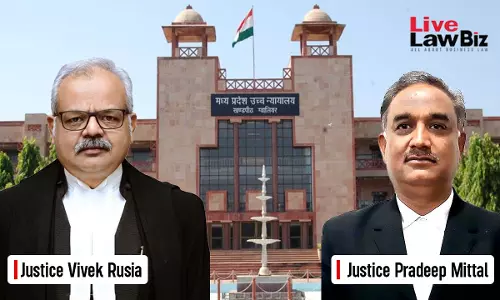
Setting aside an arbitral award in a dispute over the supply of disc insulators for transmission lines, the Madhya Pradesh High Court has found that the award was vitiated by patent illegality, noting that the arbitrator overlooked key provisions of the Contract Act and returned findings that did not align with the contractual record. The Bench of Justices Vivek Rusia and Pradeep Mittal said the November 16, 2018 award was marked by fundamental errors. It pointed out that the arbitrator had...
MP High Court Sets Aside Commercial Tax On Diamond Cement For Sale Of Food In Factory Canteen
The Madhya Pradesh High Court has, applying settled law, set aside the levy of commercial tax on subsidised food supplied in a factory canteen run as a statutory welfare measure in a 1995–96 assessment involving Diamond Cement, while upholding the rest of the demand.The court, however, upheld tax liability on scrap sales, coal purchases, and denial of set-off on certain items.The bench, consisting of Justice Vivek Rusia and Justice Pradeep Mittal, partly allowed the writ petition filed by...
Madhya Pradesh High Court Holds ICA Award Void, Says Only CJI Can Appoint Arbitrator
The Madhya Pradesh High Court has held that an arbitral award against Ssangyong Engineering and Construction Company Ltd is a nullity in law, as the dispute was an international commercial arbitration and, under Sections 11(9) and 11(12) of the Arbitration and Conciliation Act, 1996, only the Chief Justice of India or a person or institution designated by him could appoint the arbitrator. The court noted that Ssangyong is a company incorporated in the Republic of Korea, and therefore the...
Arbitration Can Proceed Despite Parallel Criminal Proceedings In Private Disputes: Madhya Pradesh High Court
The Madhya Pradesh High Court recently reiterated that parallel criminal proceedings between private parties do not bar arbitration unless the allegations have a public character and proceeded to appoint an arbitrator in a dispute arising out of purchase orders between the parties. A single bench of Justice Vivek Jain emphasised, observing, “Be that as it may be, but it is settled in law that even where criminal proceedings are pending parallelly, then also arbitration proceedings can continue...
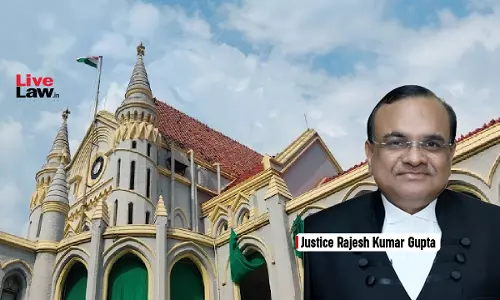
Offences Under IBC Triable By Special Court Where Registered Office Is Located: Madhya Pradesh High Court
The Madhya Pradesh High Court on 9 April held that offences under the Insolvency and Bankruptcy Code, 2016 (IBC) must be tried by the Special Court having jurisdiction over the place where the company's registered office is situated, and not on the basis of the residence of directors or the place of alleged non-compliance. A Single-Judge Bench of Justice Rajesh Kumar Gupta directed the Insolvency and Bankruptcy Board of India to file its complaint against Vinay Bhadauria before the...

Delhi Only Venue, Bhopal Court Has Jurisdiction In Beyond Malls–Century 21 Dispute: MP High Court
The Madhya Pradesh High Court has recently held that since Beyond Malls LLP and Century 21 Malls Pvt Ltd had agreed that courts where the leased property is located would have jurisdiction, and Century 21 first approached the Bhopal court for interim relief, the Bhopal court alone would have authority over all subsequent arbitration proceedings. A Division Bench of Justice Vivek Rusia and Justice Pradeep Mittal observed, “Therefore, in view of the above and as per clause 17.9 of the Agreement,...
Even Consent Cannot Cure Lack of Jurisdiction In HC Appointment Of Arbitrator In ICA: MP High Court
The Madhya Pradesh High Court has held that an arbitrator appointed by a High Court in an international commercial arbitration has no authority in law to decide the dispute, and any award passed in such proceedings is void. A bench of Justice Vivek Rusia and Justice Pradeep Mittal said, “The conjoint reading of Section 11(6) and Section 11(12)(a), ACA makes it abundantly clear that the power to appoint an arbitrator in an ICA lies exclusively with the Supreme Court. The High Court has no...