
Kerala High Court

S.245C Income Tax Act Does Not Require Prior Cut-Off Date, Pending S.153A/153C Notice Sufficient For Settlement Application: Kerala HC
The Kerala High Court stated that Section 245C of Income Tax Act does not require prior cut-off date; pending 153A/153C notice sufficient for settlement application. Justices A.K. Jayasankaran Nambiar and P.M. Manoj opined that “when Section 245C does not prescribe any prior cut-off date for an assessee to satisfy the requirements for filing an application before the Interim Board for Settlement, and the only statutory requirement is that the assessee should have a pending 'case' at...
'Decalcified Fish Scale' Import Covered Under Advance Authorisation Scheme; Customs Cannot Deny Benefit: Kerala High Court
The Kerala High Court stated that 'decalcified fish scale' import covered under advance authorization scheme; customs cannot deny benefit. The advance authorization scheme enables duty free import of inputs/raw materials required for manufacture of export goods. Justices A.K. Jayasankaran Nambiar and P.M. Manoj observed that during the period subsequent to the period covered by the show cause notice, the assessee has obtained advance authorization for importing the same product...

Two Contradictory GST Orders On Same Allegations Not Sustainable: Kerala High Court
The Kerala High Court has stated that two contradictory GST orders on the same allegations are not sustainable, and the second order cannot exist if the first one already dropped the proceedings. The Bench of Justice Ziyad Rahman A.A. observed that the proceedings were dropped in the first order after accepting the explanation by the assessee, yet a second order was passed on the same allegations. It is a matter which ought to have been rectified as it results in two mutually ...
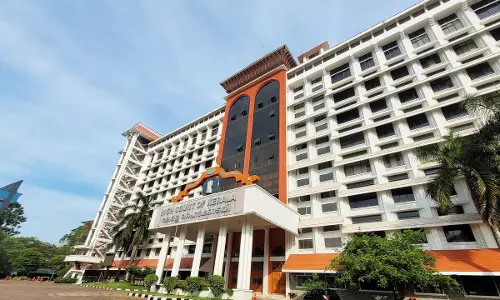
Party Barred From Taking Plea Of Duress After Accepting Full & Final Settlement Pursuant To Court Order: Kerala High Court
The Kerela High Court bench of Justice Syam Kumar V.M. and Justice Sushrut Arvind Dharmadhikari has held that when the payment due to the petitioner was made by the respondent pursuant to a court order explicitly directing it as full and final settlement of all liabilities, and the petitioner also issued a letter accepting the same, he cannot subsequently claim that the letter was issued under duress or out of necessity. Brief Facts: This appeal is filed by the State challenging...

New Arbitrator Must Initiate Proceedings Afresh When Previous Arbitrator's Appointment Is Void Ab Initio: Kerala High Court
The Kerala High Court bench of Justice M.A. Abdul Hakhim has held that where an arbitral award is set aside on the ground that the appointment of the arbitrator was void ab initio and the arbitral proceedings are declared non est, the new arbitrator must initiate proceedings afresh. The question of admissibility of previously recorded evidence is to be decided by the new arbitrator. Brief Facts The petitioner, M.I. Mohammed, a government contractor, entered into an agreement with M/s...
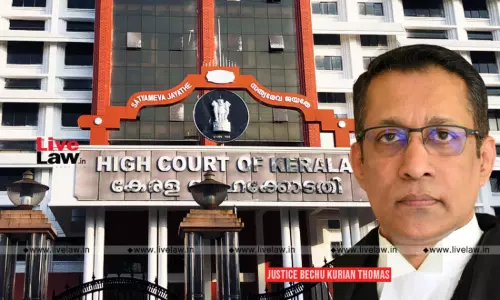
Kerala High Court Imposes Cost On Bank For Illegally Retaining Client's Documents After Closure Of Loan
The Kerala High Court, in a decision by Justice Bechu Kurian Thomas, has imposed costs on the South Indian Bank, Aluva Branch, for the illegal retention of documents after the closure of the loan.The petitioner and her husband had taken a loan from the bank in 2009. The bank acknowledged the deposit of four title deeds by the petitioners as security for the housing loan availed from them. The documents, which included two exchange deeds, a release deed, and a sale deed, all of the Aluva Sub...
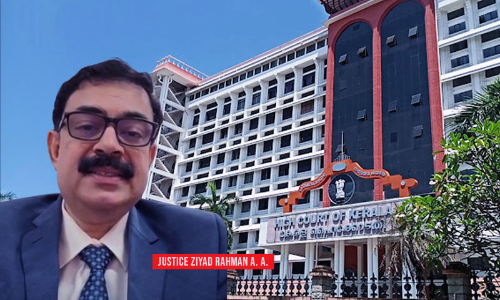
Kerala High Court Directs Customs To Dispose Of Seized Buffalo Meat Consignments Within One Month Due To Perishability
The Kerala High Court has directed the customs department to dispose of seized buffalo meat consignments within one month due to perishability. The Bench of Justice Ziyad Rahman A.A was addressing the issue pertaining to the seizure of the consignments of buffalo meat, which were proposed to be exported to a foreign country. On examination, it was found that there was a misdeclaration by the consignor, and it contained certain items which were prohibited from being exported. ...
No Provision To Reject Appeal On Non-Appearance Of Assessee, Must Be Decided By Mandate U/S 250(6) Of Income Tax Act: Kerala High Court
The Kerala High Court stated that there is no provision of rejecting the appeal merely on non-appearance of assessee and the appellate authority must decide an appeal by strictly following the mandate contemplated under Section 250(6) of the Income Tax Act, 1961. The Bench of Justice Ziyad Rahman A.A. observed that “evidently, going by Subsection 6 of Section 250, no other meaning can be assigned to the words “points for determination” as it obviously leads to the question that arises ...
Vessel Engaged Under SEAIOCM Agreement Qualifies As 'Foreign Going Vessel' For Exemption U/S 87 Of Customs Act: Kerala High Court
The Kerala High Court stated that vessel engaged under SEAIOCM agreement qualified as 'foreign going vessel' for exemption under section 87 Of Customs Act. The Bench consists of Justices A.K. Jayasankaran Nambiar and P.M. Manoj was addressing the issue of whether in the backdrop of the terms of engagement of the vessel under the SEAIOCM Agreement, the vessel can be categorized as a foreign going vessel for the purposes of claiming exemption under Section 87 of the Customs Act. In ...
Import Of Inverter Component Without Photo-Voltaic Cell Not Eligible For Customs Duty Exemption: Kerala High Court
The Kerala High Court stated that import of inverter component without photo-voltaic cell not eligible for customs duty exemption. “Inasmuch as the import was only of the inverter component, without the photo-voltaic cell - a component that was essential for harnessing solar energy, which could then be routed through the inverter system for the supply of electrical energy to the grid, the assessee cannot be seen as eligible for the benefit of the exemption notification……” stated the...
Absence Of Formal Demand Notice For Property Tax During Pendency Of Litigation Does Not Absolve Assessee's Obligation To Pay: Kerala High Court
The Kerala High Court stated that absence of a formal demand notice for property tax during pendency of litigation does not absolve assessee's obligation to pay such tax. The Division Bench of Justices A.K. Jayasankaran Nambiar and P.M. Manoj stated that “The liability to pay the tax once assessed is on the assessee and in a situation where the assessee continuously pays the tax based on the assessment that is conducted, the mere fact that the Corporation did not choose to issue a...

TRAI And CCI Are Sectoral Regulators With Defined Jurisdictions, Any Overlap Will Not Oust Jurisdiction Of Either: Kerala High Court
The Kerala High Court recently passed a judgment clarifying the scope and jurisdiction of the Competition Commission of India (CCI) and the Telecom Regulatory Authority of India (TRAI).Justice D.K. Singh in his 142 page judgment laid down the position of law while hearing Writ Petitions stating an alleged 'conflict' of jurisdiction between the two regulatory bodies. The court observed that CCI is a sectoral regulator, so far as it relates to the curbing of anticompetitive practices in India...