
Kerala High Court
Forcible Eviction Disputes Not Arbitrable Despite Existence Of Arbitration Clause In Lease Agreement: Kerala High Court
The Kerala High Court has held that disputes relating to eviction of a tenant are not arbitrable even where the lease agreement contains an arbitration clause and that the jurisdiction of the Civil Court cannot be ousted by such non-arbitrable reliefs. Justice P. Krishna Kumar observed while allowing an Original Petition filed by a retired Bharat Sanchar Nigam Ltd (“BSNL”) employee challenging an order of the Munsiff Court, Ernakulam, which had referred the dispute to arbitration under...
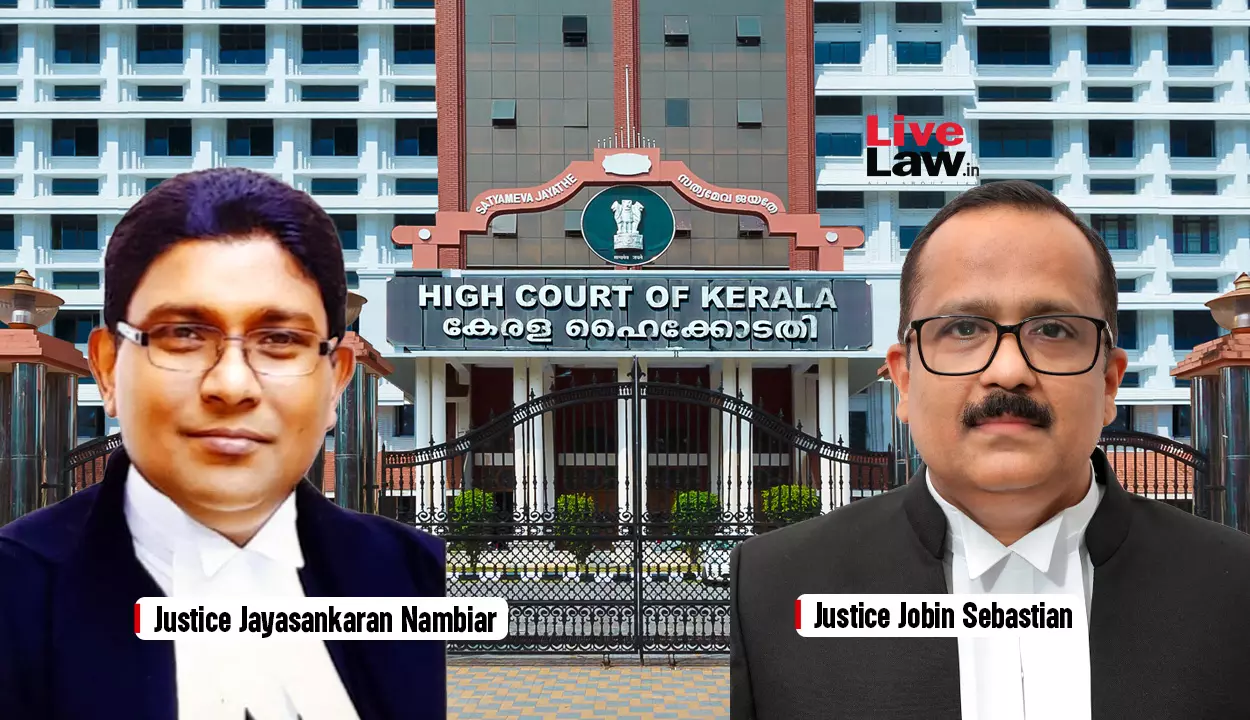
SIM Cards, Recharge Coupons & Value-Added Services Not 'Goods' Under KVAT Act; Kerala High Court Quashes Tax Demand Against Airtel
The Kerala High Court granted relief to Bharti Airtel by holding that SIM cards, recharge coupons, fixed monthly charges and telecom value-added services cannot be treated as 'goods' under the Kerala Value Added Tax Act, 2003 (KVAT Act), on which any tax can be levied. Justices A.K. Jayasankaran Nambiar and Jobin Sebastian addressed a case filed by Bharti Airtel, the assessee, challenging the assessing order both on grounds of limitation and on merits, seeking to clarify that SIM...

Penalty U/S 45A KGST Act Cannot Be Initiated Beyond 'Reasonable Time' Despite No Prescribed Limitation Period: Kerala High Court
The Kerala High Court held that even though Section 45A of the Kerala General Sales Tax Act, 1963 (KGST Act) does not prescribe any limitation period, penalty proceedings must be initiated within a reasonable time. Justices A. Muhamed Mustaque and Harisankar V. Menon stated that since the notice was issued with reference to the assessment year 2011-12, the period of five years had come to an end on 31.03.2017. The notice was issued admittedly only on 20.12.2018. The above notice is...
Fresh Arbitration Notice is Mandatory For Second Round Of Arbitration After Earlier Award Is Set Aside: Kerala High Court
The Kerala High Court has held that a fresh arbitration notice under section 21 of the Arbitration and Conciliation Act, 1996 (Arbitration Act) is mandatory for initiating a second round of arbitral proceedings after an earlier arbitral award has been set aside even when the award was declared as a nullity due to invalid appointment of the arbitrator. Justice S. Manu while dismissing the Arbitration petitions held that once an arbitral award is issued, the arbitration proceedings stand...
Levy Of Service Tax On 'Access To Amusement Facilities' Unconstitutional: Kerala High Court
The Kerala High Court held that the levy of service tax on 'access to amusement facilities' is unconstitutional, as the entire activity squarely falls within the State's taxing power under Entry 62 of List II (entertainments and amusements) of the Constitution of India.Justices A. Muhamed Mustaque and Harisankar V. Menon stated that the provisions of the Entertainments Tax Act also seek to impose tax on the entire consideration received by the assessee from their clients/customers. The question...
Customs Act | Penalty Cannot Be Sustained Solely On S. 108 Statements Without Compliance Of S. 138B: Kerala High Court
The Kerala High Court held that statements recorded under S. 108 of the Customs Act cannot form the basis for imposing penalties unless the mandatory procedural safeguards under Section 138B are complied with.Justices A. Muhamed Mustaque and Harisankar V. Menon opined that Section 138B is essentially in the form of a procedural safeguard regarding the admission of statements under Section 108 in evidence. When the safeguards under Section 138B have not been complied with, no question of...

Kerala High Court Revives Two KELTRON Subsidiaries After Two Decades, Recalls Winding Up Orders
The Kerala High Court has recalled its winding up orders against two subsidiaries of Kerala State Electronics Development Corporation Ltd (KELTRON), allowing the revival of Keltron Power Devices Ltd (KPDL) and Keltron Rectifiers Ltd (KRL). The court noted that there was no legal or procedural bar to reopening the companies in view of changed circumstances and fresh government approval. KELTRON is a state-owned electronics major engaged in IT hardware and software. Its group companies also...
Civil Court Cannot Grant Injunctions In NCLT Matters, High Court Can Set Them Aside: Kerala High Court
The Kerala High Court has recently reiterated that civil courts have no jurisdiction to entertain suits in matters that fall within the exclusive domain of the National Company Law Tribunal (NCLT). The court held that injunctions granted in violation of the Insolvency and Bankruptcy Code are "patently illegal" and liable to be struck down. The ruling was delivered by a single bench of Justice K Natarajan in an order dated December 12, 2025, while dismissing a review petition filed by T Beena,...
CGST Act | Once Returns Are Filed Within Time Period U/S 16(5), Limitation U/S 16(4) Loses Significance: Kerala High Court Allows ITC Claim
The Kerala High Court held that Section 16(5) of the CGST Act (Central Goods and Services Tax Act, 2017), being a non-obstante provision, overrides the time limit prescribed under Section 16(4) once returns are filed within the cut-off date specified therein. Section 16(4) of the Central Goods and Services Tax Act, 2017 specifies that no registered person can take Input Tax Credit (ITC) for any invoice or debit note issued against the supply of goods or services after the due date for...
Income Tax Act | Upkeep & Maintenance Expenses For Rubber Replantation Are Revenue Expenditure, Deductible U/S 37: Kerala High Court
The Kerala High Court held that expenditure incurred on the upkeep and maintenance of rubber trees, including expenses relating to replantation and replacement, is revenue in nature and therefore allowable as a deduction under Section 37 of the Income Tax Act, 1961. Section 37 of the Income Tax Act, 1961, provides that expenses incurred by businesses for raising loans are eligible for deduction. Justices A. Muhamed Mustaque and Harisankar V. Menon were examining the issue regarding...
Bank Not 'Assessee In Default' For Not Deducting TDS On Interest After Accepting Form 15H From Senior Citizens: Kerala High Court
The Kerala High Court held that once a bank accepts valid Form 15H declarations from senior citizen depositors under Section 197A(1C) of the Income Tax Act, it cannot be treated as an “assessee in default” for non-deductions of TDS (deduct tax at source) on interest income. Justices A. Muhamed Mustaque and Harisankar V. Menon examined whether the bank (appellant) has to be treated as an assessee in default for failure to deduct TDS on interest income paid to senior citizens who have ...
Review Petition Can't Be Entertained Against Order Refusing To Appoint Arbitrator: Kerala High Court
The Kerala High Court held that review petitions challenging orders passed under section 11 of the Arbitration and Conciliation Act, 1996 (Arbitration Act) are not maintainable, reiterating that the arbitration act is a self contained code and does not permit substantive review unless expressly provided. Justice S. Manu dismissed a review petition filed against an order passed by the court refusing to appoint the arbitrator, holding that the High Court becomes functus-officio after...