
Himachal Pradesh HC Quashes Cheque Bounce Case Against Society Signatory, Directs Society Impleadment
Shilpa Soman
25 May 2026 4:00 PM IST
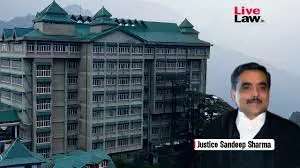
The Himachal Pradesh High Court has held that an authorised signatory of a society cannot be prosecuted under Section 138 of the Negotiable Instruments Act for dishonour of a cheque issued from the society's account unless the society itself is arraigned as an accused.
Justice Sandeep Sharma quashed a complaint filed by Kuldeep Singh against Parveen Rajput, holding that a complaint against an authorised signatory alone is not maintainable when a cheque is issued on behalf of a society that has not been impleaded as an accused. He held:
“True it is that cheque, if any, issued in the name of the company or society is always issued by the authorized signatory, but his/her culpability, if any, can only be established by impleading company or society, because cheque is in the name of the society. Firstly, society or company is to be held liable, because cheque is issued towards lawful liability of company or society, however same cannot be done without there being impleadment of the company or society.”
Kuldeep Singh initiated proceedings under Section 138 of the Negotiable Instruments Act against Parveen Rajput, alleging dishonour of a cheque for Rs.10 lakh issued towards discharge of a lawful liability. The bank returned the cheque unpaid due to insufficiency of funds, and Rajput did not make payment despite receipt of a statutory demand notice. Rajput approached the High Court under Section 482 of the Code of Criminal Procedure seeking quashing of the complaint.
He argued that he issued the cheque only in his capacity as General Secretary of the Professors Educational and Welfare Society, which ran Delhi Convent School from premises rented from the complainant. He contended that the society, being the actual tenant and account holder, was not impleaded as an accused, which rendered the complaint not maintainable.
The complainant opposed the plea and submitted that Rajput executed the rent agreement and that the issue of liability required trial. He further argued that non-impleadment of the society amounted to a curable defect and did not justify quashing of proceedings.
The High Court held that a society, acting through its office-bearers, must be arraigned as an accused before prosecution of its authorised signatory can proceed for acts done on its behalf. It also noted that the cheque in question was drawn on an account linked to Delhi Convent School and bore Rajput's signature as authorised signatory. It observed:
“Once cheque, which is subject matter of the present case is of Delhi Convent School and bare perusal of the same suggests that it bears signature of the petitioner being authorized signatory, complaint instituted under Section 138 of the Act against the petitioner is not maintainable without there being impleadment of the society.”
Referring to the Supreme Court's decision in Aneeta Hada v. Godfather Travels and Tours Private Limited, the Bench reiterated:
“…arraigning of a company as an accused is imperative, rather categories of offenders can only be brought in the drag-net on the touchstone of vicarious liability as has been stipulated in the provision itself”
Distinguishing Himanshu v. TCNS Clothing Company Limited, Justice Sharma held that the Delhi High Court decision concerned a partnership firm and could not be applied to disputes involving a society.
Accordingly, the High Court quashed the complaint and all consequential proceedings.
For Petitioner: Senior Advocate R.K Bawa and Advocate Ajay Kumar Sharma
For Respondent: Advocate Nitin Thakur