
Delhi High Court Rejects Bank's Plea To Revive Cheque Case After Counsel Earlier Said Dues Were Fully Paid
Shilpa Soman
25 Sept 2026 6:17 PM IST
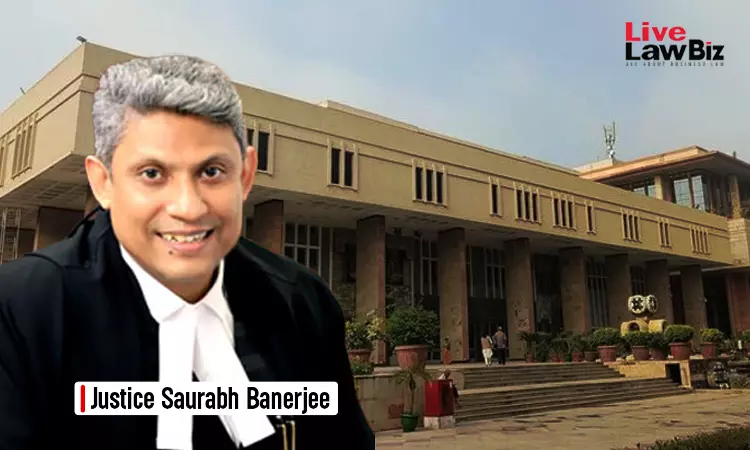
The Delhi High Court has refused to revive a cheque dishonour complaint after Equitas Small Finance Bank Limited's counsel told a magistrate and the National Lok Adalat that the dispute had been settled and the bank had received full payment.
The bank later claimed that its then counsel had misunderstood its instructions and erroneously represented that the dues had been settled and paid. It sought recall of the September 14, 2024 Lok Adalat award and restoration of the complaint.
Justice Saurabh Banerjee held that the bank could not come up with a new version after its counsel had made the same representation before two forums.
“Resultantly, the petitioner now by way of the present petition cannot be permitted to come out with a new version to overcome the voluntary/ uncontroverted statements made before two forums, and that too, before the learned JMFC after a long gap of thirteen (13) months and thereafter before this Court after a further gap of more than nine (9) months.”
The bank had sanctioned a ₹14.50 lakh loan to the respondents in March 2021. The respondents later mortgaged an immovable property as collateral security and issued a post-dated cheque in favour of the bank.
After the loan account was declared a non-performing asset on August 3, 2023, the bank issued a notice under Section 13(2) of the SARFAESI Act, calling upon the respondents to clear the outstanding arrears.
The bank presented the cheque on January 8, 2024. It was returned unpaid on January 18 with the remark “Refer to Drawer”. After the respondents failed to make payment despite a legal notice, the bank filed a complaint under Sections 138 and 142 of the Negotiable Instruments Act on March 19, 2024.
Section 138 deals with cheque dishonour, while Section 142 sets out the requirements for complaints concerning such offences.
On August 8, 2024, during the complaint proceedings, the bank's counsel told the judicial magistrate that the matter had been settled and that the bank had received full and final payment towards the cheque amount.
The matter was then referred to the National Lok Adalat.
The same representation was made before the Lok Adalat on September 14, 2024. The complaint was disposed of as compounded under Section 147 of the Negotiable Instruments Act and the respondents were acquitted. Section 147 allows offences under the Act to be compounded.
The bank subsequently sought revival of the complaint. The judicial magistrate dismissed the application, holding that the relief seeking alteration or review of the earlier order was beyond the purview of a criminal court.
Before the high court, the bank contended that its then counsel, Shamim Saifi, had made the representation amid confusion and without authority from the bank. It maintained that there had been no settlement or discharge of liability and that it had not received any payment towards the cheque or settlement.
The high court noted that the representation about settlement and receipt of payment was made twice — first before the judicial magistrate and then before the Lok Adalat. Separate statements of the counsel were also recorded on both occasions.
The bank raised the issue of lack of authority nearly 13 months later, when it sought revival of the complaint on September 25, 2025. The court also noted that the bank had neither initiated proceedings against the counsel nor sought clarification from him about what had happened.
The court observed that the counsel held a duly executed vakalatnama and was an “officer of the Court and not a mere mechanical agent of the petitioner.”
The court also noted the two positions taken by the bank about what had happened after the complaint was filed. While the bank maintained that there had been no settlement or payment, it also contended that it had merely given the respondents an opportunity to make payment after their oral request. The bank claimed that the respondents later went back on their promise after the complaint had been disposed of as compounded.
The court held that the bank's attempt to resile from its counsel's statements on the ground of lack of instructions, authority or ratification was unsustainable.
It further held that a litigant cannot resile from an order passed on the strength of counsel's submissions.
Allowing such a course, the court observed, would create a “chaotic situation” and undermine the advocate-client relationship and the role of counsel in assisting the court in the adjudicatory process.
The writ petition was dismissed with no order as to costs.
For Petitioner: Advocates K.S Mahadeva, Swati Bansa; and R. Rangarajan