
DEL Status Cannot Continue For Pre-CIRP Defaults After IBC Resolution Plan: Delhi High Court
Shilpa Soman
6 Oct 2026 5:49 PM IST
The Delhi High Court has held that continuing a company's Denied Entry List (DEL) status to enforce export obligations arising before the commencement of its insolvency proceedings would violate the “clean slate” principle under the Insolvency and Bankruptcy Code (IBC).
This would apply where the monetary liabilities arising from those defaults have been settled under an approved resolution plan
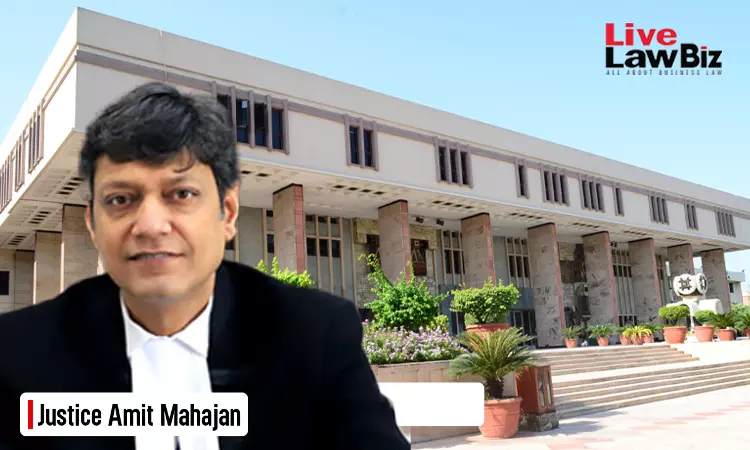
Justice Amit Mahajan made the observation while allowing a petition filed by Waaree Transpower Private Limited challenging the continued operation of the DEL status against its Importer Exporter Code (IEC).
“Once the new management has taken over, continuation of such Denied Entry List even after approval of the Resolution Plan would be contrary to the “clean slate” principle under the IBC.” it held
The company had been placed on the DEL, following alleged non-fulfilment of export obligations and non-submission of documents relating to various Advance Authorisations and EPCG Authorisations. The DEL status restricted the company's access to certain licences and benefits under the foreign trade regime.
The company's CIRP commenced on June 9, 2023, after which the government authorities filed a claim of approximately ₹15.66 crore towards duty saved, interest and penalties arising from the same export obligation defaults. The Resolution Plan was subsequently approved by the NCLT on August 2, 2024, with the government dues settled at Nil.
It thereafter sought removal of the DEL status, but despite repeated representations, the authorities did not remove it. The High Court had also earlier permitted the company to execute a supply order that had been blocked due to its DEL status.
The Court noted that nine out of the ten impugned DEL orders were passed on September 5, 2023, during the subsistence of the moratorium under Section 14 of the IBC.
The Bench further noted that the export-obligation defaults had resulted in monetary liabilities towards duty saved, interest and penalties, all of which were dealt with under the Resolution Plan.
“The above Resolution Plan was approved by the learned NCLT vide Order dated 02.08.2024 and it was also noted that from the date of the approval of the Resolution Plan, any claim not included in the approved Resolution Plan is permanently extinguished, and no party retains the right to initiate or pursue/continue any legal proceedings regarding such claims.” it said
Emphasising on the binding nature of resolution plan under Section 31 of the IBC, the Court stated:
“The underlying objective is to enable the successful resolution applicant to take over and operate the corporate debtor as a going concern, without being burdened by antecedent claims and liabilities, thereby providing finality to the resolution process and avoiding a proliferation of litigation arising from unresolved claims pertaining to the period preceding the resolution.”
The Court held that continuing an administrative disability such as DEL status, which essentially operates as a coercive mechanism for enforcing pre-CIRP export obligations, would defeat the clean slate principle.
It observed that the Resolution Plan had been approved by the NCLT, and the respondents had neither challenged the approval order nor sought its modification. It therefore held that the company's name could not continue on the DEL for the past dues or defaults of the erstwhile management, particularly since those dues had been settled at Nil under the approved Resolution Plan.
Accordingly, the Court set aside the impugned DEL orders and directed the authorities to remove Waaree Transpower from the DEL.
However, it clarified that the extinguishment of the monetary claims would not prevent the authorities from conducting fresh verification of the new management in accordance with law. If any independent default or non-fulfilment of export obligations is subsequently found, the Court said, it would constitute a fresh cause of action, enabling the authorities to take appropriate action and pass fresh orders in accordance with law.
For Petitioner: Senior Advocate Jeevesh Nagrath, Advocates Shiraj Abraham Philips, Febin Mathew Varghese, Soyarchon Khangrah and Bhavika Sharma
For Respondents: Advocate Shankar Kumar Jha, SPC and Malay Dixit, Legal Officer