
Calcutta High Court

Calcutta HC Rejects ₹27.74 Cr CENVAT Demand, Says Revenue Cannot Choose Assessee's Compliance Method
The Calcutta High Court has recently dismissed the Revenue's appeals against a biscuit manufacturer in a Rs 27.74 crore CENVAT credit dispute involving the manufacture of both dutiable and exempted biscuits.It held that an assessee has the right to choose between the methods of compliance available under Rule 6(3) of the CENVAT Credit Rules.A Division Bench of Justice Rajarshi Bharadwaj and Justice Uday Kumar held that the Revenue cannot switch an assessee to a more punitive method merely...

ITAT Cannot Automatically Confirm Adverse Order For Non-Payment Of Costs: Calcutta High Court
The Calcutta High Court on 7 August held that the Income Tax Appellate Tribunal (ITAT) cannot make payment of costs a condition for continuation of an appeal or direct that non-payment would automatically revive or confirm an adverse appellate order. A Division Bench of Justices Rajarshi Bharadwaj and Uday Kumar clarified that while the ITAT can impose costs for procedural lapses, such costs cannot be made a condition precedent to a litigant's statutory right to have an appeal adjudicated,...

NBFC's Pending Amalgamation Application Not Enough To Claim It Meets NOF Requirement: Calcutta High Court
The Calcutta High Court has recently held that a pending amalgamation proposal does not give a Non-Banking Financial Institution (NBFI) a legal right to claim that it meets the prescribed Net Owned Fund (NOF) requirement when the amalgamation has not actually gone through.Justice Sabyasachi Bhattacharyya observed that even if the Reserve Bank of India (RBI) had approved Nadia Printing & Packaging Pvt Ltd's proposed amalgamation with five other companies, further steps would still have been...

Civil Courts Cannot Injunct SARFAESI Measures; 'To Be Taken' Includes Future Action: Calcutta High Court
The Calcutta High Court has held that civil courts cannot grant injunctions against measures already taken, or “to be taken," by banks under the SARFAESI Act.The court held that Section 34 of the SARFAESI Act imposes a wider bar on civil courts granting injunctions against any action taken or “to be taken” in pursuance of powers under the Act.“Whereas a suit or proceeding cannot be instituted if a notice under Section 13(4) of the SARFAESI Act, 2002 has been issued, the bar to grant of...

'Even The Bald Want A Haircut': Calcutta High Court Slams Borrowers' Repeated Bid To Sell Secured Assets
The Calcutta High Court has criticised borrowers of South Indian Bank for repeatedly seeking permission to sell all their immovable properties without the bank's interference, calling the attempts “commercially imprudent” and “mischievous”.A division bench of Justice Ravi Krishan Kapur and Justice Chaitali Chatterjee (Das) observed,“The repeated attempts of the borrowers to seek permission to sell all their immovable properties without any interference from the appellant bank is not only...

CA Certifying False Returns Can Be Prosecuted If Active Complicity, Mens Rea Shown: Calcutta High Court
The Calcutta High Court has recently held that a Chartered Accountant certifying a false statutory return or e-form can face prosecution if there are specific allegations showing that the professional knowingly participated in the falsification or actively connived in it.Justice Uday Kumar was hearing a revision filed by the Registrar of Companies, West Bengal, against the discharge of practising Chartered Accountant Ranjan Meghani.“The proposition that an independent professional certifying a...
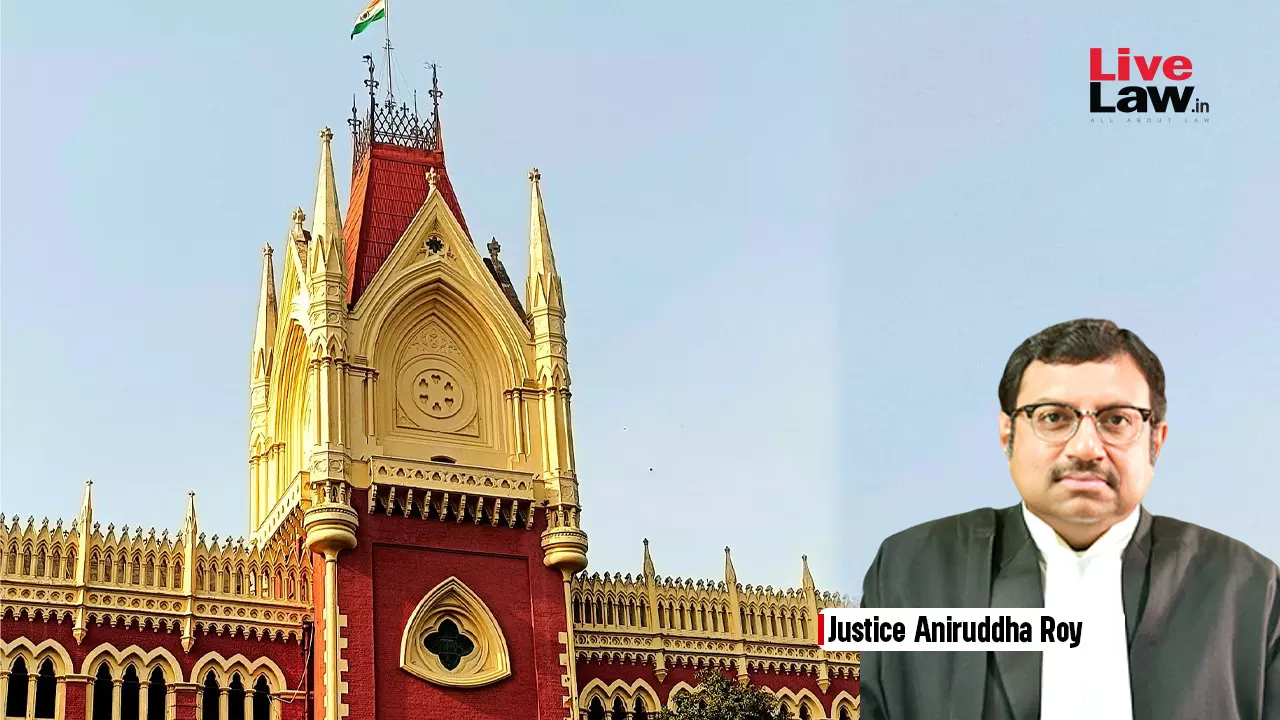
Whether A Commercial Suit Is Urgent Enough To Skip Pre-Institution Mediation Is For Court To Decide: Calcutta High Court
The Calcutta High Court has ruled that whether a commercial suit can bypass mandatory pre-institution mediation under the Commercial Courts Act depends on the court's assessment of whether the case genuinely requires urgent interim relief. The assessment must be based on the pleadings and the reasons placed before the court by the party seeking the exemption. Justice Aniruddha Roy observed, "Since neither Section 12A of C.C. Act nor the Practice Procedure, 2021 specify or define what should...

Playing IPRS-Owned Music In Hotel Rooms Without Licence Is Copyright Infringement: Calcutta High Court
The Calcutta High Court has restrained Hotel Appolo & Tours Private Limited from communicating literary and musical works owned by members of The Indian Performing Right Society Limited (IPRS) to guests through television sets in its hotel rooms without first obtaining a valid licence from the copyright society. It held that routing cable television connections to hotel rooms amounts to "communication to the public" under the Copyright Act, 1957.A division bench of Justice Debangsu Basak and...

Certified Copy Without Arbitrators' Signatures Is Not a 'Signed Copy' Under Arbitration Act: Calcutta High Court
The Calcutta High Court has ruled that a certified copy of an arbitral award carrying only a third-party certification that the original was signed, without reproducing the arbitrators' signatures, does not amount to delivery of a "signed copy" under Section 31(5) of the Arbitration and Conciliation Act, 1996. Without such delivery, the limitation period for challenging the award under Section 34 does not begin, making an execution petition for its enforcement premature.A single bench of Justice...

NCLT & NCLAT Can't Decide Tenancy Rights, Civil Courts Have Exclusive Jurisdiction: Calcutta High Court
The Calcutta High Court on 29 July held that the National Company Law Tribunal (NCLT) and National Company Law Appellate Tribunal (NCLAT) cannot decide tenancy rights. Only civil courts can adjudicate such disputes. A Division Bench of Justices Sabyasachi Bhattacharyya and Supratim Bhattacharya dismissed the review petition filed by D & I Taxcon Services Pvt. Ltd. and upheld the eviction decree passed against the company after holding that it occupied the disputed premises as a licensee and...

Housing Finance Companies Can't Invoke SARFAESI For Secured Debt Below ₹20 Lakh: Calcutta High Court
The Calcutta High Court has recently held that Tata Capital Housing Finance Ltd. as a housing finance company could not invoke the SARFAESI Act, as the secured debt was below the ₹20 lakh threshold prescribed under a Central Government notification. It accordingly set aside the enforcement measures initiated by the lender.Justice Smita Das De ruled that Tata Capital Housing Finance lacked jurisdiction to invoke the SARFAESI Act in the present case. The court observed, "In view of the above, this...
Sole Proprietor's Family Members Can't Be Held Vicariously Liable U/S 141 NI Act: Calcutta High Court
The Calcutta High Court on 29 July held that vicarious liability under Section 141 of the Negotiable Instruments Act cannot be imposed on family members of a sole proprietor merely by alleging that they are partners of the proprietorship concern. Justice Uday Kumar quashed the criminal proceedings against Prakash Sharma, who was prosecuted under Sections 138 and 141 of the NI Act in connection with the dishonour of two cheques allegedly issued by S.R. Telematics. He held: "Section 141 of the...