
Bombay High Court Upholds IBBI's Power To Levy 0.25% Fee On Successful Resolution Plans
Shilpa Soman
21 Aug 2026 11:32 AM IST
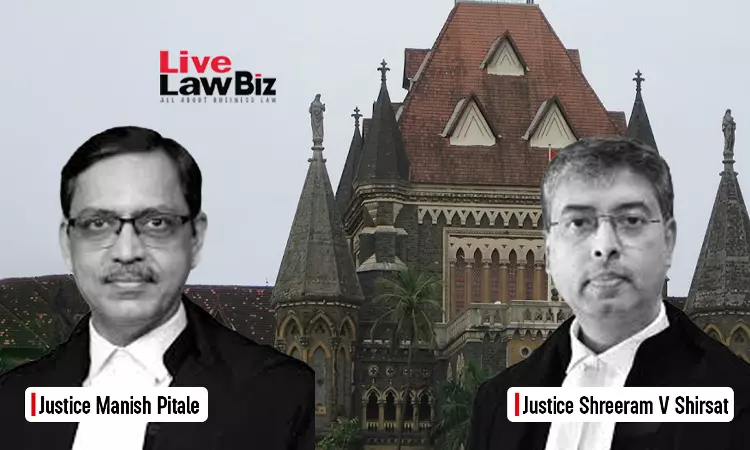
The Bombay High Court on 19 August upheld the validity of Regulation 31A of the Insolvency and Bankruptcy Board of India (Insolvency Resolution Process for Corporate Persons) Regulations, 2016, holding that the provision enabling the IBBI to levy a regulatory fee on successful resolution plans is neither ultra vires the Insolvency and Bankruptcy Code, 2016 nor violative of Article 14 of the Constitution.
A Bench of Justices Manish Pitale and Shreeram V Shirsat dismissed four petitions challenging the provision, which imposes a regulatory fee of 0.25% on the realisable value to creditors under an approved resolution plan where such value exceeds the liquidation value. The Court held:
“…we find that the petitioners have not been able to make good their contentions with regard to the impugned Regulation 31A of the IBBI Regulations being either ultra vires the parent Statute i.e. IBC or the Regulation being arbitrary and hence violating Article 14 of the Constitution of India.”
Regulation 31A came into effect from 1 October 2022. It was challenged by Hazel Mercantile Limited and Suraksha Realty Limited, the two successful resolution applicants, along with Vineet Shrivastava, a bank depositor, and Yadubir Singh Sajwan, a homebuyer in the CIRP of Som Resorts Private Limited, who argued that the IBBI lacked the power to impose the levy.
In Hazel Mercantile Limited's case, the Committee of Creditors (CoC) approved the resolution plan for Reliance Naval and Engineering Limited with a 94.86% voting share on 17 March 2022. The plan was pending before the National Company Law Tribunal (NCLT) when Regulation 31A came into force. The NCLT approved it on 23 December 2022, after which the IBBI directed payment of the regulatory fee.
In Suraksha Realty Limited's case, the CoC approved its resolution plan for Jaypee Infratech Limited with a 98.66% voting share on 10 June 2021. The plan was pending before the NCLT when Regulation 31A was introduced and was ultimately approved on 7 March 2023. The resolution professional subsequently informed the petitioners that the regulatory fee formed part of the Corporate Insolvency Resolution Process (CIRP) costs.
The other two petitions were filed by Vineet Shrivastav and Yadubir Singh Sajwan also challenged the levy as arbitrary and beyond the IBBI's powers.
The petitioners argued that the IBBI does not regulate successful resolution applicants or the CoC during the CIRP and does not provide them any service. They submitted that the resolution process is primarily driven by the CoC and the resolution professional. Therefore, according to them, the 0.25% levy was effectively a tax imposed in the guise of a fee without any corresponding service from the IBBI.
The IBBI defended the levy by submitting that it plays an integral role in the CIRP and performs various functions to support the insolvency ecosystem. It argued that a regulatory fee does not require a direct or proportionate quid pro quo and that the levy was also necessary for the Board's financial self-sufficiency.
Rejecting the argument that the IBBI's power to levy fees was confined to insolvency professionals, insolvency professional agencies and information utilities, the Court observed:
“The provisions of the IBC, particularly after the amendments that have been introduced from time to time, indicate that the legislature itself has indicated that the role of the Board, as a regulator, is broad-based, far-reaching and has a crucial bearing on achieving the object of enactment of IBC.”
The Bench noted that the IBBI performs a wider regulatory role in the CIRP and exercises executive, quasi-judicial and quasi-legislative functions at different stages involving the CoC and resolution applicants. It also relied on Section 196(1)(c) of the IBC, which empowers the Board to levy fees or other charges for carrying out the purposes of the Code.
It further observed that Regulation 31 permits certain levies to be included as CIRP costs, including other costs directly relating to the CIRP and approved by the CoC. It therefore rejected the argument that the regulatory fee was impermissible merely because it did not fall within the specific categories under Section 5(13)(a) to (d) of the IBC.
On the argument that the levy was a tax disguised as a fee, the Court held that a regulatory fee can be sustained where there is an indirect benefit and a broad nexus between the levy and the services rendered. Referring to precedents, it observed:
“It is no longer necessary for the authority imposing a fee, particularly a regulatory fee, to strictly demonstrate the exact service rendered as quid pro quo for the fee charged from certain entities.”
The Bench also held that the IBBI therefore only needed to establish a broad and general quid pro quo by demonstrating the regulatory services it provides to stakeholders throughout the CIRP. It added:
“The Courts have been relying on the respondent Board as a statutory regulator for various aspects of CIRP, including for laying down guidelines for the manner in which members of the CoC shall conduct their affairs, in order to ensure that the process of CIRP is expeditiously taken to its logical end. In that sense, the respondent Board is justified in claiming that it provides a conducive 'eco-system' for efficient completion of CIRP, in order to meet the goals for which the IBC has been enacted.”
The Court also rejected the challenge to the quantum of the fee, holding that the 0.25% levy could not be considered excessive or disproportionate merely because the amount collected exceeded the Board's expenditure during a particular period.
On retrospectivity, the Bench held that Regulation 31A operates prospectively from 1 October 2022. It clarified that approval of a resolution plan by the CoC before that date does not prevent the regulation from applying where the plan was subsequently considered and approved by the NCLT.
Accordingly, the High Court dismissed the petitions and upheld the validity of Regulation 31A.
For Petitioners: Senior Advocates Vikram Nankani, Ravi Kadam, Advocates Sumeet Nankani, Amir Arsiwala, Vaishnavi Dhure, Khushboo D. Rohra, Meghna Talwar, Princi Jaiswal, Janhavi Hirlekar, Kanishk Khetan, Rohan Kelkar, Meghna Talwar, Princi Jaiswal, Janhavi Hirlekar, and Sonal Verma
For Respondents: Senior Advocate Darius J. Khambata, Advocates Tushar Hathiramani, Ashish Mehta, Ashok R. Varma, Vinit Jain and D. P. Singh