
'Ruse To Exploit Mill Land': Bombay High Court Rejects Plea To Revive Swadeshi Mills
Shilpa Soman
24 Feb 2026 2:15 PM IST
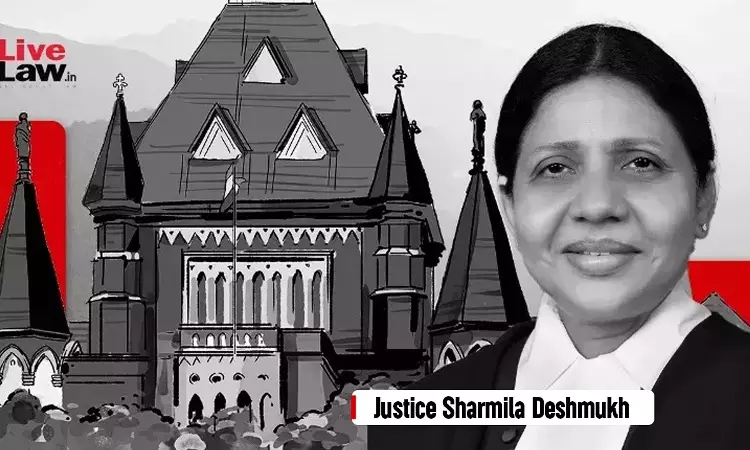
The Bombay High Court on Monday dismissed an application filed by Grand View Estates Pvt Ltd seeking a stay of winding up proceedings and revival of Swadeshi Mills Company Ltd, holding that the proposal was not a genuine attempt to revive the textile company but an effort to exploit its valuable mill land for real estate development.
A single-judge bench of Justice Sharmila U. Deshmukh observed that the revival plan was “nothing but a ruse to obtain the valuable land for exploitation in real estate market. At the core of the dispute lies 45 acres of land in the heart of city of Mumbai located in prime residential and commercial area which would command astronomical price given the potential of the property for development. The manner in which the Applicant has attempted to lay its hands on this valuable property of the company in liquidation leaves much to be desired,”
The court noted that a substantially identical proposal had been rejected in earlier rounds of litigation and continued to bind the court.
Swadeshi Mills, formerly engaged in textile manufacturing, was ordered to be wound up on September 5, 2005 after being declared a sick company by the Board for Industrial and Financial Reconstruction.
A provisional liquidator was appointed in 2002, the plant and machinery were sold, and the winding-up order followed in 2005.
Grand View moved the present application under Section 466 of the Companies Act, 1956, after two earlier revival attempts had failed. It claimed the status of a secured creditor based on debts assigned from IDBI, the Stress Assets Stabilisation Fund and Bank of Baroda, asserting outstanding dues of approximately Rs.985 crore and mortgage interests over Swadeshi Mills' Chunnabhatti property in Mumbai.
Opposing the plea, minority shareholders argued that the scheme mirrored an earlier rejected proposal and was aimed at acquiring the company's prime land without participating in a public auction. They contended that the land was extremely valuable and that value maximisation could only be achieved through sale under liquidation.
The recognised workers' union supported the revival, saying settlements had already been worked out and that workers stood to receive better payouts under the proposed scheme than if the liquidation process continued.
Grand View, for its part, said the present plea was based on “changed circumstances.” It cited the settlement of workers' dues with additional benefits, a plan to address creditor liabilities, shareholder approval to amend the company's object clause to allow real estate activity, and a technical feasibility report suggesting that restarting the textile business was no longer viable.
Referring to the Supreme Court's decision in Meghal Homes Pvt Ltd v. Shree Niwas Girni K.K. Samiti, the Court reiterated that a stay of winding up requires satisfaction of the triple test of bona fide intent to revive the company, commercial morality and public interest.
The court held that the present proposal, which envisaged diversifying into real estate development by utilising the company's immovable properties, was materially identical to the earlier revival scheme rejected in 2011. It was observed that the earlier finding that the proposal amounted to an attempt to take over the lands for real estate exploitation continued to bind the Court.
Rejecting the argument that repayment of creditors alone justified a stay, the Court reiterated that mere settlement of liabilities does not amount to revival of the company's business. It noted that Grand View did not propose relocation or resumption of textile operations but sought revival primarily to unlock the development potential of the mill land.
The court further observed that the proposal would enable the applicant and its group entity to take a “lion's share” of redevelopment profits, leaving other stakeholders “high and dry,” and held that workers' consent could not be the singular driving force for accepting a scheme of revival.
Concluding that the applicant had failed to demonstrate a bona fide revival proposal satisfying the requirements laid down in Meghal Homes, the court dismissed the application.
For Applicant: Senior Advocate Janak Dwarkadas, Advocates Shansh Sengupta, Siddharth Ranade, Nishi Bhankharia, Vedant Kumar, Gaurav Jain, and Neeraja Barve
For Respondents: Senior Advocates Dr. Virag Tulzapurkar, Cyrus Ardeshir, Advocates Vaishnavai Dhure, Amir Arsiwala, Pranav Varsaria, Tejas Popat, Pravin Patil, Yash Jariwala, Mohit Khanna, Ranjeev Carvalho and Apurv Thipsay