
All High Courts
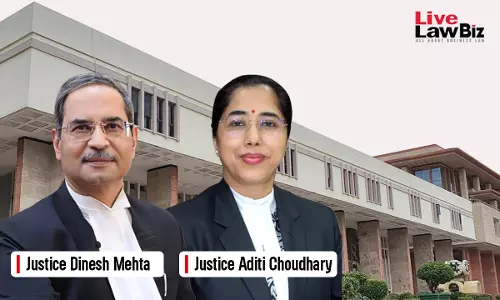
Delhi High Court Quashes Income Tax Penalty Order Passed During Pendency Of ITAT Appeal
The Delhi High Court has quashed an income tax penalty order passed against a private company under Section 270A of the Income Tax Act, 1961, during the pendency of the company's appeal before the Income Tax Appellate Tribunal (ITAT).The Division Bench of Justices Dinesh Mehta and Aditi Choudhary held that Section 275(1)(a) of the Income Tax Act mandates that penalty proceedings remain in abeyance when an appeal against the relevant assessment order is pending before the ITAT.The Court allowed...
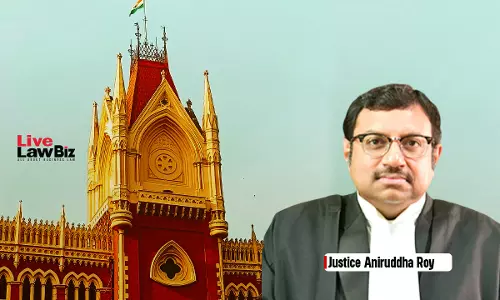
Breach of Family Settlement Over Trade Name Falls Under Commercial Division, Not IPR Division: Calcutta High Court
The Calcutta High Court has held that a suit alleging breach of a family settlement restricting use of the trade name “Sindharam Sanwarmal” within one kilometre of a Cotton Street shop is maintainable before its Commercial Division and does not belong in the Intellectual Property Rights Division.Declining to grant an interim injunction, Justice Aniruddha Roy instead directed the defendant to maintain accounts and set apart profits from the disputed business.The plaintiff, Ramji Lal Agarwal, sued...
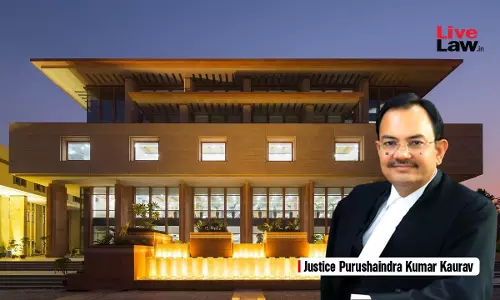
Delhi High Court Permanently Bars Hisar Coaching Operators From Using 'CAREER POWER' Mark
The Delhi High Court has permanently restrained two Hisar-based coaching operators from using the 'CAREER POWER' mark and its device, or the name 'METIS EDUVANTURES', in a passing off and copyright infringement suit filed by Metis Eduventures Private Limited India.Justice Purushaindra Kumar Kaurav passed the judgment on October 5, 2026, observing that the company's rights needed protection through a final decree despite the operators having complied with an earlier interim injunction.The company...
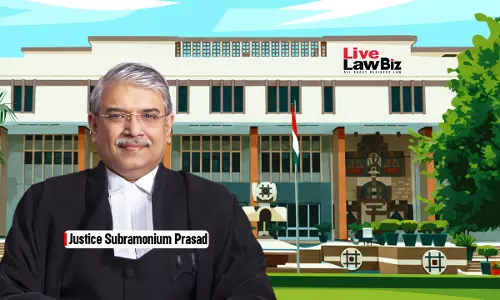
Delhi High Court Rejects NDMC Plea To Dismiss Taj Mahal Hotel Operator's ₹38.35 Crore COVID-19 Licence Fee Suit
The Delhi High Court has rejected the New Delhi Municipal Council's (NDMC) plea to dismiss a suit filed by Indian Hotels Company Limited (IHCL), which operates the Taj Mahal Hotel in New Delhi. The company is seeking exemption from ₹38.35 crore in licence fees for the COVID-19 pandemic period and an extension of the licence by 272 days.Justice Subramonium Prasad was hearing NDMC's application to dismiss the suit, which seeks relief under the force majeure clause of the leave and licence...
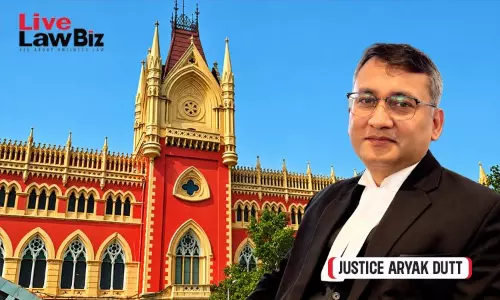
Calcutta High Court Quashes ₹25.23 Lakh GST Penalty, Orders Release Of Two Detained Trucks
The Calcutta High Court on 14 October quashed GST penalty orders totalling Rs. 25.23 lakh imposed on two detained trucks, holding that the authorities passed the orders beyond the statutory deadline under Section 129(3) of the Central Goods and Services Tax (CGST) Act, 2017. A Single-Judge Bench of Justice Aryak Dutt allowed a petition filed by truck owner Permender Singh, holding that the penalty orders were barred by limitation and passed without jurisdiction. He also held: “An appeal under...
Delhi High Court Bars 3 Pizza Outlets From Using 'Domind's', 'Domzz' And Other Names Mimicking Domino's
The Delhi High Court on 8 October, permanently restrained three Delhi pizza outlets from using names deceptively similar to Domino's trademarks, including “Domind's Pizza”, “Domzz Pizza”, “Domin'd Pizza”, “Domi'd Pizza” and “Dom'd Pizza”. Justice Purushaindra Kumar Kaurav passed the order in the suit filed by Domino's IP Holder LLC, which owns the group's intellectual property, and Jubilant FoodWorks, which operates Domino's franchises in India. The Bench observed that the outlets had “no...
Vodafone Idea Tax Dispute: Bombay HC Directs Income Tax Dept To Pass Orders In 13 Matters In 6 Weeks
The court also continued its interim protection restraining the department from recovering ₹699.54 crore already refunded to Vodafone Idea.
Bombay High Court Upholds Tata Chemicals' Tax Deduction For Non-Compete Fee Paid To Former Employee
The Bombay High Court on 8 October held that payments made to a former employee under a non-compete agreement qualify as revenue expenditure for income tax purposes, even when paid in instalments across multiple financial years. A Division Bench comprising Justices Suman Shyam and Gautam A. Ankhad dismissed the Income Tax Department's appeal against Tata Chemicals Ltd., upholding deductions claimed by the company for non-compete compensation and expenditure on projects that were later written...
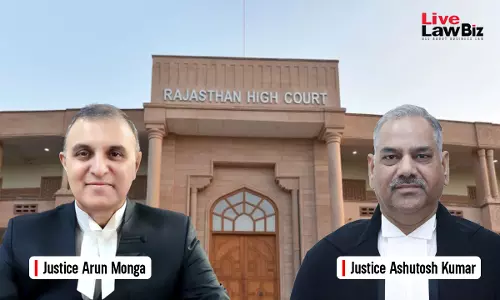
Rajasthan High Court Orders Release Of ₹47.45 Lakh Cash Seized Over Alleged Unaccounted Sales
The Rajasthan High Court on 14 September directed the GST department to release Rs. 47.45 lakh seized during a search of residential premises, along with applicable interest. A Division Bench comprising Justices Arun Monga and Ashutosh Kumar held that Section 67(2) of the Central Goods and Services Tax (CGST) Act does not authorise the seizure of cash merely on suspicion that it represents proceeds from unaccounted sales. It observed: “...the jurisdictional condition of 'reasons to believe'...
Calcutta High Court Allows Birla Corporation's Cross-Objections In Income Tax Appeal Under CPC
On 14 October, the Calcutta High Court allowed Birla Corporation Limited to maintain cross-objections in the Income Tax Department's appeal, subject to the requirement that they raise substantial questions of law. A Division Bench comprising Justices Rajarshi Bharadwaj and Sudip Deb held that Section 260A(7) of the Income Tax Act, 1961, incorporates the relevant provisions of the Code of Civil Procedure, 1908 (CPC), including the right to file cross-objections. The judges observed: “We are of...
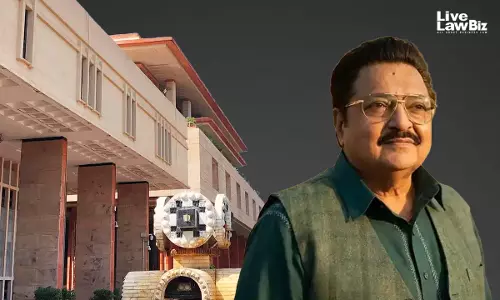
“Have To Draw Some Line”: Delhi High Court To Examine Scope Of Personality, Publicity Rights Amid Rising Suits
The Delhi High Court on Thursday observed that it needs to draw clear boundaries around personality rights and publicity rights, noting that the two are increasingly claimed together in lawsuits and that some claims extend to defamation, caricatures, and independent creative works.Justice Purushaindra Kumar Kaurav made the observation while hearing actor Rakesh Bedi's suit seeking protection of his personality rights.“Therefore, we have to draw some line,” the court observed, calling for...
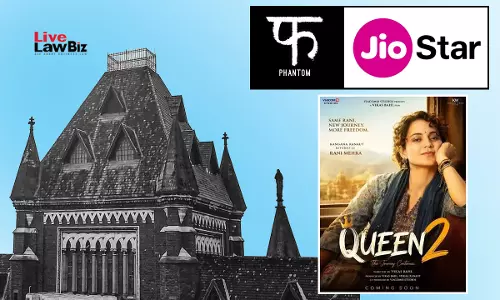
Bombay High Court Refuses To Restrain Kangana Ranaut's 'Queen Full Power' Over Copyright Dispute
The Bombay High Court on Wednesday refused to restrain the making and release of Queen Full Power, a film starring Kangana Ranaut and directed by Vikas Bahl, in a suit filed by Phantom Studios India Pvt. Ltd., which claims 50% ownership of the intellectual property rights in the 2014 film Queen. Justice Sandeep V. Marne held that Phantom had failed to establish a prima facie case of passing off or breach of contract. The Court also found that Phantom had not demonstrated that the word “queen”...