
High Court
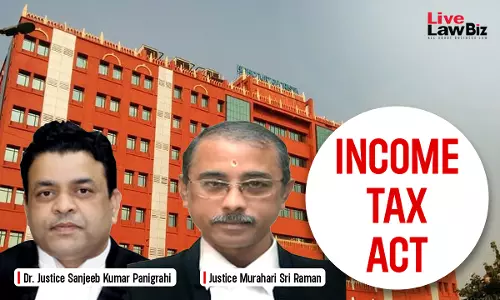
Orissa High Court Issues Notice On Challenge To Section 147A Of Income Tax Act
The Orissa High Court has recently issued notice on a plea challenging the constitutional validity of Section 147A of the Income Tax Act, 1961, which was introduced by the Finance Act, 2026, with retrospective effect from April 1, 2021.Section 147A was introduced to clarify that the Assessing Officer issuing notices under Sections 148 and 148A would mean an officer other than the National Faceless Assessment Centre or an assessment unit under Section 144B. The provision was made retrospective...
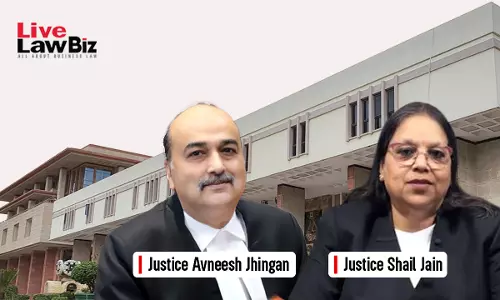
Mere Location Of Customs Headquarters In Delhi Does Not Confer Territorial Jurisdiction: Delhi High Court
The Delhi High Court has dismissed a writ petition challenging the seizure of imported stainless-steel coils at the Inland Container Depot (ICD), Dadri, Uttar Pradesh, holding that the location of the Customs Commissionerate's headquarters in Delhi does not confer territorial jurisdiction on the Court when no part of the cause of action has arisen within its jurisdiction.The Division Bench of Justices Avneesh Jhingan and Shail Jain held that the dispute concerning the seizure of goods and their...
Delhi High Court Says Customs Broker's Licence Need Not Be Revoked For Every CBLR Violation
The Delhi High Court has upheld the view that revocation of a customs broker's licence is not warranted for every violation of the Customs Brokers Licensing Regulations, 2018 (CBLR), and that the punishment must be proportionate to the nature of the violation.The Division Bench of Justices Avneesh Jhingan and Shail Jain endorsed the view while dismissing an appeal filed by the Customs Department challenging a CESTAT order which had declined to revoke Respondent's licence over its alleged role in...
Customs Dept Takes “Sweet Time” To Move Files Despite Panel Of Lawyers: Delhi HC Refuses To Condone Delay
The Delhi High Court has refused to condone a delay of 154 days in an appeal filed by the Customs Department, observing that a government department cannot take its own sweet time to move files and then seek condonation of delay.The Division Bench of Justices Avneesh Jhingan and Shail Jain held that administrative negligence and the leisurely movement of files cannot constitute sufficient grounds for condoning delay in filing an appeal, particularly when the department has its own panel of...
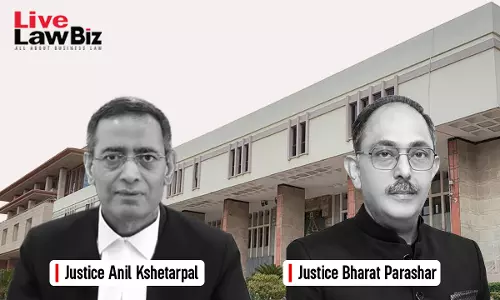
GST Portal Glitch Led To Multiple Demand Summaries; Delhi High Court Directs Correction Within 15 Days
The Delhi High Court has directed the Goods and Services Tax (GST) Department to rectify multiple demand summaries generated due to a technical glitch in the GST portal within 15 days.The Division Bench of Justices Anil Kshetarpal and Bharat Parashar also clarified that the statutory pre-deposit for filing an appeal must be calculated on the demand actually confirmed in the assessment order and not on the erroneously repeated amount.It directed the Department to ensure that the corrected...
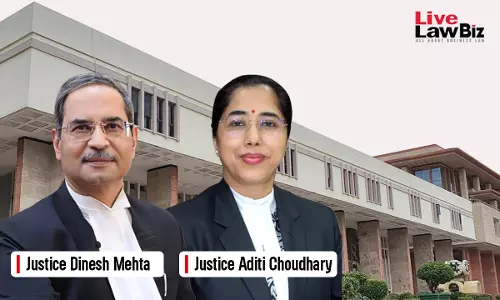
AO Is Quasi-Judicial Authority, Must Act Dispassionately: Delhi High Court Sets Aside Income Tax Assessment Order
The Delhi High Court has set aside an income tax assessment order after the Assessing Officer (AO) failed to consider the assessee's reply filed before the assessment was finalised.The Division Bench of Justices Dinesh Mehta and Aditi Choudhary observed that an AO, being a quasi-judicial authority, is expected to act objectively and dispassionately while dealing with the material available on record.It directed the Assessing Officer/National Faceless Assessment Centre (NFAC) to provide the...
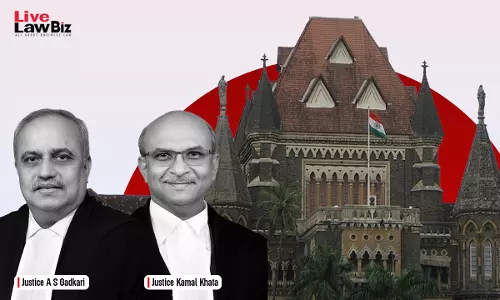
Bombay High Court Sets Aside Attachment Of ₹25 Crore Properties Linked To Businessman Avinash Bhosale
The Bombay High Court has set aside the continued attachment of properties worth ₹25 crore belonging to entities associated with businessman Avinash Bhosale, holding that the Enforcement Directorate (ED) failed to establish a link between the properties and alleged proceeds of crime.A coram of Justices A.S. Gadkari and Kamal Khata was hearing cross-appeals against an April 1, 2026 order of the Appellate Tribunal, New Delhi under the Smugglers and Foreign Exchange Manipulators (Forfeiture of...
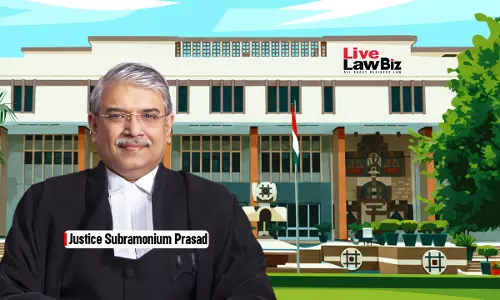
Delhi High Court Sets Aside ₹2.60 Cr. Damages Award Against Som Shiva Impex For Lack Of Loss Assessment
The Delhi High Court on 13 October set aside a Rs. 2.60 crore arbitral damages award against Som Shiva Impex Limited in favour of the National Research Development Corporation (NRDC), holding that damages for breach of contract cannot be awarded without assessing the actual loss suffered. Justice Subramonium Prasad held that the arbitrator had rejected NRDC's royalty claim because the technology was never commercialised but had nevertheless calculated damages using the unpaid royalties without...
Delhi High Court Restrains Rishikesh Hotel From Using Mark Similar To Ananda Resort's Trademark
The Delhi High Court on 14 October restrained Ishanee Villas Tech Private Limited from using the mark 'ANANDAM IN THE HIMALAYAS' or any deceptively or confusingly similar mark that infringes IHHR Hospitality Ananda Private Limited's registered trademark 'ANANDA' and tagline 'IN THE HIMALAYAS'. Justice Vikas Mahajan passed the ex parte ad interim injunction in a trademark infringement and passing off suit filed by IHHR Hospitality. He held: “I am of the view that the plaintiff has made out a...

Delhi High Court Restrains Benne Delhi From Using 'BENNE' Trademark In South Indian Cuisine Business
The Delhi High Court on 16 October granted an interim injunction restraining Benne Delhi from using the trademarks “BENNE” and “BENNE DELHI” or any identical or deceptively similar mark in connection with South Indian cuisine services. Justice Vikas Mahajan passed the order in a suit filed by Shimow Hospitality Private Limited against Benne Delhi, through its proprietor. He held: “...any identical and/or deceptively similar mark/name, especially comprising the word 'benne' in any form or...
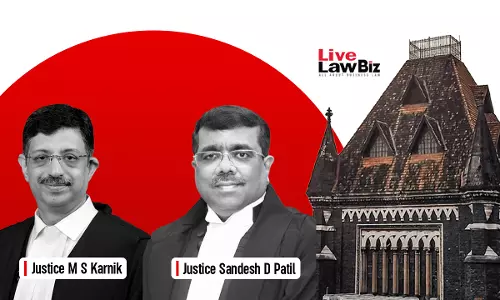
Bombay High Court Sets Aside ₹62.42 Lakh GST Demand Over Notices Uploaded In Wrong Portal Section
The Bombay High Court on 16 October set aside a GST demand of Rs. 62.42 lakh against Abracadabra India after finding that the tax department had uploaded the notices in a separate section of the GST portal, depriving the company of an opportunity to respond. A Division Bench of Justices M.S. Karnik and Sandesh D. Patil held that the notices had not been uploaded in the regular “View Notices and Orders” section of the GST portal but in the “Additional Notices and Orders” section, which the...
Delhi High Court Orders Takedown Of Fake Kotak Trading Accounts From Social Media
The Delhi High Court on 14 October granted an ex parte ad-interim injunction to Kotak Mahindra Bank and Kotak Securities against unidentified defendants accused of impersonating them on social media to lure investors into fraudulent trading schemes. Justice Vikas Mahajan directed Meta Platforms, WhatsApp, Google, Telegram, X Corp and LinkedIn to remove the infringing accounts and disclose the operators' KYC details. He held: “I am of the view that the plaintiffs have made out a prima facie...