
High Court

Bombay High Court Restores Injunction To Protect Atomberg's Fan Design From Imitation By Stove Kraft
The Bombay High Court has restored an interim injunction restraining Stove Kraft Limited from manufacturing and selling its Pigeon Fan-tastic ceiling fan, finding that its design imitates the distinctive appearance of Atomberg Technologies' Renesa Alpha fan.“The primary test to determine novelty, originality and infringement under the Designs Act, 2000, is the 'eye' test to evaluate whether two designs are substantially identical or if an imitation has occurred through visual comparison, then...
Bombay High Court Rejects Plea To Stay Trademark Infringement Suit Over 'Pune Mirror' Mark
The Bombay High Court has refused to stay a trademark infringement suit filed by three media companies against a Pune-based newspaper publisher over the alleged unauthorised use of the names Pune Mirror and KM Kothrud Mirror. It rejected such plea that was made after the case had reached the stage of final arguments.Justice Gauri Godse held that the newspaper publisher had failed to establish a prima facie case challenging the validity of the media companies' registered trademarks. “In the...
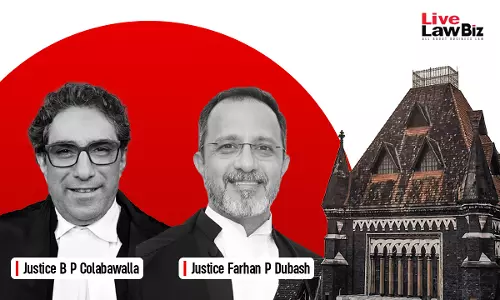
Bombay High Court Condones 260-Day Delay By Cine Artist Welfare Trust In Claiming Tax Exemption On ₹70 Lakh
The Bombay High Court has condoned a 260-day delay by Cine Artist Welfare Trust in filing Form 10 (a form required to claim tax benefits on income set aside for future use) under the Income Tax Act, 1961. The court observed that denying the tax exemption could deplete the trust's funds and affect its charitable activities.A Division Bench of Justice B.P. Colabawalla and Justice Farhan P. Dubash set aside the Income Tax Department's order rejecting the trust's request to condone the delay. It...
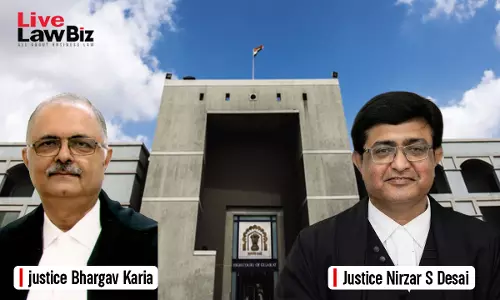
Accepted Search Return Without Further Addition Can't Attract Concealment Penalty: Gujarat High Court
The Gujarat High Court on 14 October held that penalty for concealment of income under Section 271(1)(c) of the Income Tax Act cannot be levied where the Assessing Officer accepts additional income disclosed in a return filed in response to a search-related notice without making any further addition, leaving no tax sought to be evaded under Explanation 4(c). A Bench comprising Justices Bhargav D. Karia and Nirzar S. Desai set aside the Income Tax Appellate Tribunal's order restoring a penalty...
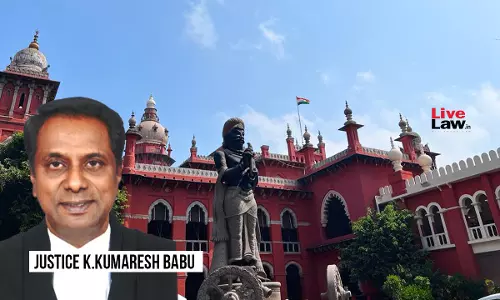
Madras High Court Orders Patent Grant To North Face, Says Invisible Marker Technology Was Overlooked
The Madras High Court on 16 October set aside the refusal of a patent application filed by The North Face Apparel Corp. for its invention titled “Systems and Methods for End-to-End Article Management,” holding that the Patent Office had failed to properly assess the inventive step involved in the claimed technology. Justice K. Kumaresh Babu allowed the company's appeal under Section 117A of the Patents Act, 1970, and directed the Controller of Patents and Designs to grant a patent for the...
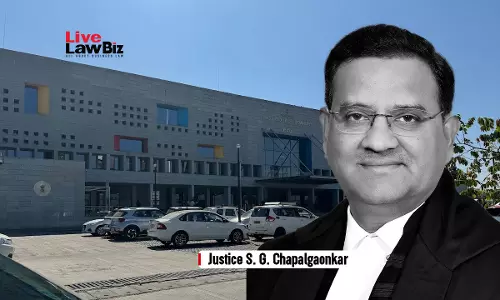
Omission From Witness List Does Not Bar Summons If Sufficient Reasons Are Shown: Bombay High Court
The Bombay High Court at Goa on 21 October held that a party may summon a witness whose name was omitted from the original witness list if it provides sufficient reasons for doing so, particularly when the evidence is necessary to resolve a dispute over GST invoices. Justice S.G. Chapalgaonkar partly allowed the defendant's petition challenging the trial court's refusal to summon the Assistant Commissioner of Central Goods and Services Tax (CGST) and the Principal of Jain College of...
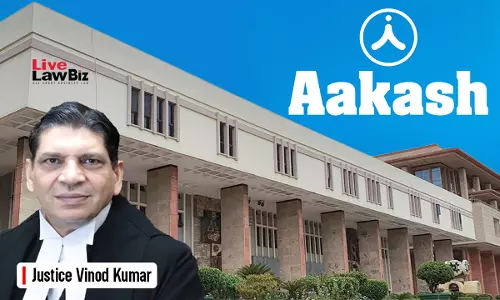
Delhi High Court Appoints Local Commissioner In Aakash's ₹2.13 Crore Student Fee Dispute
The Delhi High Court on 16 October appointed a Local Commissioner to inspect and preserve financial and electronic records at Aakash Educational Services Limited's former franchise centre in Gangapur City, Rajasthan. Justice Vinod Kumar allowed Aakash's application under Section 9 of the Arbitration and Conciliation Act, 1996, following allegations that franchisee Vaibhav Gupta had failed to remit over Rs. 2.13 crore in student fees and obstructed Aakash's audit. The Bench held: “In view of...
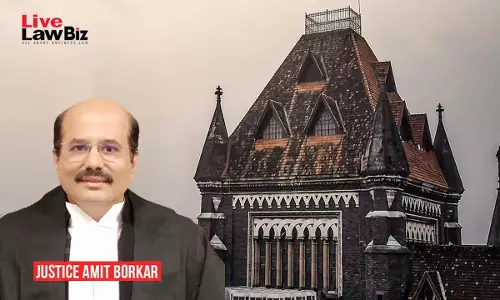
Bombay High Court Restrains Developers From Dealing With Assets In ₹278 Crore Swan Corp Dispute
The Bombay High Court on 22 October restrained Subramanya Constructions and Developments Co. Limited and Prakruthi Infrastructure and Development Co. Limited from dealing with their assets in a Rs. 278 crore arbitration settlement dispute with Swan Corp Limited. A Bench of Justice Amit Borkar granted interim protection to Swan Corp Limited (formerly Swan Energy Limited), Cardinal Energy and Infrastructure Private Limited and Pegasus Ventures Private Limited, and directed the developers to...

Madras High Court Directs Film Producer To Pay ₹1.22 Crore GST Dues To "Saakshyam" Dubbing Rights Buyer
The Madras High Court has directed film production company Shri Abishek Pictures and its partner Abhishek Venkat Nama to jointly and severally pay ₹1.22 crore to SPM Arts LLP towards GST dues arising from the assignment of dubbing rights for the Telugu film Saakshyam.Justice P.B. Balaji held that the production firm, having received the entire consideration of ₹7.5 crore and agreed to bear the GST liability under the assignment deed, was responsible for paying the applicable tax.The Court...
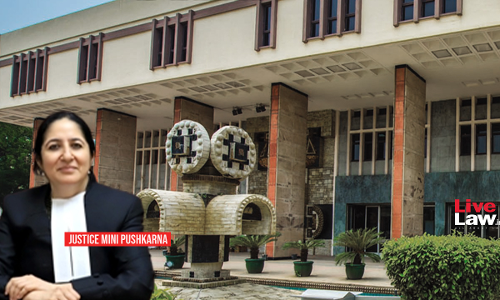
Delhi HC Orders ED To Release Seized Assets Of M3M Group Promoters After ₹404 Crore Property Attachment
The Delhi High Court has directed the Enforcement Directorate (ED) to release cash, jewellery, vehicles, and fixed deposits seized from M3M Group promoters, noting that the agency had subsequently attached properties worth ₹404 crore belonging to the group.A coram of Justice Mini Pushkarna passed the order while hearing a writ petition filed by Roop Bansal and others challenging, among other things, the seizure of assets and freezing of bank accounts by the ED.The Court also directed the release...
Madras High Court Stops Tamil Nadu Maritime Board From Prematurely Terminating Shop Licence
The Madras High Court has recently restrained the Tamil Nadu Maritime Board from prematurely terminating a shop licence after it chose to allot the premises through negotiations despite the availability of an open tender process, only to seek fresh bids before the agreed tenure expired.Justice K. Kumaresh Babu observed that the Board could not rely on a policy that was already available when it granted the original allotment as a reason to terminate the arrangement before its expiry.“It is to be...
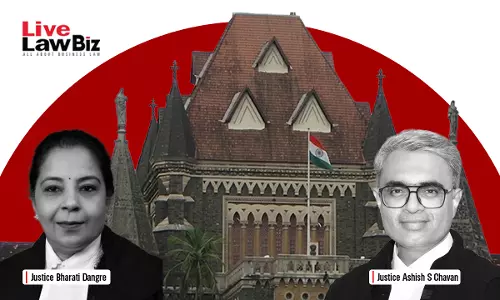
Bombay High Court Directs ED To Return Chellaram Mills Director's Seized Assets After 180-Day Limit
The Bombay High Court on 14 October directed the Enforcement Directorate (ED) to return documents and digital devices seized from Mukesh Talreja, Director of Chellaram Mills, and unfreeze his locker after the 180-day retention period under the Prevention of Money Laundering Act (PMLA) expired. A Bench of Justices Bharati Dangre and Ashish S Chavan allowed Talreja's writ petition challenging the seizure of documents and digital devices and the freezing of his locker. They observed: “…we find...