
Subsequent Use By Junior Applicant Cannot Defeat Earlier 'Proposed to Be Used' Trademark Application: Delhi High Court
Riya Rathore
11 March 2026 11:13 AM IST
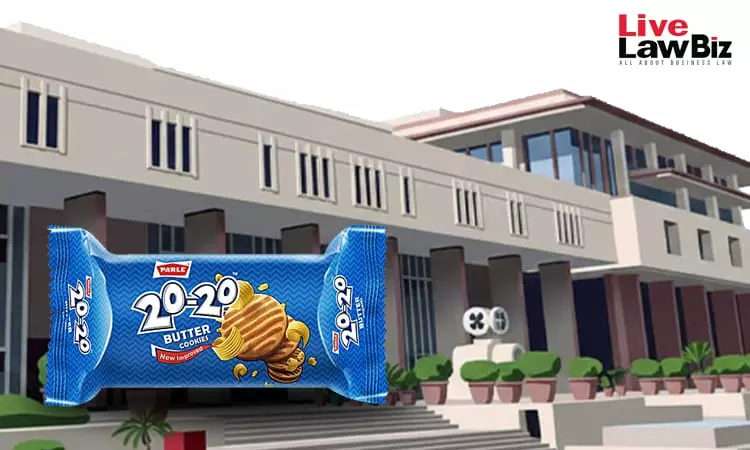
The Delhi High Court has dismissed an appeal filed by Parle Products Pvt Ltd in a trademark dispute over the mark “20-20”. The court held that when competing trademark applications are filed on a “proposed to be used” basis, subsequent commercial use by one applicant cannot defeat the earlier filing date of the other.
Justice Tushar Rao Gedela upheld an order of the Registrar of Trade Marks dated April 29, 2025 rejecting Parle's opposition to a rival company's application to register the mark “20-20” for goods in Class 30.
“When two entities apply for a similar, identical or a deceptively similar mark, that too on a 'proposed to be used' basis, under the provisions of Section 18 of the Act, subsequent use of the marks applied for by one of the parties would not enure to its benefit in any manner and such prior use in the eyes of law shall be inconsequential. Thus, the only firm conclusion in such circumstances is that the senior adopter would oust the junior adopter for the purposes of registration under section 18 of the Act” the court said.
The dispute concerns the mark "20-20," which Parle uses for its biscuits, and traces back to 2007 when two competing trademark applications were filed within a week of each other.
According to the record, the rival company applied for registration of the mark “20-20” on September 27, 2007, on a “proposed to be used” basis. Parle Products filed its own application for the identical mark a week later, on October 4, 2007, also on a proposed-to-be-used basis.
Parle later launched products under the “20-20” mark between 2007 and 2008 and relied on this subsequent market use to argue that it should prevail under the “first in the market” principle recognised by the Supreme Court in Neon Laboratories Ltd v Medical Technologies Ltd.
However, the rival company argued that it was the senior applicant and had consistently pursued registration of its trademark application for nearly 17 years. It contended that mere commencement of manufacture and use of the mark by Parle during the pendency of the application could not defeat its earlier filing.
The court held that Parle's reliance on Neon Laboratories was misplaced because that decision concerned passing-off disputes, whereas the present case involved the statutory framework governing trademark registration.
For the purpose of registration, the court said, the rights of competing parties must generally be determined as on the date of the application, particularly where both applications were filed on a proposed-to-be-used basis.
The court cautioned that allowing subsequent use to override an earlier application would undermine the scheme of the Trade Marks Act.
“If such situation is acceded to, then unscrupulous applicants would use such incongruity to oust the senior adopter/applicant from valid registration. Provisions of law cannot be read in a manner so as to defeat the aim of the Section or the Act itself. This would also be in consonance and conformity with Section 18 of the Act," the court said.
Finding no merit in Parle's contentions, the court dismissed the appeal.
For Parle Products: Senior Advocate J. Sai Deepak with Advocates N.K. Bhardwaj, Bikash Ghorai, and Salil Oberoi
For Respondents: CGSC Nidhi Raman with Advocates Om Ram and Nikita Singh for Registrar Of Trade Marks; Advocates Ajay Sahni and Mohit Maru for rival company