
Kerala High Court Upholds GST Recovery Against Satwa Solutions For Failure To Raise Timely Objection
Mehak Dhiman
7 Oct 2026 4:46 PM IST
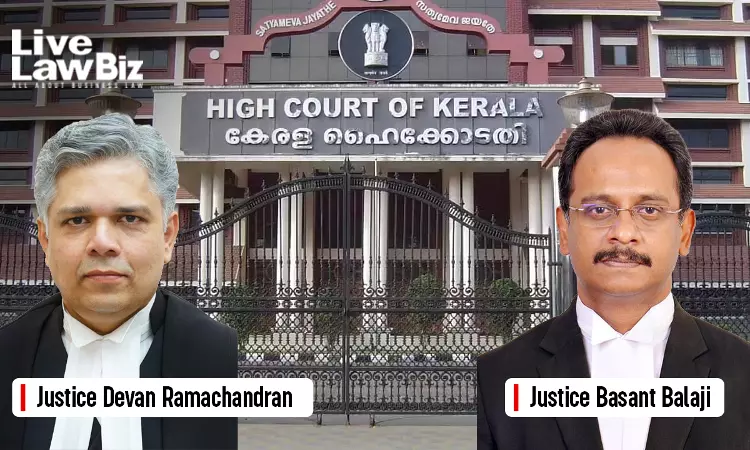
The Kerala High Court on 26 September refused to interfere with GST recovery proceedings against Satwa Solutions and upheld the dismissal of its writ petition challenging the proceedings arising from a statutory notice and subsequent final order.
A Division Bench comprising Justices Devan Ramachandran and Basant Balaji held that the taxpayer had failed to raise its objection to the notice at the appropriate stage. It observed:
“It is unmistakable from the attendant circumstances, that the controversy in this case is pirouetted on the factual assertion of the appellant that they had not seen Ext.P2 notice, or Ext.P3 order, until they received intimation of recovery. However, the afore assertion remains without any corroboration and is a self serving statement, which cannot be accepted by any Court.”
The dispute arose from a notice issued to Satwa Solutions, followed by a final order and subsequent recovery proceedings. The taxpayer contended that the notice was legally defective as it contained only an electronic summary and did not provide the complete details required under law.
The appellant challenged the Single Judge's dismissal of its writ petition, which had been dismissed on the ground that an alternative statutory remedy was available and had not been availed of.
Advocate P.J. Anilkumar, appearing for the appellant, argued that since the notice itself was not issued in the manner prescribed by the statute, the consequential final order was non est and illegal. Therefore the availability of an alternative statutory remedy could not bar the writ petition.
On the contrary, the State argued that the appellant had admittedly received the notice on the GST portal and was aware of the subsequent proceedings but had failed to take any action against them.
The Court agreed that a statutory notice must be issued in the manner prescribed by law. However, it noted that the appellant's case was that, despite the notice being available on the portal, it had not actually seen it due to certain circumstances and became aware of the proceedings only when recovery action commenced.
It found this explanation to be a “self serving statement” unsupported by any corroboration. It observed that if the appellant believed that the notice was invalid or lacked necessary details, it could have responded to the notice and insisted that further proceedings not be taken until the necessary details were furnished.
Further, the Bench noted the submission of the Senior Government Pleader that the appellant had availed Input Tax Credit during the relevant period, which indicated that it had been monitoring the GST portal. It observed that “the objection to Ext.P2 ought to have been raised at the right time.”
It added that had the objection been raised then, the authorities would have been alerted to respond with the necessary details. Also, that the taxpayer's failure to raise the objection at the appropriate stage disentitled it from seeking relief after the final order
Accordingly, the High Court upheld the Single Judge's decision and dismissed the writ appeal. It clarified that any other remedies legally available to the appellant would not be precluded by its observations.
For the Appellant: Advocates K.N. Sreekumaran and P.J. Anilkumar
For the Respondents: Senior Government Pleader T.K. Shaij Raj