
No Excise Duty On Dolochar Generated During Sponge Iron Production: CESTAT Kolkata
Mehak Dhiman
28 Feb 2026 3:31 PM IST
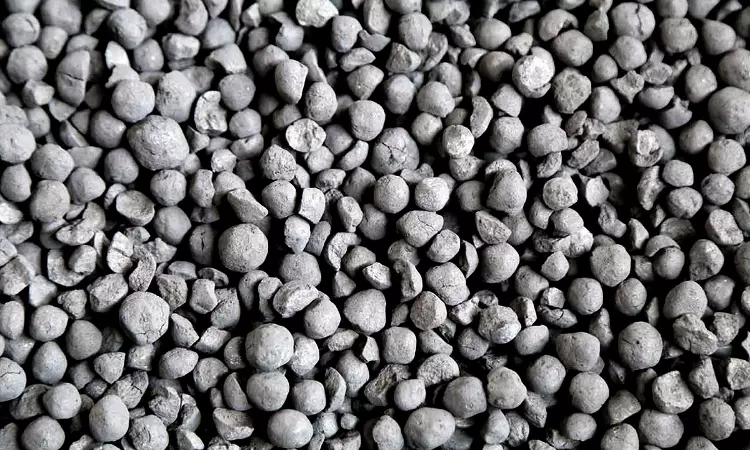
The Kolkata Bench of Customs, Excise, and Service Tax Appellate Tribunal (CESTAT) has held that 'dolochar' generated during the manufacture of sponge iron is an inevitable waste and not a manufactured excisable product. Therefore no central excise duty is payable on its clearance.
A Bench comprising Judicial Member Ashok Jindal and Technical Member K. Anpazhakan was hearing an appeal filed by Kaushal Ferro Metals (P) Ltd., challenging the confirmation of excise duty along with interest and equal penalty imposed on the sale of dolochar.
The Bench held that “no duty is payable by the appellant on dolochar that emerges during the course of manufacture of sponge iron. Therefore, no duty is sustainable.”
Kaushal Ferro Metals is engaged in the manufacture of sponge iron, using iron ore as the primary raw material, coal as fuel, and dolomite or limestone as flux for desulphurisation. During the manufacturing process, waste materials such as coal ash, char, devolatilised dolomite, and iron particles are generated, collectively referred to in the trade as dolochar.
The Department contended that dolochar constituted a manufactured excisable good and proposed the recovery of central excise duty, along with interest and penalty, under Section 11AC of the Central Excise Act, 1944.
The demand was confirmed by the adjudicating authority and upheld by the Commissioner (Appeals), prompting the appellant to approach the Tribunal.
After examining the process of manufacture and the nature of dolochar, the Tribunal observed that dolochar arises unavoidably during sponge iron production and does not emerge as a new product with a distinct name, character, or use.
The Bench relied on earlier decisions, including Alok Steel Industries Pvt. Ltd v. CCE (2019-VIL-926-CESTAT-KOL-CE) and CCE v. Jharkhand Ispat Pvt. Ltd (2021-VIL-521-CESTAT-KOL-CE), which consistently held that dolochar or coal char is merely waste and not the result of a manufacturing process.
Accordingly, the Tribunal allowed the appeal and set aside the impugned demand.
For Appellant: Advocates, Kartik Kurmy and Ritika Kurmy
For Respondent: Authorised Representative, D.Sue