
COMPANY LAW

Supreme Court Sets Aside HC Ruling In Birla Corp AGM Vote Dispute; Says Majority Trustees Can Authorise Voting
The Supreme Court on Tuesday set aside a Calcutta High Court ruling that had held that once an e-vote is cast in the Annual General Meeting (AGM) of Birla Corporation Ltd., it could not subsequently be invalidated through later communications. The High Court had also held that the first vote cast on behalf of the societies must prevail. A Bench of Justices Vikram Nath and Sandeep Mehta held that the Division Bench erred in concluding that trustees could bind the societies only if all trustees...
NCLT New Delhi Allows First Motion In CDIL–CSPL Demerger Scheme, Orders Creditors' Meeting
On 14 May, the New Delhi Bench of the National Company Law Tribunal (NCLT) passed its first motion order in the joint application filed by Continental Device India Pvt Ltd (CDIL), the demerged company, and CDIL Semiconductors Pvt Ltd (CSPL), the resultant company. Judicial Member Bachu Venkat Balaram Das and Technical Member Ravindra Chaturvedi allowed the application and issued directions for processing the proposed scheme of arrangement. CDIL, incorporated in 1964, manufactures semiconductor...

Pending Company Winding-Up Cases Before HC Transferable To NCLT Unless At Irreversible Stage: Calcutta HC
The Calcutta High Court has held that pending company winding-up petitions before High Courts can be transferred to the National Company Law Tribunal even after admission, a winding-up order, and appointment of an Official Liquidator, so long as the proceedings have not reached an irreversible stage.Relying on Supreme Court rulings on transfer of winding-up proceedings, a Division Bench of Justice Debangsu Basak and Justice Shabbar Rashidi observed: “Post admission of a winding up petition,...

Supreme Court Issues Notice In Plea Challenging HC Order Barring Registered Office Shift Pending NCLAT Appeals
On Friday, 22 May, the Supreme Court issued notice on a plea filed by Hindusthan National Glass & Industries Ltd, a corporate debtor, challenging the Calcutta High Court judgment dated 15 May 2026. The judgement had held that the company could not shift its registered office from Kolkata to Mumbai while appeals against its insolvency resolution plan remained pending before the NCLAT.A Division Bench of Justices Pamidighantam Sri Narasimha and Alok Aradhe, while issuing notice, declined to...

Delhi High Court Stays MCA Penalty Orders Against Microsoft CEO Satya Nadella, LinkedIn
The Delhi High Court recently stayed orders imposing penalties on Microsoft CEO Satya Nadella, LinkedIn chief executive Ryan Roslansky, LinkedIn Technology Information Pvt. Ltd., and several of its current and former directors over alleged violations of significant beneficial ownership disclosure norms under company law. A Bench of Justice Anish Dayal issued notice in the matter and stayed the impugned orders till the next date of hearing. “Having appreciated the submissions advanced on behalf...
Only Central Government Can Order SFIO Probes, Not Company Tribunals: NCLAT
The National Company Law Appellate Tribunal (NCLAT) in Delhi has recently reiterated that company tribunals cannot directly order a Serious Fraud Investigation Office probe, ruling that the power to direct such an investigation rests with the Central Government. A bench of Judicial Member Justice Mohd. Faiz Alam Khan and Technical Member Naresh Salecha relying on its own earlier decision observed, "The procedure for investigation in the affairs of the company has been provided under Section...
MP Sudheer Gupta To Head Joint Parliamentary Committee On Corporate Laws (Amendment) Bill
Lok Sabha Speaker Om Birla on Monday constituted a 31-member Joint Parliamentary Committee to examine the Corporate Laws (Amendment) Bill, 2026, appointing BJP MP Sudheer Gupta as its chairperson. The committee comprises 21 members from Lok Sabha and 10 members from Rajya Sabha.The Bill was introduced in the Lok Sabha by Finance and Corporate Affairs Minister Nirmala Sitharaman on March 23, 2026 and was subsequently referred by the Speaker to the JPC for clause by clause examination, stakeholder...
"Undue Haste": NCLT Hyderabad Stays MBG Commodities EGM To Increase Share Capital Amid Oppression Case
The Hyderabad Bench of the National Company Law Tribunal has stayed an Extraordinary General Meeting proposed by MBG Commodities Pvt Ltd to increase its authorised share capital. The tribunal observed that the company was acting in “undue haste” even as the main oppression and mismanagement petition over its rights issue and capital structure is awaiting orders. A Bench of Judicial Member Rajeev Bhardwaj and Technical Member Sanjay Puri passed the interim order on an application moved by...
NCLT Mumbai Rejects Ex-SNVG Logistics Director's Plea Claiming Forced Share Transfer And Oppression
The Mumbai Bench of the National Company Law Tribunal (NCLT) has dismissed a petition alleging oppression and mismanagement in the affairs of S.N.V.G. Logistics Private Limited, holding that former director and shareholder Sachin Natrajan failed to establish that his exit from the company and transfer of shares were the result of coercion or intimidation. The tribunal observed: “…..the Petitioner had not filed any complaint in relation to purported threat or intimidation alleged to be caused...
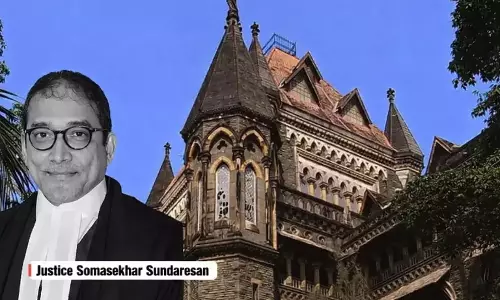
Treating Returns Of Allotment Penalty Provision To Exclude Adjudicating Officer's Discretion Unconstitutional: Bombay HC
The Bombay High Court has held that penalties for defective filings relating to the issuance of securities cannot be imposed through a mechanical computation exercise without examining the nature, gravity, and impact of the default. It also called arbitrary the multiplication of penalties based solely on the number of directors on a company's board, while modifying a ₹64 lakh penalty imposed on a Nidhi company and its directors. Justice Somasekhar Sundaresan, hearing a petition by N.S.J.L...
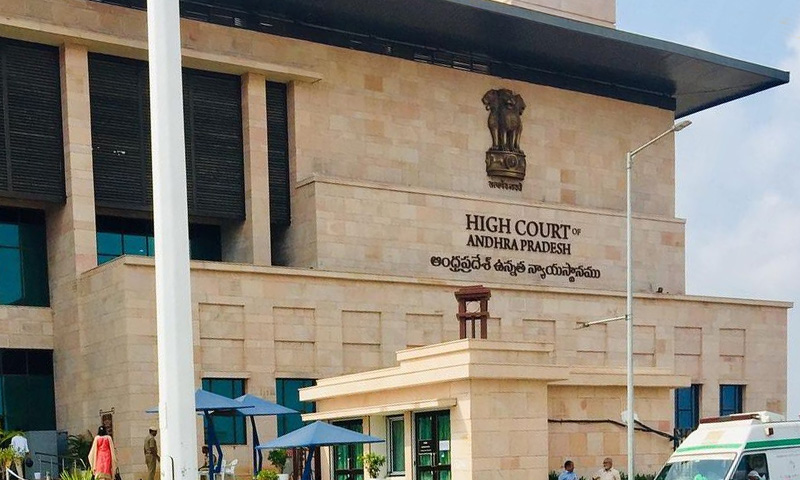
Andhra Pradesh High Court Dismisses BGR Energy Appeal, Rules Solvency Cannot Defeat Winding-Up Petition
The Andhra Pradesh High Court at Amaravati on 7 May held that commercial solvency alone cannot defeat a winding-up petition when the debt is admitted and no bona fide dispute exists. The Court reiterated that the existence of a genuine dispute determines maintainability under Section 433(e) of the Companies Act, 1956. A Division Bench comprising Justices Battu Devanand and Subhendu Samanta dismissed the appeal filed by BGR Energy Systems Ltd. and upheld the Single Judge's order dated 13 April...
NCLT Bengaluru Sanctions Amalgamation Scheme Of Wholly Owned Subsidiaries Into Kirloskar Electric
The Bengaluru Bench of the National Company Law Tribunal (NCLT) on 30 April 2026 sanctioned the amalgamation of Kelbuzz Trading Company Limited, Luxquisite Parkland Private Limited, SLPKG Estate Holdings Private Limited and SKG Terrra Promenade Private Limited with Kirloskar Electric Company Limited under the Companies Act, 2013.Judicial Member Sunil Kumar Aggarwal and Technical Member Radhakrishna Sreepada allowed the second motion petition filed by the companies and approved the Scheme of...