
Additional Written Statement Cannot Be Filed After 120-Day Limit In Commercial Suits: Kerala High Court
Shilpa Soman
17 Aug 2026 4:33 PM IST
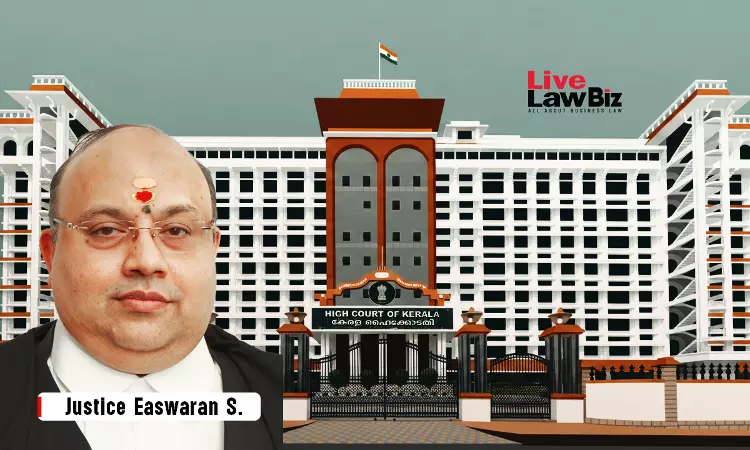
The Kerala high court has ruled that a defendant in a commercial suit cannot invoke the provision allowing additional written statements after the 120-day deadline for filing the written statement has expired.
However, the commercial court can still exercise its inherent powers in appropriate circumstances to require an additional written statement.
Justice Easwaran S. made the ruling while considering a petition filed by Subin Backer challenging the Kozhikode Commercial Court's refusal to accept his additional written statement. The commercial court had refused to accept it on the ground that the mandatory 120-day period for filing the written statement had expired.
The issue before the high court was whether the provision permitting subsequent pleadings with the court's permission could still be invoked in a commercial suit after the 120-day deadline.
Under Order VIII Rule 9 of the Civil Procedure Code, a party cannot file a pleading after the written statement without the court's permission. The provision also allows the court to require a party to file an additional written statement.
Commercial suits are subject to a strict timeline for filing written statements. Under the proviso to Order VIII Rule 1, a defendant ordinarily gets 30 days to file the written statement. The court can allow filing during the extended period, but the outer limit is 120 days from the date of service of summons.
Once 120 days expire, the defendant forfeits the right to file the written statement, and the court cannot take it on record.
Backer argued that the amendments made to the Civil Procedure Code through the Commercial Courts Act did not affect Order VIII Rule 9. He relied on the Delhi high court's January 2025 ruling in Novartis AG v. Natco Pharma Limited, which held that since Rule 9 had not been amended, its applicability to commercial suits could not be ruled out.
The respondents relied on the Madras high court's July 2026 ruling in Sri Gokulam Hospital Pvt. Ltd. v. Canadian Crystalline Water India Limited. They argued that the Commercial Courts Act, being a special statute, would have overriding effect under Section 21. They contended that permission to file an additional written statement could therefore be sought only within the 120-day period.
The Kerala high court agreed with the Madras high court's approach.
The court observed that Section 21 of the Commercial Courts Act gives the Act an overriding effect. He also noted that the 2018 amendment was aimed at ensuring early resolution of commercial disputes.
Justice Easwaran S. observed, “if the argument of the petitioner is accepted it would mean that the defendant will be entitled to seek to file additional written statements beyond the specified period of 120 days.”
The high court then considered the conflicting views of the Delhi and Madras high courts.
In Novartis AG, the Delhi high court held that since the Commercial Courts Act did not amend Order VIII Rule 9, its applicability to commercial suits could not be ruled out.
The Madras high court took the opposite view in Sri Gokulam Hospital. It held that the right under Order VIII Rule 9, if available in a commercial suit, could be exercised only within the specified 120-day period.
The Kerala high court chose to follow the Madras high court.
Explaining its reasoning, Justice Easwaran S. observed that accepting the Delhi high court's interpretation would create an incongruous situation. A defendant would lose the right to file a written statement after 120 days but could then potentially rely on Order VIII Rule 9 to file an additional written statement.
Justice Easwaran S. observed, “Since the Act provides that the defendant shall forfeit his right to file a written statement, the applicability of Order VIII Rule 9 should be considered in the touchstones of the purpose for which the proviso to Rule 1 of Order VIII has been incorporated. Otherwise, the purpose of proviso will stand obliterated.”
The high court made clear that this does not mean a defendant has no right to file an additional written statement. The application under Order VIII Rule 9 can be made within the statutory 120-day period. Beyond that, the benefit of the provision cannot be extended to a commercial suit.
There is, however, a separate power available to the commercial court under Section 151 of the Civil Procedure Code. The high court noted that this power can be exercised to require an additional written statement if the circumstances warrant it.
The court observed, “it is open for the Commercial Court to exercise its powers under Section 151 to require the defendant to file additional written statements, if the circumstances so warrant.”
The high court found the Kozhikode Commercial Court's refusal to accept the additional written statement legally sustainable. Although the order did not contain detailed reasoning, the high court held that its conclusion was correct and did not warrant interference under Article 227 of the Constitution.
The high court nevertheless directed the commercial court to reopen the plaintiff's evidence so that the defendant could cross-examine the plaintiff on the merits of the claim. The commercial court was directed to pass suitable orders within 10 days of receiving the judgment.
For Petitioner: Advocates P Jeril Babu and Srinath Girish
For Respondents: Advocates T.K Rajesh Kumar, M.R Anison, V.V Suresndran, P.A Harish and Apoorva Ramkumar