
RBI Must Consult State Government Before Supersession Of Co-operative Bank Board: Kerala High Court
Shilpa Soman
18 Nov 2026 4:15 PM IST
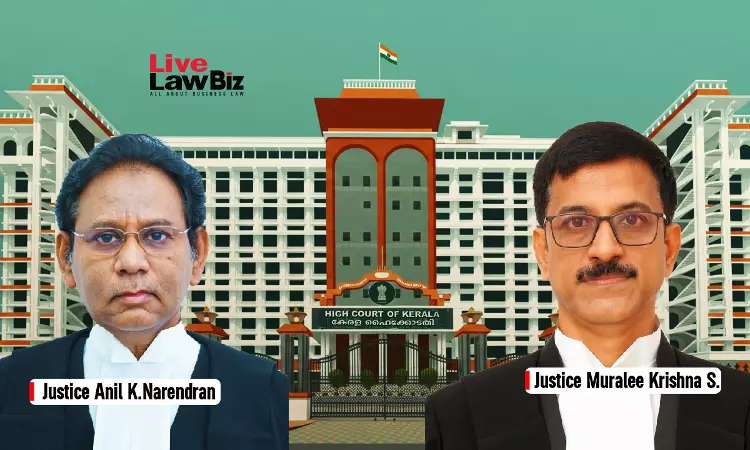
The Kerala High Court on 17 November held that the Reserve Bank of India (RBI) must consult the concerned State Government before superseding the Board of Directors of a co-operative bank under Section 36AAA(1) of the Banking Regulation Act, 1949. Consultation with the Registrar of Co-operative Societies cannot substitute the mandatory statutory consultation.
A Division Bench of Justices Anil K Narendran and Muralee Krishna dismissed cross-appeals filed by the former President of Irinjalakuda Town Co-operative Bank and the RBI against different aspects of a Single Judge's judgment concerning the supersession of the bank's Board of Directors. It observed:
“Merely for the reason that under Section 56(zg) of the Banking Regulation Act, the reference to Central Government was directed to be construed as Central Registrar or Registrar of Cooperative Societies, the same meaning cannot be pressed into service as far as Section 36AAA of the Act is concerned, for the simple reason that if that was the intention of the law makers, there was no difficulty to carry out those amendments to Section 36AAA also.”
The RBI issued an All Inclusive Direction on 29 July 2025 under Section 35A of the Banking Regulation Act, 1949, restricting the bank's operations for six months. On 7 October 2025, it superseded the bank's Board of Directors and appointed an Administrator under Section 36AAA read with Section 56 of the Act.
The bank's former President challenged the supersession order before the High Court, seeking its quashing and restoration of the elected managing committee.
The Single Judge held that the managing committee was not entitled to a personal hearing before the supersession order. However, the Bench also held that consultation with the State Government was mandatory under Section 36AAA(1).
It declined to quash the supersession order, observing that the Administrator had already managed the bank for several months and that restoring the elected committee would not serve the interests of the depositors or the bank.
The former President challenged the refusal to quash the supersession order, while the RBI appealed against the finding that consultation with the State Government was mandatory.
During the pendency of the appeals, the RBI issued another order on 6 October 2026, extending the supersession and the Administrator's appointment for a further year from 7 October 2026. The RBI informed the Court that it had sought comments from the State Government but had received no response.
Examining Section 36AAA, the Division Bench held that the provision expressly requires the RBI to consult the concerned State Government before superseding the Board of Directors of a co-operative bank. It rejected the RBI's contention that consultation with the Registrar of Co-operative Societies would satisfy this requirement.
It reiterated that when a statute prescribes a particular manner of performing an act, it must be performed in that manner alone. It also rejected the RBI's reliance on Section 56(zg) of the Act, observing that the legislature had not made a corresponding amendment to Section 36AAA to extend the reference to the Central Government to the Registrar of Co-operative Societies. It added:
“It is the duty of the 1st respondent to act in accordance with the provisions of the statutory framework”
Moreover, the judges held that the Registrar could be consulted in place of the State Government only if the Government had specifically appointed the Registrar for consultation on the supersession of the co-operative bank. They said:
“...unless the Registrar of Cooperative Societies is specifically appointed by the Government to have consultation in the matter of supersession of the Cooperative Bank, such an interpretation is not possible.”
However, the Court upheld the Single Judge's decision not to quash the original supersession order. It noted that the former President had approached it nearly four months after the Administrator took charge and had not secured interim relief. The Administrator would have taken several administrative decisions during this period, making it inappropriate to restore the position that existed before the appointment.
It noted that the subsequent extension order could not independently survive without compliance with the mandatory consultation requirement. Merely seeking comments from the State Government was insufficient.
Since the Administrator's original term had expired on 6 October 2026 and the extension order had also been issued without completing the statutory consultation, the Bench directed the parties to maintain status quo for one month from the date of judgment to prevent an administrative vacuum while the RBI completed the consultation process.
Accordingly, the High Court dismissed the writ appeals.
For Appellant: Advocates Arjun Raghavan, T.R Harikumar and Pooja Pankaj
For Respondents: Advocates Sumathi Dandapani, Millu Dandapani, P.N Mohanan and Arun Chandran, Spl GP(Co-operation)