
RBI Banking Ombudsman Cannot Review Or Recall Order After Disposing Complaint: Kerala High Court
Shilpa Soman
29 July 2026 2:58 PM IST
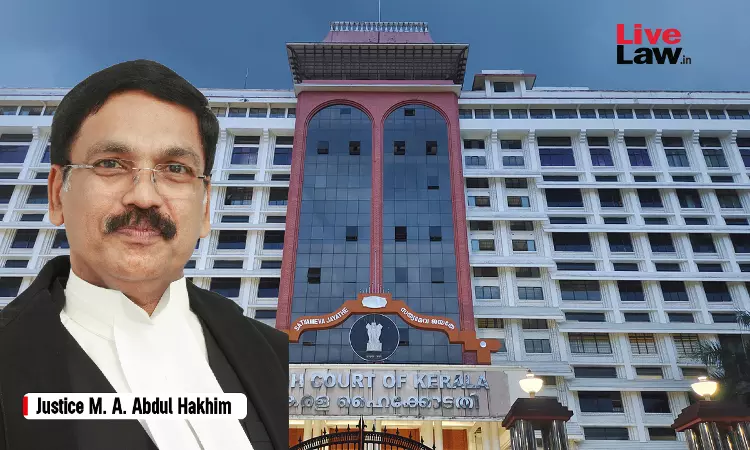
The Kerala High Court has recently held that the RBI Banking Ombudsman has no authority to review or recall an order after disposing of a complaint, observing that the Ombudsman becomes functus officio once the proceedings conclude.
"As a matter of fact, Banking Ombudsman has no right or authority to review or recall the original Ext.P4 Order. After disposal of the complaint, the Banking Ombudsman becomes functus officio. Accordingly, I find that Ext.R3(c) Order passed by the Banking Ombudsman is totally without jurisdiction and the same is declared as null and void," Justice M.A. Abdul Hakhim held.
The court was hearing a petition filed by Mary Peter challenging an order of the RBI Banking Ombudsman rejecting her complaint against the Central Bank of India.
According to Peter, the bank had sanctioned a cash credit loan of ₹10 lakh and a term loan of ₹50,000 but disbursed only ₹4.05 lakh, while refusing to release the remaining amount. She also alleged that the bank had wrongly denied her the benefit of a moratorium.
Aggrieved, she filed a complaint before the Banking Ombudsman. The Ombudsman rejected the complaint under Clause 16(2)(a) of the Reserve Bank – Integrated Ombudsman Scheme, 2021, holding that there was no deficiency in service.
During the pendency of the writ petition, the Banking Ombudsman passed a fresh order again rejecting the complaint. Peter contended that the Ombudsman had become functus officio after passing the original order and that neither order considered her reply or disclosed adequate reasons for rejecting the complaint.
The Bank argued that it had withheld the remaining loan amount because the petitioner had failed to produce documents showing utilisation of the amount already disbursed. It also argued that the petitioner herself had informed the bank that she did not wish to avail a moratorium. The Banking Ombudsman defended the subsequent order, contending that it had been passed after considering the petitioner's reply.
Allowing the petition, the Court held that the Ombudsman had no authority to pass a fresh order after disposing of the complaint.
The Court noted that there was nothing to show that the petitioner's reply had been received after the Ombudsman passed the original order. It therefore held that the reply ought to have been considered before rejecting the complaint.
The Court further found that the impugned communication lacked the attributes of a quasi-judicial order, as it did not disclose the identity of the officer who passed it. Examining the order, the Court observed:
“It is clear that the Order is not passed by a single individual, i.e., the Banking Ombudsman, but by the Office of the Banking Ombudsman. Ext.R3(a) Scheme provides authority only to the Banking Ombudsman to dispose of the Complaints and not to his office to pass orders with the approval of the Banking Ombudsman.”
On the issue of hearing, the Court clarified that the principles of natural justice do not require the Banking Ombudsman to grant a personal hearing in every case. It said that while an opportunity to be heard must be afforded, it can be satisfied through written representations.
“It is for the Banking Ombudsman to decide whether personal hearing is to be granted to the Complainant in a particular case or not, considering the facts and circumstances of the case.” it added
The Court also noted that the petitioner had not sought a personal hearing in the writ petition and, therefore, was not entitled to one when the Banking Ombudsman reconsidered the complaint.
Accordingly, the Court allowed the petition, set aside the original order rejecting the complaint, and directed the Banking Ombudsman to reconsider the complaint and pass a reasoned order within two months.
For Petitioner: Advocates M.P Madhavankutty, Divyadevi V.G, Angel Gyles Like, Michale Thomas Tharian and Sanjeev Kumar V.E
For Respondents: Advocates M. Gopikrishnan Nambiar, K. John Mathai, Joson Manavalan, Kuryan Thomas, Paulose C Abraham, Raja Kannan and Akhila Nambiar