
PSCC Act Doesn't Bar Arbitration Where License To Enter Property for Development Is Incidental: Bombay HC
Kirit Singhania
7 April 2026 11:23 AM IST
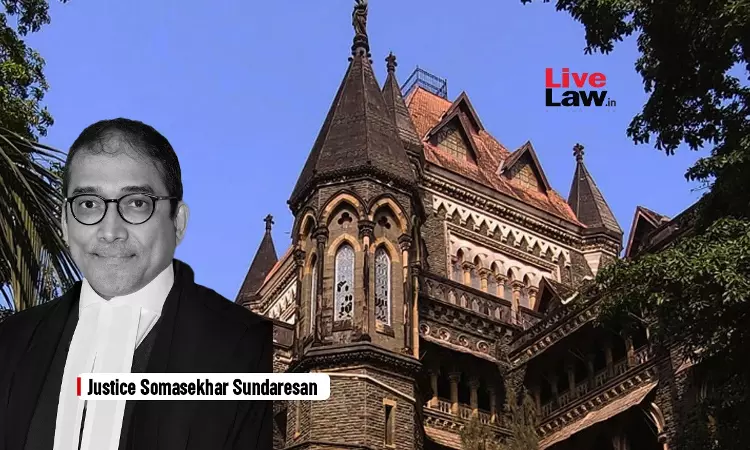
The Bombay High Court has recently held that a developer cannot avoid arbitration by claiming tenancy protection under the Small Causes Courts Act when its right to use the property is only incidental to a development agreement.
A single-judge bench of Justice Somasekhar Sundaresan was hearing a petition under Section 34 of the Arbitration and Conciliation Act filed by Shri Mahavir Developers and its partners challenging an arbitral award in a dispute with Shri Mahavir Jaina Vidyalaya, a public charitable trust, and its trustees.
Upholding the arbitral award, the court rejected the developer's objection that the dispute was not arbitrable on the ground that it involved eviction of a licensee, which would fall within the exclusive jurisdiction of the Small Causes Court under the Presidency Small Cause Courts Act (PSCC Act).
“The objection on arbitrability on the ground of exclusive jurisdiction under the PSCC Act is untenable since the license granted to the Developer was incidental to the development rights conferred on the Developer. Once such development rights are not held as being amenable to enforcement by way of specific relief, the license would also become irrelevant,” the court observed.
The dispute arose from a Memorandum of Understanding dated April 9, 2005 and a Development Agreement dated April 30, 2007, under which development rights were granted to the developer over trust property in Mumbai. The developer had agreed to construct a hostel building with a minimum area of 32,000 sq. ft., along with a temple.
The trust terminated the arrangement on March 4, 2016 after alleging that the developer failed to meet this obligation, leading to arbitration.
The arbitral tribunal directed the developer to hand over possession of the property to the trust, rejected claims for damages, and ordered refund of the consideration paid by the developer along with interest.
Before the High Court, the developer argued that the dispute was non-arbitrable, as it involved eviction of a licensee protected under the PSCC Act. It also challenged the award as perverse and contrary to the terms of the development agreement.
Rejecting these contentions, the court held that the developer was not a typical licensee entitled to statutory protection. Instead, its right to enter the property was ancillary to the larger contractual right to develop it. Once the tribunal found that the development agreement was not capable of specific performance due to the developer's failure to meet the core obligation of delivering 32,000 sq. ft. of developed area, the incidental license lost significance.
The court agreed with the tribunal that the developer had not demonstrated readiness and willingness to carry out its obligations, emphasising that delivering the agreed 32,000 sq. ft. area lay at the heart of the contract.
It found no perversity or patent illegality in the award and therefore declined to interfere with it under Section 34 of the Arbitration Act, resulting in dismissal of the petition.
For Petitioner: Senior Advocate Darius Khambata with Advocates Ish Jain, Rajan Yadav, Karan Rukhana, Aditya Pimple, Duj Jain, Krishma Shah, Naomi Ting, Deep Thakkar, instructed by Kiran Jain & Co
For Respondent: Senior Advocate Dinyar Madan with Advocates Ieshan Sinha, Dhruvi Mehta & Yajas Achal, i/b Wadia Ghandy & Co