
Participation Cannot Cure Ineligibility: Bombay High Court Sets Aside Awards By Unilaterally Appointed Arbitrator
Mohd Malik Chauhan
7 March 2026 10:25 AM IST
The Bombay High Court has recently reiterated that arbitral awards passed by an arbitrator unilaterally appointed by one party are liable to be set aside and that such illegality cannot be cured merely because the opposing party participated in the arbitration proceedings without raising an objection.
Applying the Supreme Court's recent ruling in Bhadra International (India) Pvt. Ltd. v. Airports Authority of India, the court further reiterated that waiver of an arbitrator's ineligibility under the Arbitration and Conciliation Act, 1996 is permissible only through an express written agreement executed after the dispute arises and cannot be inferred from a party's conduct or participation in proceedings.
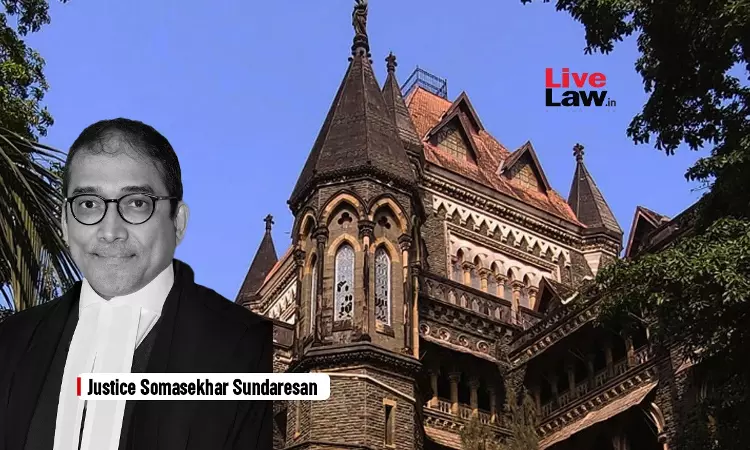
Justice Somasekhar Sundaresan held, “Evidently, the vice of unilateral appointment of an Arbitrator is not curable by uncontested participation in the arbitration proceedings. Evidently, equity would not supplant the law, and there is no scope for supplementing the law declared on the anvil of uncontested participation before the unilaterally appointed arbitrator.”
The ruling came in petitions filed under Section 34 of the Arbitration and Conciliation Act challenging arbitral awards passed in disputes arising from a loan agreement dated March 31, 2011.
Karvy Financial Services Ltd. invoked arbitration through a notice dated November 30, 2016. The disputes involved a loan amount of Rs 1.22 crore computed as of December 26, 2015, along with interest at 14.25%. The arbitrator, who was unilaterally appointed by Karvy, passed awards on February 6, 2018.
The petitioners challenged the awards, contending that the arbitrator was unilaterally appointed and was therefore de jure ineligible to act as an arbitrator. They argued that such ineligibility cannot be cured merely because the parties participated in the arbitration proceedings. It was further argued that waiver of objection to such an appointment is valid only through an express agreement in writing executed after the dispute has arisen.
Karvy, however, maintained that the challenge was an afterthought. Its counsel argued that the petitioners had taken part in the arbitral proceedings without raising any objection to the arbitrator's appointment.
Having participated in the process, they could not wait for the outcome and question the appointment only after the award went against them, the respondent submitted.
In deciding the issue, the court turned to the Supreme Court's recent judgment in Bhadra International (India) Pvt. Ltd. v. Airports Authority of India. That ruling clarified that the ineligibility of an arbitrator under Section 12(5) can be waived only through a clear written agreement between the parties after the dispute has arisen. Participation in proceedings, filing pleadings, or other procedural steps cannot be treated as consent, the Supreme Court had held.
Quoting the Supreme Court, the court observed:
“The statutory design therefore makes it evident that the bar under Section 12(5) can be removed only by a clear, unequivocal, and written agreement executed after the dispute has arisen, and not by any form of tacit acceptance or procedural participation.”
The top court held that participation in arbitration proceedings cannot be treated as a waiver of objection to unilateral appointment. It further clarified that procedural actions such as filing pleadings, participating in hearings, or seeking interim relief cannot amount to the written agreement required under Section 12(5).
“When an arbitrator is found to be ineligible by virtue of Section 12(5) read with the Seventh Schedule, his mandate is automatically terminated. In such circumstance, an aggrieved party may approach the court under Section 14 read with Section 15 for appointment of a substitute arbitrator. Whereas, when an award has been passed by such an arbitrator, an aggrieved party may approach the court under Section 34 for setting aside the award,” the court observed, quoting the Supreme Court.
The court further observed that the ineligibility of an arbitrator is a matter of law that goes to the root of the matter. Consequently, the mandate of such an arbitrator stands automatically terminated, and objections to such an appointment can be raised even at the stage of a challenge under Section 34 after the award has been passed.
Holding that participation in arbitration proceedings cannot cure the ineligibility of an arbitrator appointed unilaterally, the court allowed the petitions and set aside the awards.
For Petitioners: Advocate Rohan Savant with Advocate Prabhakar M. Jadhav (ARBP/324 and 335 of 2019); Advocate Vilasini Balsubramaniyam with Advocate Prabhakar M. Jadhav (ARBP/336 and 338 of 2019); Advocate Prabhakar M. Jadhav (ARBP/337 of 2019).
For Respondent: Advocates Aseem Naphade, Deepanjali Mishra, Sahil Salvi and Omar Khaiyam Shaikh, instructed by Vikas Salvi & Associates.