
Statutory Bar On Arbitrability Can Be Examined While Granting Interim Relief: Bombay High Court
Mohd Malik Chauhan
20 April 2026 2:40 PM IST
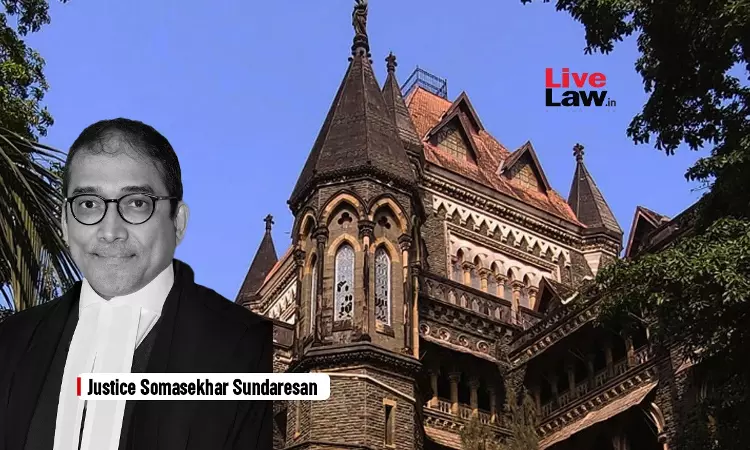
The Bombay High Court on 16 April held that courts can examine arbitrability, including statutory bars, while deciding petitions under Section 9 of the Arbitration and Conciliation Act, 1996, especially where no Arbitral Tribunal exists.
Section 9 allows a Court to grant interim protection measures before, during, or after arbitral proceedings to safeguard the subject matter of the dispute.
A Bench of Justice Somasekhar Sundaresan allowed the review petitions filed by the Airports Authority of India (AAI) and restored the Section 9 petitions for fresh adjudication, noting that it had withdrawn its earlier consent to arbitration on the ground that it violated the Airports Authority of India Act, 1994. He held:
“However, where there is a statutory bar, the question that would arise is whether the parties can at all agree to proceed to arbitration. This would be a neat question of jurisdiction. The question of jurisdiction would ordinarily lie before the Arbitral Tribunal but in Section 9 proceedings, the question of jurisdiction would be considered by the Section 9 Court.”
The dispute arose from licence agreements that AAI executed with various parties, including individuals and entities such as Vision Enterprises and Zen Media LLP.
In earlier Section 9 proceedings, the parties had consented to arbitration, leading to the appointment of a sole arbitrator. AAI later filed review petitions and argued that the disputes related to eviction from airport premises. It contended that such disputes fall under Chapter VA of the AAI Act, which bars courts from granting injunctions in respect of actions taken by the Eviction Officer under that chapter.
The AAI submitted that the AAI Act provides a complete mechanism for eviction and that Section 28M bars the jurisdiction of courts and other authorities. It further submitted that consent cannot operate against statute.
The respondents argued that the Arbitral Tribunal must decide arbitrability under Section 16 of the Arbitration Act. They also contended that the dispute involves broader contractual issues and not merely eviction, and that AAI cannot resile from its earlier consent to arbitration.
The High Court held that parties cannot confer jurisdiction by consent where a statutory bar exists. It further held that such consent would be invalid if it is contrary to statute.
The Bench distinguished between Sections 9 and 11 of the Arbitration Act. It held that while a Court under Section 11 only examines the existence of an arbitration agreement, a Court under Section 9 can examine issues of arbitrability and jurisdiction. Since the Tribunal in the present case was constituted by consent under Section 9, the Court must examine arbitrability. It observed:
“Had the Section 9 Petitions been contested in the normal course by both sides when the proceedings came up originally, this issue would have been dealt with, since existence of arbitration agreement and arbitrability have to be considered when granting relief under Section 9 of the Arbitration Act. This was not a case of Section 11 jurisdiction, which explicitly confines the scope of jurisdiction to examination of whether a validly executed formal arbitration agreement exists.”
Justice Sundaresan also referred to Section 28A of the AAI Act, which includes continued occupation after termination within the scope of unauthorised occupation. He noted that Section 28M bars interference in eviction matters and held that these provisions raise a prima facie case that the disputes may be non-arbitrable. He stated:
“I cannot ignore the fact that prima facie, the term “unauthorised occupation” brings within its sweep any occupation of any airport premises where the authorisation for occupation has been determined.”
The Bench also noted that the sole arbitrator had resigned and that no Tribunal existed to decide the issue of jurisdiction. It therefore held that the Section 9 Court must decide all issues. It held that “since the Arbitral Tribunal came to be appointed by consent under Section 9 of the Act, with no occasion for this Court to consider the issues now raised in the Review Petition, in my opinion, the ends of justice warrant a reconsideration of the original Section 9 Petitions afresh on merits, and a case for review on merits has been made out.”
Accordingly, the High Court allowed the review petitions and restored the Section 9 petitions for fresh adjudication, holding that the Court had not examined issues of arbitrability and jurisdiction in the earlier proceedings.
For Petitioner: Senior Advocate Pravin Samdani, along with Advocate Shilpa Kapil, Advocates Chidanand Kapil, Darshit Jain, Shruti Bhatt, Aishwarya Mall, Vishwabharati Devkhile
For Respondents: Advocates Samit Shukla along with Vaibhavi Bhalerao, instructed by Trilegal, for the Respondent in RPCD(L)/18565/2025. Advocate Karl Tamboly