
Interim Relief Under Arbitration Act Cannot Supplant Execution Proceedings: Madras High Court
Mohd Malik Chauhan
9 March 2026 10:54 AM IST
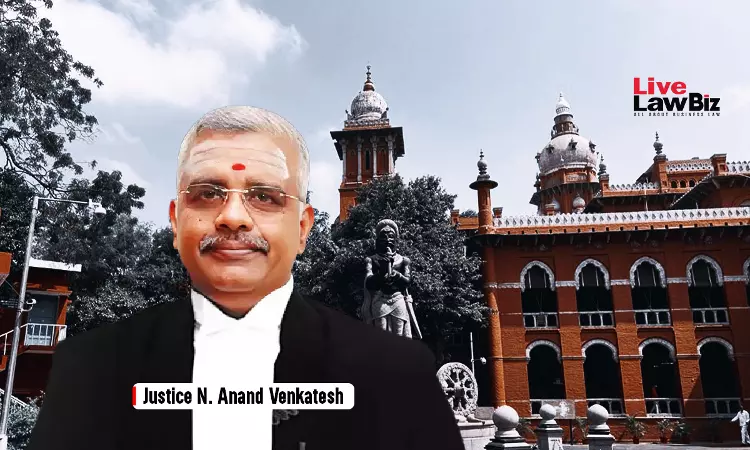
The Madras High Court recently observed that a petition seeking interim relief under Section 9 of the Arbitration and Conciliation Act cannot be used as a substitute for execution proceedings under the Civil Procedure Code.
“An application under Section 9 can supplement but cannot supplant the process of execution contemplated through Order XXI of the Code,” Justice N. Anand Venkatesh said.
The court explained that although a Section 9 petition may remain maintainable until an arbitral award is fully satisfied, that does not mean the court must entertain such a petition in every case. The power to grant interim measures under the provision is discretionary, particularly where execution proceedings concerning the same award are already pending before the executing court.
The matter reached the High Court after contractor C.J. Charles Rajkumar, proprietor of Kiruba Constructions, secured an arbitral award on May 26, 2022, directing a family to pay about Rs 10.04 crore with interest at 18% per annum. Although the award reached finality, no payment was ever made.
Rajkumar then moved the District Court at Chengalpet to enforce the award.
While those proceedings were pending, the award holder approached the High Court seeking an injunction restraining the judgment debtors from alienating the same property that formed the subject of the execution petition.
Counsel for the applicant argued that the High Court could still grant interim protection under Section 9 because the award had not yet been fully satisfied.
Reliance was placed on a Full Bench decision of the Madras High Court in B.M. Insulation Pvt. Ltd. v. Vardeep Petro Chemical Pvt. Ltd., which clarified that the word “enforced” in Section 9 refers to complete satisfaction of the award and therefore a Section 9 petition can remain maintainable until the award is fully satisfied.
Justice Venkatesh accepted that the petition was legally maintainable but stressed that maintainability and entertainability are distinct concepts. “By holding that a petition under Section 9 is maintainable till the stage of complete satisfaction of the award, it does not follow that a petition under Section 9 should be entertained in all cases. There is no gainsaying that the power under Section 9 and the quality of orders which can be passed under the said provision are discretionary in nature,” the court said.
The court also noted that the executing court itself has adequate powers to protect the decree holder. “There is no difficulty in concluding that the executing court possesses all such implied or ancillary powers which are necessary to enable it to effectively execute the decree and assist the decree holder to realize the fruits of litigation. Thus, where there exists a threat of alienation, the executing court could always protect the interests of the decree holder by effecting an order of interim attachment,” the court observed.
Expressing concern over the slow progress of the execution proceedings in the case, the court remarked, "In some cases, the pace of execution is so tardy that it would make even the proverbial snail blush. This case is an illustrative example. Month after month after month the case has seen nothing but adjournments before the executing court. The time has now come to set the house in order.”
The High Court ultimately dismissed the petition, granting liberty to the applicant to seek interim protection before the executing court.
At the same time, it directed the Mahila Court at Chengalpattu to conclude the pending execution proceedings by June 30, 2026 and file a compliance report before the Registrar General of the Madras High Court.
The court also directed the Registrar General to seek an explanation from the Mahila Court on why the execution petition filed in 2023 had seen no effective progress. In addition, the Registrar General was asked to obtain a report from the Principal District Judge, Chengalpattu on execution petitions involving arbitral awards in the district.
The Principal District Judge's report must set out how many execution petitions involving arbitral awards are currently pending in Chengalpattu district. It should also list the matters that have remained pending for more than six months, arranged from the oldest to the most recent, and explain the reasons for the delay.
The court further asked for details of execution petitions filed after April 2025, their present stage, and whether any have been disposed of within six months. In cases where proceedings have remained pending beyond that period, the report must also specify the names of the judicial officers who have presided over those courts.
For Applicant: Advocate Srikanth
For Respondents: Advocate P.V. Balasubramanian, SC for Advocate M.Marudhachalam