
Courts Cannot Re-Examine Merits Of Foreign Arbitral Awards At Enforcement Stage: Bombay High Court Reiterates
Mohd Malik Chauhan
9 March 2026 8:15 AM IST
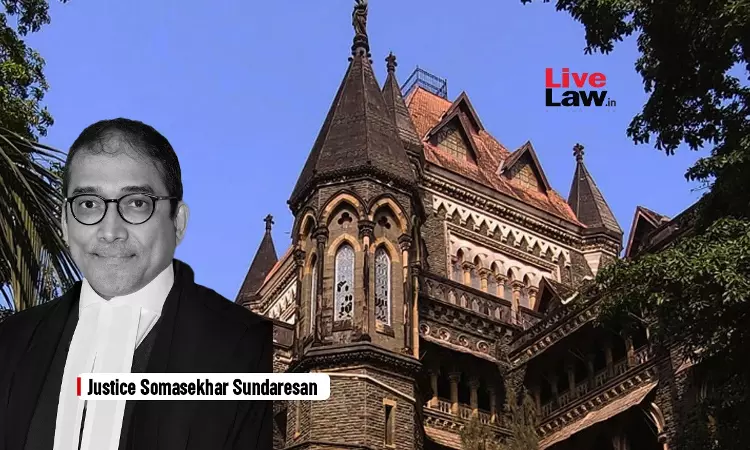
The Bombay High Court has reiterated that courts considering enforcement of foreign arbitral awards under Section 48 of the Arbitration and Conciliation Act, 1996 cannot re-examine the merits of the award or undertake a fresh evaluation of the evidence.
A single-judge bench of Justice Somasekhar Sundaresan observed that the jurisdiction of an enforcement court under Section 48 is limited and does not permit a review of the arbitral tribunal's findings.
“The scope of jurisdiction of the Section 48 Court is narrow and it would not be open to this Court to conduct a second innings, wading into the merits,” the court said.
Applying this principle, the High Court enforced foreign arbitral awards worth about USD 16.4 million and GBP 606,628 against Nagarjuna Fertilizers and Chemicals Ltd. in favour of Trammo DMCC (formerly Transammonia DMCC).
The petition was filed under Part II of the Arbitration and Conciliation Act seeking recognition and enforcement of foreign arbitral awards rendered in London.
The dispute arose from fertilizer supply transactions between the parties involving Di-Ammonium Phosphate (DAP) and Nitrogen Phosphorus Sulphate (NPS). The transactions were entered into between 2011 and 2013.
Following disputes between the parties, they executed an ad-hoc arbitration agreement in 2014 and constituted a tribunal seated in London comprising former English judges. The tribunal issued a series of interim final and cost awards in favour of Trammo.
The High Court ultimately enforced four of those awards. It directed Nagarjuna Fertilizers to pay USD 16,427,310.80 and GBP 606,628.29 along with interest as awarded by the tribunal.
Nagarjuna opposed enforcement under Section 48 of the Arbitration Act. It argued that the arbitration agreement was invalid under English law because the contracts relied on “deemed acceptance” through email communications.
The company also contended that the tribunal had exceeded its jurisdiction. It further argued that the tribunal was not constituted in accordance with the arbitration clauses contained in the contracts. Lastly, it submitted that enforcement would violate the public policy of India because damages had been awarded even though Trammo had not supplied fertilizer.
Rejecting these objections, the court reiterated that the enforcement stage does not permit a review of the arbitral tribunal's findings.
Relying on the Supreme Court's judgment in Shri Lal Mahal Ltd v Progetto Grano SPA, the court observed that Section 48 does not allow courts to reconsider the merits of a foreign award.
“Section 48 of the 1996 Act does not give an opportunity to have a 'second look' at the foreign award in the award enforcement stage. The scope of inquiry under Section 48 does not permit review of the foreign award on merits,” the court noted.
The court also referred to the Supreme Court's decision in Vijay Karia v Prysmian Cavi E Sistemi SRL, which held that foreign awards must be read as a whole and cannot be subjected to a detailed merits review at the enforcement stage.
On the issue of contract formation, the court noted that the arbitral tribunal had examined the evidence and concluded that the parties had entered into contracts through their established commercial practice of confirming terms through email communications.
The tribunal had also considered the parties' past dealings and concluded that email confirmations and deemed acceptance were part of their established mode of contracting.
“In my view, the contention about English law not permitting deemed acceptance clauses does not inspire confidence. When as a matter of fact, it has found, on appreciation of evidence, that these very parties have, in the past, taken part in contract formation activity in the very same manner as seen in the instant case, and English case law has been cited by the Learned Arbitral Tribunal in support of its findings, it is not for the Section 48 Court to re-visit this issue at the recognition and enforcement stage,” the court said.
The court also noted that the parties had executed an ad-hoc arbitration agreement in 2014 empowering the tribunal to determine whether valid contracts and arbitration agreements existed and to adjudicate the dispute on merits.
“In clause (c) of the scope of reference in the Arbitration Agreement, the parties positively agreed that if it is found that the Dubai Claimed Contracts and the Emailed Purported Contracts existed, and it is also found that the parties had an arbitration agreement, then the Learned Arbitral Tribunal would hear the matter on merits,” the court observed.
Addressing Nagarjuna's argument that different contracts referred to LCIA and LMAA arbitration rules, the court held that the parties themselves had resolved the issue by constituting a single ad-hoc tribunal to adjudicate the disputes.
“That would be to read the scope of arbitration created by the parties themselves, by constituting the Learned Arbitral Tribunal on an ad hoc basis, and empowering it to adjudicate the disputes under one roof as one forum. This is what the Learned Arbitral Tribunal has held and that is a logical, reasonable, commercially commonsensical and rational finding,” the court said.
The court further noted that arbitration clauses in commercial contracts should be interpreted pragmatically. It relied on the Supreme Court's decision in Enercon (India) Ltd v Enercon GmbH, which emphasises that courts must adopt a commercially sensible approach when construing arbitration agreements.
Allowing the enforcement petition, the High Court directed Nagarjuna Fertilizers and Chemicals Ltd to pay USD 16,427,310.80 and GBP 606,628.29 along with interest as awarded by the arbitral tribunal.
For Petitioner: Senior Advocate Darius Khambata, along with Advocates Omar Ahmad, Arun Siwach, Suraj Iyer, Vikram Shah, Vidhi Shah, Ritik Rath, Gauri Joshi, instructed by Ganesh & Co
For Respondents: Senior Advocate Prateek Seksaria along with Advocates Pratik Poojary, Divyam Agarwal, Harsh Agarwal instructed by Pratik Amin Associates