
Delhi High Court Stays Encashment of Conditional Bank Guarantees, Says Invocation Prima Facie Extra-Contractual
Mohd Malik Chauhan
2 March 2026 11:03 AM IST
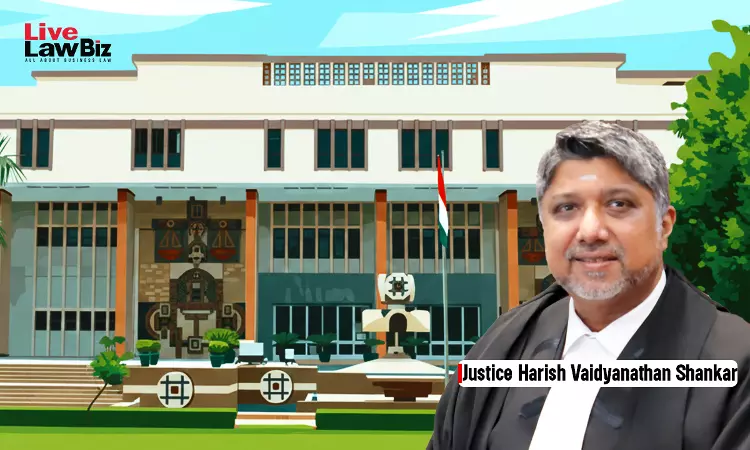
The Delhi High Court has held that a determinable contract cannot be protected against termination. However, interim relief under Section 9 of the Arbitration and Conciliation Act, 1996 can be granted to stay encashment of conditional bank guarantees if the proposed invocation is prima facie not traceable to the contract.
Justice Harish Vaidyanathan Shankar passed the order in a petition filed by Sadguru Engineers and Allied Services Pvt Ltd against National Highways Infrastructure Development Corporation Ltd.
"The raison d'être of Section 9 of the A&C Act is to preserve and protect the subject matter of the dispute in the interregnum, so that the arbitral proceedings, when commenced, are not rendered nugatory. The power vested with the Courts under Section 9 is thus essentially protective and facilitative in character, intended to safeguard and secure the efficacy of the arbitral process and not to supplant it", the court observed
The contractor had been awarded two packages for four-laning of NH-37 in Assam. It furnished two performance bank guarantees and one mobilisation bank guarantee issued by the State Bank of India. The total value of the guarantees was Rs 8.63 crore.
The appointed date was February 14, 2024. The contractor claimed substantial progress. It stated that Package I had achieved about 97 percent physical and 93.18 percent financial progress. Package IV had achieved about 94.73 percent physical and 92.35 percent financial progress. It sought an extension of time, citing authority defaults and force majeure events. It also stated that the mobilisation advance had been fully recovered with interest, yet the mobilisation bank guarantee was not released.
On January 14, 2026, NHIDCL wrote to the contractor stating that it intended to invoke the bank guarantees. The very next day, on 15 January 2026, it issued a termination notice alleging contractor default. The contractor then moved the High Court under Section 9, seeking to stop both the encashment of the guarantees and the termination of the contracts.
NHIDCL opposed the plea. It argued that courts should not step in to block bank guarantee invocation except in cases of egregious fraud or irretrievable injustice. It also said damages had already been imposed and that the contractor had failed to fulfil its contractual obligations.
At the outset, the Court clarified that its jurisdiction under Section 9 is protective and not adjudicatory. It observed:
“The power vested with the Courts under Section 9 is thus essentially protective and facilitative in character, intended to safeguard and secure the efficacy of the arbitral process and not to supplant it.”
On the prayer to stay termination, the Court relied on the Supreme Court's judgment in Indian Oil Corporation v. Amritsar Gas Service. It refused relief and said:
“No relief can be granted insofar as the stay of the effect and operation of the Termination Notice is concerned. It is a well-settled position of law that a Contract which is, by its very nature, determinable does not admit of an order of interdiction or stay restraining its termination. Any such restraint would, in effect, amount to enforcing the continuance of a contractual relationship which the law itself recognises as terminable, and is therefore impermissible.”
The Court then examined the bank guarantees. It noted that the guarantees were conditional and linked to contractor performance under the agreement. It held that invocation could only be predicated on breach of contractual provisions, particularly those traceable to Clause 23.1 of the agreement.
Part of the proposed invocation related to recovery of amounts allegedly released on the basis of assurances. The court found that these assurances were not enshrined in the agreement and were extra-contractual.
It held:
“In view of the same, this Court is of the prima facie view that the alleged invocation of the BGs towards recovery of funds released on the basis of the assurances, clearly relates to the assurances which were not enshrined in the Agreement itself but were extra contractual and on the basis of which certain amounts came to be released.”
The Court also examined the argument that liquidated damages imposed under Clause 10.3 permitted invocation of the guarantees. It held that damages under that clause were recoverable by deduction from payments and were not traceable to Clause 23.1 so as to justify encashment of the guarantees.
The Court noted that Rs 81 lakh was admitted as outstanding to one vendor. Other vendor claims were disputed and proceedings were pending before the National Company Law Tribunal. Despite the admitted amount, the Court held that allowing encashment at this stage could cause serious prejudice and potentially render the arbitral process infructuous.
It observed:
“CBG do not warrant the application of a stringent or severe standard while considering the grant of stay against their invocation, particularly where such guarantees form part of the subject matter and their invocation, prior to adjudication, would render the ensuing arbitral proceedings infructuous and occasion irreparable injustice to the party against whom such guarantees are sought to be invoked.”
The Court further said,
“This Court is of the considered opinion that the balance of convenience tilts in favour of the Petitioner. The encashment of the said BGs at this stage would result in serious and irreparable prejudice to the Petitioner, which cannot be adequately compensated in monetary terms at a later stage, particularly if the Petitioner ultimately succeeds in the arbitral proceedings.”
Accordingly, the court stayed encashment of all three bank guarantees. It refused to stay the termination notice, holding that the contract was determinable in nature..
For Petitioner: Advocates Ashkrit Tiwari, Aditi Shrivastava, Kartik Pendharkar,Kanika Arora, Aman Kumar and Abhinav Akash
For Respondents: Advocates Gopal Singh, Shivam Singh and Shubham Janghu, Advocates for Respondent No. 1. Santosh Kumar Rout, Standing Counsel Respondent No. 2. Devna Soni, for Shivashish Dwivedi and Varsha Jain, Advocates for Respondent No. 4.