
Delhi High Court Dismisses UOI Challenge To ₹32.76 Crore Arbitral Award For Varindera As Time-Barred
Mohd Malik Chauhan
2 March 2026 3:05 PM IST
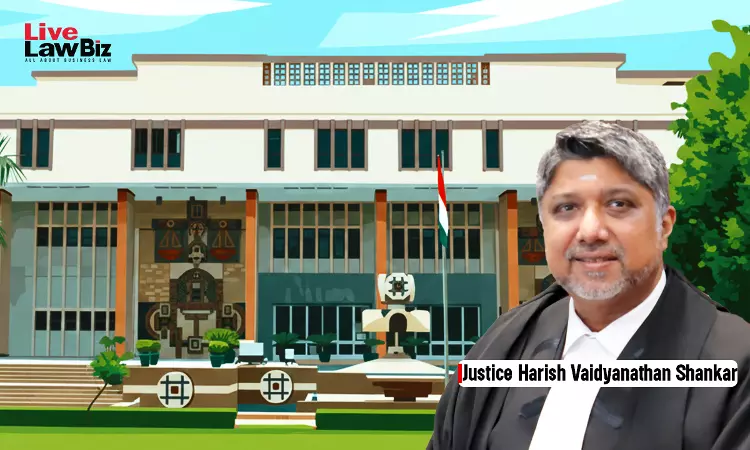
The Delhi High Court recently dismissed the Union's challenge to a Rs. 32.76-crore arbitral award in favour of Varindera Constructions Limited. The Court held that the initial petition filed under Section 34 of the Arbitration and Conciliation Act, 1996 (Arbitration Act) was non-est filing and could not halt the running of limitation.
A Bench comprising Justice Harish Vaidyanathan Shankar in a judgement dated 27 February observed that courts lack jurisdiction to condone delay beyond the statutorily prescribed outer limit.
Justice Shankar wrote:
“It is well settled that a filing which lacks the minimum jurisdictional substratum cannot be permitted to assume the character of a valid institution in the eyes of law. A defective presentation, which fails to meet the foundational statutory requirements, does not amount to a proper filing so as to confer legal efficacy upon the proceedings.”
The dispute arose from construction works carried out under the Married Accommodation Project for the Military Engineer Services.
By an arbitral award dated 2 May 2024, subsequently corrected on 12 June 2024, the Sole Arbitrator directed the Union of India (UOI) to pay Varindera Constructions a principal sum of 32.76 crore, along with pre-reference, pendente lite, and future interest.
The Union of India (UOI) filed a petition under Section 34 challenging the arbitral award, along with an application seeking condonation of a 25-day delay. Varindera Constructions objected, contending that the initial filing was non-est and that the petition was barred by limitation under Section 34(3).
UOI argued that the delay primarily arose from administrative processing and confusion regarding stamp duty on the arbitral award. It further contended that filing a signed copy at the initial stage should suffice, with any defects being curable later, and urged the Court to adopt a justice-oriented approach rather than dismiss petitions on hyper-technical grounds.
In contrast, Varindera Constructions contended that the time period prescribed under Section 34(3) is inflexible. It further argued that filing the petition without the arbitral award and other foundational documents was non-est and could not be used to halt the limitation period.
The High Court held that the limitation under Section 34(3) is mandatory and inelastic. However, not every defective filing is treated as non-est. Filing missing essential documents, such as the complete arbitral award, unsigned pleadings, vakalatnama, or affidavit, are considered non-existent in the eyes of law.
The Court observed that “in essence, the filing must not be merely perfunctory or illusory so as to indicate an attempt only to arrest the running of limitation.” It also noted that the first re-filing with the required documents took place four days after the limitation period under Section 34(3).
Further, the Bench noted:
“The filing dated 24.09.2024 did not constitute a valid invocation of jurisdiction under Section 34 of the A&C Act. The said presentation was admittedly bereft of foundational requirements, as noted above, including the complete Arbitral Award, duly executed affidavits, Vakalatnama, proper court fee and essential procedural compliances, which are not mere technicalities but conditions precedent for a legally cognisable challenge.”
Rejecting the contentions regarding stamp duty and internal approvals, the Court held that a government authority with adequate legal machinery cannot rely on internal confusion to justify non-compliance with statutory timelines.
It further noted that “the Petitioner, being a well equipped Government authority with adequate legal and administrative machinery at its disposal, cannot be permitted to rely upon internal confusion or procedural uncertainty as a justification for non-compliance with statutory timelines.”
The Court concluded that the initial filing was non-est and did not stop the limitation period and directed the UOI to deposit the awarded amount within two weeks if it has not already done so.
Accordingly, it dismissed the UOI's petition.
For Petitioner: Dr. Monika Arora, Mr. Subhrdeep Saha, Mr. Prabhat Kumar, Ms. Anamika Thakur and Mr. Abhinav Verma, Advocates.
For Respondent: Mr. Pradeep Chhindra, Mr. Parth Dhawan, Mr. Devarshi Mishra and Ms. Pratibha Rathi, Advocates.