
Delhi High Court Declines Interference With Arbitral Award In TDI-DMRC Advertising Rights Dispute
Mohd Malik Chauhan
2 March 2026 5:19 PM IST
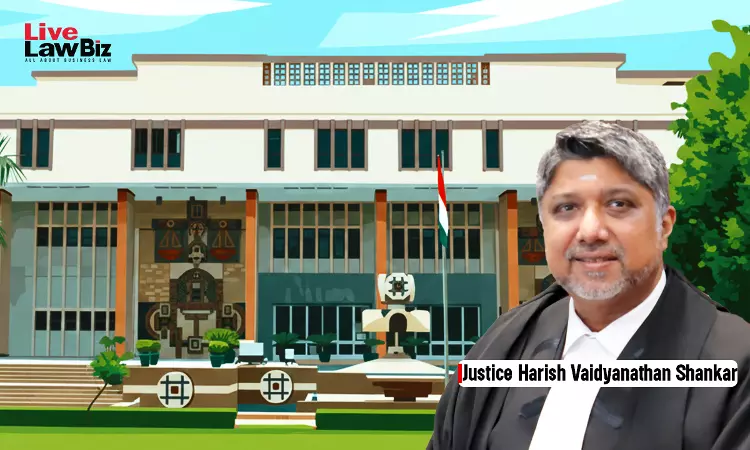
The Delhi High Court on 24 February dismissed a petition filed by TDI International India Ltd., challenging an arbitral award in a dispute with Delhi Metro Rail Corporation (DMRC), holding that no grounds existed for interference under Section 34 of the Arbitration and Conciliation Act, 1996 (Arbitration Act).
Justice Harish Vaidyanathan Shankar observed:
“...the grant of an ad hoc remission of 50% of the licence fee for the uninstalled area represents an exercise of contractual interpretation and factual appreciation. This Court is unable to hold that such an approach is perverse or patently illegal, or that it contravenes the public policy of India.”
The dispute arose from a 2006 licence agreement under which DMRC granted TDI advertising rights at three metro stations: Mandi House, Pragati Maidan and Indraprastha.
While TDI initially received approval for certain advertising sites, DMRC later withdrew approval for two sites on the Foot Over Bridge at Indraprastha Metro Station. TDI also claimed that eleven prefabricated advertising panels at Mandi House Metro Station were unmarketable because they were located in an out of bounds area.
TDI initiated arbitration. The sole arbitrator allowed TDI's claim regarding the Indraprastha sites by granting a 50 percent remission of licence fees for the withdrawn area but rejected the claim concerning the allegedly unmarketable panels at Mandi House.
Aggrieved, TDI approached the High Court under Section 34, challenging the award only in respect of Claim Nos. 1 and 3.
Before the High Court, TDI contended that the arbitrator acted contrary to the licence agreement by allowing DMRC to recover licence fees for areas that were not made available and by granting ad hoc relief without consent, thereby deciding the dispute on equitable considerations under Section 28(2) of the Arbitration Act.
The Court emphasised the limited scope of interference under Section 34, noting that judicial review does not extend to sitting in appeal over arbitral awards. Interference is warranted only when an award is vitiated by patent illegality, perversity, or contravenes the fundamental policy of Indian law.
On Claim No. 1, the Court observed that the arbitrator had carefully balanced DMRC's contractual right to reject advertising sites with the fact that approval for the disputed sites was initially granted and later withdrawn without clear demarcation at the tender stage.
It observed that “the learned Arbitrator has neither ignored the contractual stipulation treating the advertising area as one indivisible unit nor overlooked the Respondent's contractual right to reject locations. At the same time, the Arbitrator has taken into account the fact that approval for the sites was initially granted and subsequently withdrawn, and that no specific alternative sites were indicated for a considerable period.”
Regarding equitable considerations, the Court noted that both parties were at fault in handling the subject matter and the arbitrator had fashioned an appropriate remedy. The decision was therefore not based solely on equitable considerations in disregard of the contract. Partial relief was granted on the basis of shared responsibility. It held:
“The learned Arbitrator categorically found that both parties had erred or were negligent in relation to the subject matter and, on that basis, fashioned an appropriate remedy. This is not a case where relief was granted solely on equitable considerations in disregard of the contract; rather, partial relief was granted upon a finding of shared responsibility. Such determination cannot be characterised as an exercise of jurisdiction ex aequo et bono in violation of Section 28(2) of the Act. This Court is unable to hold that such an approach is perverse or patently illegal, or that it contravenes the public policy of India.”
On Claim No. 3, the court upheld the arbitrator's rejection of the claim, noting that TDI had accepted the advertising panels after a joint inspection without raising contemporaneous objections and had expressly acknowledged their viability under the licence agreement. Justice Shankar wrote:
It held that “the learned Arbitrator has construed Clause 14 in conjunction with the admitted fact of joint inspection and unconditional takeover of all twenty-four panels and has concluded that the Petitioner, having expressly acknowledged their viability and raised no objection at the relevant time, could not subsequently resile and contend that eleven of the panels were inherently unmarketable.”
Accordingly, the Court dismissed the petition, holding that the arbitral award did not suffer from any infirmity under Section 34 of the Arbitration Act.
For Petitioner: Senior Advocate Ashish Mohan along with Akshit Mago and Auritro Mukherjee
For Respondent: Advocates Manish Kumar Srivastava and Ankit Bhushan