
Bombay High Court Upholds Arbitral Award In Mandovi Bridge Dispute, Says Former Employee Arbitrator Not Proof Of Bias
Mohd Malik Chauhan
16 March 2026 10:13 AM IST
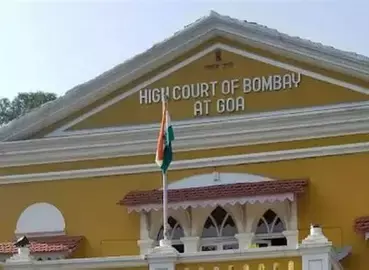
The Goa Bench of the Bombay High Court has dismissed an appeal filed by the State of Goa challenging an arbitral award passed in favor of U.P. State Bridge Corporation Ltd., holding that an arbitral award could not be set aside merely on the ground that one of the arbitrators nominated by the contractor had served as the Managing Director and consultant of the corporation.
Justice Suman Shyam further observed that in the absence of material demonstrating actual bias or likelihood of bias, an arbitral award cannot be set aside.
"Therefore, in the absence of any material brought on record to demonstrate bias-ness, the mere fact that a former employee of the Corporation has been nominated as an Arbitrator, by itself, would not be enough to raise a justifiable doubt as regards his neutrality so as to vitiate the Award."
The dispute arose out of a contract awarded by the State of Goa to U.P. State Bridge Corporation Ltd. for the construction of the new Mandovi Bridge on National Highway-17. The agreement between the parties was executed on 21 February 1987.
During the course of construction, Span 11 of the bridge collapsed on 14 October 1990 which led to disputes between the parties Subsequently, disputes were referred to arbitration as per clause 67 of the agreement.
A three member tribunal was constituted and chairman of the tribunal was nominated by the Director General (Road Development), Ministry of Surface Transport, Government of India. The tribunal passed an award directing the State of Goa to pay ₹1.31 crore along with interest. The State of Goa challenged the award before the Principal District Judge under section 34 of the Arbitration Act. The District Judge rejected the petition. Aggrieved, the State of Goa filed an appeal before the High Court under section 37 of the Arbitration Act.
The State of Goa submitted that the award was vitiated on account of bias of one of the arbitrators nominated by the contractor. It was argued that the arbitrator had acted as the Managing Director and as a consultant of the corporation.
These circumstances raised serious doubts about independence and impartiality of the arbitrator, the State argued. It was further submitted that as per sections 12 and 13 of the Arbitration Act, an arbitrator is mandated to disclose all circumstances giving rise to justifiable doubts as to his independence and impartiality, since in the present case such disclosure was not given, the award was liable to be set aside.
Opposing the plea, the contractor submitted that the State had knowledge of the previous association of the arbitrator with the corporation at the time of appointment and had not raised any objection. It was further argued that since arbitration proceedings in the present had already commenced before the enforcement of the Arbitration Act, 1996, provisions of section 12 would not be applicable to the present case. Lastly, it was submitted that the award in the present case was unanimous and was passed not only by the arbitrator nominated by the contractor but also the arbitrators nominated by the State.
The court rejected the State's contention, holding that the award did not suffer from any legal infirmity. The court further observed that as per section 85 of the Arbitration Act, 1996, all proceedings commenced before the enforcement of the Arbitration Act, 1996 would continue to be governed by the Arbitration Act, 1940 unless otherwise agreed by the parties.
Since in the present case, no contrary agreement existed, the proceedings would be governed by the Arbitration Act, 1940, it ruled. Consequently, the disclosure requirement provided under section 12 of the Arbitration Act, 1996 could not be used to challenge the appointment of an arbitrator, the court held.
It held that “there is nothing on record to show that there was any agreement between the parties providing that the new Act would be applicable after it comes into force.Therefore, the question of Sections 12 and 13 of the Act of 1996 having a relevant bearing on the Arbitration Proceeding in question also did not arise in the eyes of law.”
Rejecting the contention over alleged bias, the court observed that circumstances on which the appointment was challenged were already in knowledge of the State at the time of appointment. Therefore, the appointment of an arbitrator could not be challenged on the grounds which were in knowledge of the party from the outset, it said.
It held that “it is not in dispute that all these facts were well within the knowledge of the Appellant at the time when Shri Shitala Sharan was nominated as an Arbitrator. Not only that, when the nomination of Shri Shitala Sharan as an Arbitrator was intimated to the employer, no objection was raised by the Appellant-State on such count. The question of making a disclosure by the Arbitrator would arise only when certain facts are not within the knowledge of the other party.”
Emphasising the importance of three member tribunal, the court said that each party is entitled to nominate one arbitrator and effect of nomination of one arbitrator by one party is neutralised by the nominee appointed by the other party and by the presence of a neutral presiding arbitrator.
In the present case, the court held, the award was passed unanimously and there was no allegation of bias against the nominee arbitrator and the arbitrator nominated by the State.
“It is an unanimous Award and there is no allegation of biasness against the Presiding Arbitrator. In view of the above, the grounds urged by the Appellant, in the opinion of this Court, cannot be said to be of such nature which, in the absence of any further material to demonstrate bias or lack of neutrality on the part of Shri Shitala Sharan, can automatically lead to the conclusion that one of the Arbitrator was bias”, the court observed.
Applying the well-established test of bias, the court held that mere previous association of one of the arbitrators with any party without any material demonstrating actual bias or partiality is not sufficient to invalidate an arbitral award.
Finding no infirmity in the arbitral award passed, the court dismissed the present appeal.
For Appellant: Advocate Manish Salkar.
For Respondent: Advocate Shivan Desai, with Advocate Maria Cotta Viegas