
Arbitrator's 12-Month Deadline Runs From Date Of Entering Reference Under State Arbitration Law: J&K&L High Court
LiveLawBiz News Desk
7 Nov 2026 6:15 PM IST
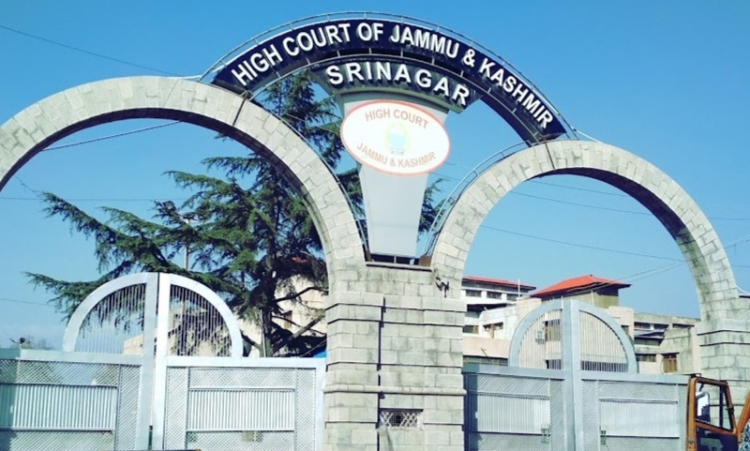
An arbitral tribunal conducting proceedings under the Arbitration and Conciliation Act, 1996, as applicable to the Union Territory of Jammu and Kashmir, must make its award within 12 months from the date it enters upon the reference and not from the date of completion of pleadings, the Jammu and Kashmir and Ladakh High Court has ruled.
Justice Rajesh Sekhri held that the mandate of a sole arbitrator appointed in a Central Public Works Department (CPWD) contractual dispute had terminated after he failed to make the award within the statutory period. The court also held that Jammu was the seat of arbitration, as the contract was awarded and executed there and the cause of action had accrued there.
Explaining the difference between Section 29A(1) of the 1996 Act as applicable to the UT of Jammu and Kashmir and the corresponding provision of the Central Act applicable in the rest of India, the court observed:
“Under Section 29A(1) of the Act of 1996, applicable to the UT of J&K, award is to be made by the Arbitrator within a period of twelve months from the date the Arbitral Tribunal enters upon the reference, whereas under Section 29A(1) of the Act of 1996, applicable to the rest of India, award is to be made by the Arbitral Tribunal within a period of twelve months from the date of completion of pleadings under sub-section (4).”
The court was hearing a petition filed by the Union of India seeking termination of the mandate of sole arbitrator Atul Kumar Garg and appointment of a substitute in a contractual dispute with Bhagwati Associates.
The dispute arose from a contract for construction of a 120-men barrack. Bhagwati Associates raised a dispute and invoked Clause 25 of the General Conditions of Contract for Central P.W.D. Works, 2014 (GCC-2014).
The Additional Director General (Jammu), CPWD, appointed Garg as sole arbitrator on June 9, 2023. He entered upon the reference on June 30, 2023.
The Union filed an application dated October 17, 2024, communicated to the arbitrator the following day, contending that his mandate under Section 29A had expired. Bhagwati Associates separately approached the arbitrator through an application dated November 30, 2024, seeking a determination of the venue of arbitration.
On December 10, 2024, the arbitrator rejected the Union's application but accepted the contractor's request. He held that New Delhi would be the venue of arbitration and that the provisions of the 1996 Act applicable there would govern the proceedings.
In a subsequent order dated December 31, 2024, he held that his mandate continued until March 25, 2025. On January 24, 2025, he asked the parties to approach the court for an extension beyond that date.
The Union challenged these orders, arguing that Jammu was the seat of arbitration. The contract had been awarded and executed there, the contractor had raised the dispute before the competent authority there and the arbitrator had also been appointed by the Additional Director General (Jammu), CPWD.
The court held that the arbitration clause in GCC-2014 subjected the proceedings to the 1996 Act as applicable to Jammu and Kashmir. This was the law in force when the arbitration commenced. It also clarified that the arbitrator was deemed to have entered upon the reference when he received written notice of his appointment.
Since Garg entered upon the reference on June 30, 2023, he was required to make the award by June 29, 2024. The court held that his procedural order dated December 10, 2024, had been passed after he became functus officio.
The court then examined Sections 14 and 15 of the Act, which deal with termination of an arbitrator's mandate and appointment of a substitute. Under Section 14, the mandate terminates when an arbitrator becomes de jure or de facto unable to perform his functions or, for other reasons, fails to act without undue delay, subject to the conditions specified in the provision. Section 15(2) provides that a substitute arbitrator must be appointed according to the rules applicable to the appointment of the arbitrator being replaced.
Finding that Garg had failed to make the award within the statutory 12-month period and had also failed to act without undue delay, the court held that his mandate stood terminated.
The court also addressed the seat of arbitration. It noted that the contract had been awarded at Jammu, the work had been executed there and the contractor had approached the competent authority there for appointment of an arbitrator. The cause of action had also accrued at Jammu.
It observed, “Since the Act of 1996, applicable to the UT of J&K, was applicable to the Arbitration proceedings before the Arbitral Tribunal, and the cause of action accrued at Jammu, it implies that seat of arbitration is to be at Jammu.”
Allowing the petition, the court declared that Garg's mandate stood terminated with effect from June 29, 2024. It appointed Er. Vinod Gupta, retired Commissioner, Jammu and Kashmir Government, as the substitute arbitrator to adjudicate the dispute.
The substitute arbitrator was directed to proceed in accordance with the 1996 Act and make the award within the time prescribed under it. The parties were also directed to share the prescribed fee and incidental expenses.