
ARBITRATION
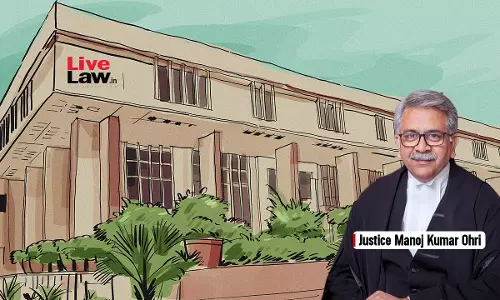
Court's Jurisdiction U/S 11(6) Of A&C Act Is Decided Under CPC When No Seat Or Venue Is Specified In Arbitration Agreement: Delhi High Court
The Delhi High Court bench of Justice Manoj Kumar Ohri has held that in the absence of a specified seat or venue in the Arbitration Agreement, the court's jurisdiction under Section 11 of the Arbitration and Conciliation Act, 1996 (Arbitration Act) is determined by Sections 16 to 20 of the Civil Procedure Code, 1908 (CPC). The relevant factors include where the respondent resides or conducts business and where the cause of action arose. Brief Facts: The parties entered into an...
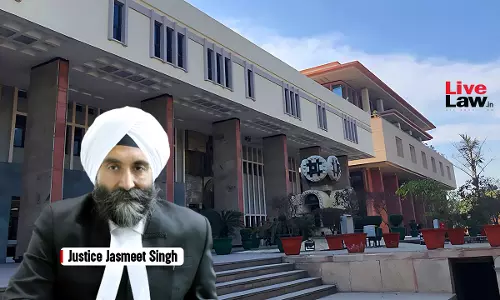
Court Can Appoint Arbitrator U/S 11(6) Of Arbitration Act If MSME Council Fails To Initiate Mediation U/S 18 Of MSMED Act: Delhi HC
The Delhi High Court bench of Justice Jasmeet Singh has held that When the Facilitation Council under the Micro, Small, and Medium Enterprises Development Act (MSMED Act) fails to initiate the mediation process under Section 18 of the MSMED Act, the court can appoint an arbitrator under Section 11(6) of the Arbitration and Conciliation Act, 1996 (Arbitration Act). Brief Facts: The respondent placed a Letter of Intent for execution of civil and associated work for construction of New...
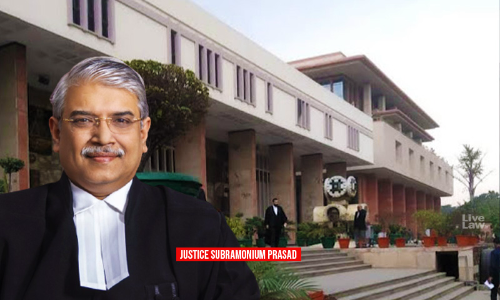
Participation In Arbitral Proceedings Does Not Imply Acceptance Of Unilateral Appointment Of Arbitrator Unless Objections Are Waived In Writing: Delhi HC
The Delhi High Court bench of Justice Subramonium Prasad has held that the mandate of the Arbitrator can be terminated under Section 14 of the Arbitration and Conciliation Act, 1996 (Arbitration Act) if the Arbitrator was appointed unilaterally, which is explicitly prohibited under Section 12(5) of the Arbitration Act unless the ineligibility is expressly waived through a written agreement. It also held that mere participation in the arbitration proceedings without expressly waiving any ...
Non-Signatories To Arbitration Agreement Can Be Made Party To Dispute If Reliefs Sought Against Them Align With Those Sought Against Signatories: Calcutta HC
The Calcutta High Court bench of Justices Sabyasachi Bhattacharyya and Uday Kumar has observed that if the reliefs against the non-signatories to the arbitration agreement are in harmony with the reliefs sought against the signatories, particularly when the legal relationship between the signatories and non-signatories are on the same platform vis-a-vis the cause of action of the suit and the reliefs claimed, then the non-signatories could very well be brought within the purview of the ...
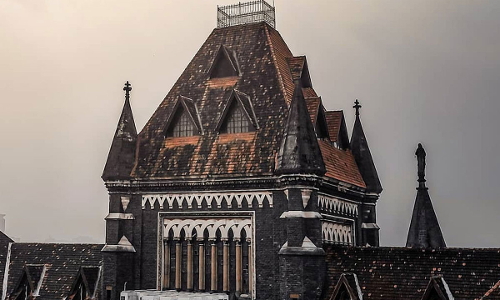
Bombay High Court Injuncts Owner Of Kapani Resorts From Alienating Any Interest In Properties Until Conclusion Of Arbitral Proceedings
The Bombay High Court bench of Justice Somasekhar Sundaresan has injuncted the owner of Kapani Resorts and Greater Kailash Property from alienating any interest in the Resorts and the property under section 9 of the Arbitration and Conciliation Act, 1996 (Arbitration Act), until the conclusion of arbitral proceedings Brief Facts: Under the Agreement executed between Mr. Manmohan Kapani (Petitioner) and the Respondents, the petitioner will infuse USD 1 million in the Kapani Resorts to...
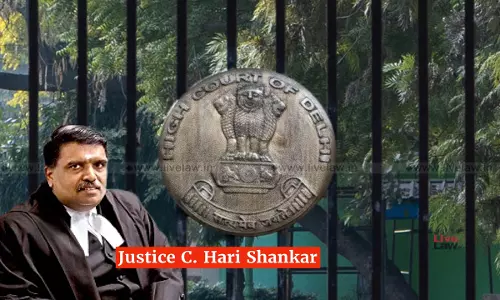
Exclusive Jurisdiction Clause Prevails Over Seat Of Arbitration Clause If It Expressly Covers Proceedings Relating To Arbitration: Delhi HC
The Delhi High Court bench of Justice C. Hari Shankar has observed that generally if an agreement contains both exclusive jurisdiction clause and seat of arbitration clause, then judicial proceedings relating to arbitration would lie only before the court having territorial jurisdiction over the arbitral seat/venue. However, as in the instant case, if the exclusive jurisdiction clause also covers proceedings relating to arbitration then it would prevail over the seat of arbitration...
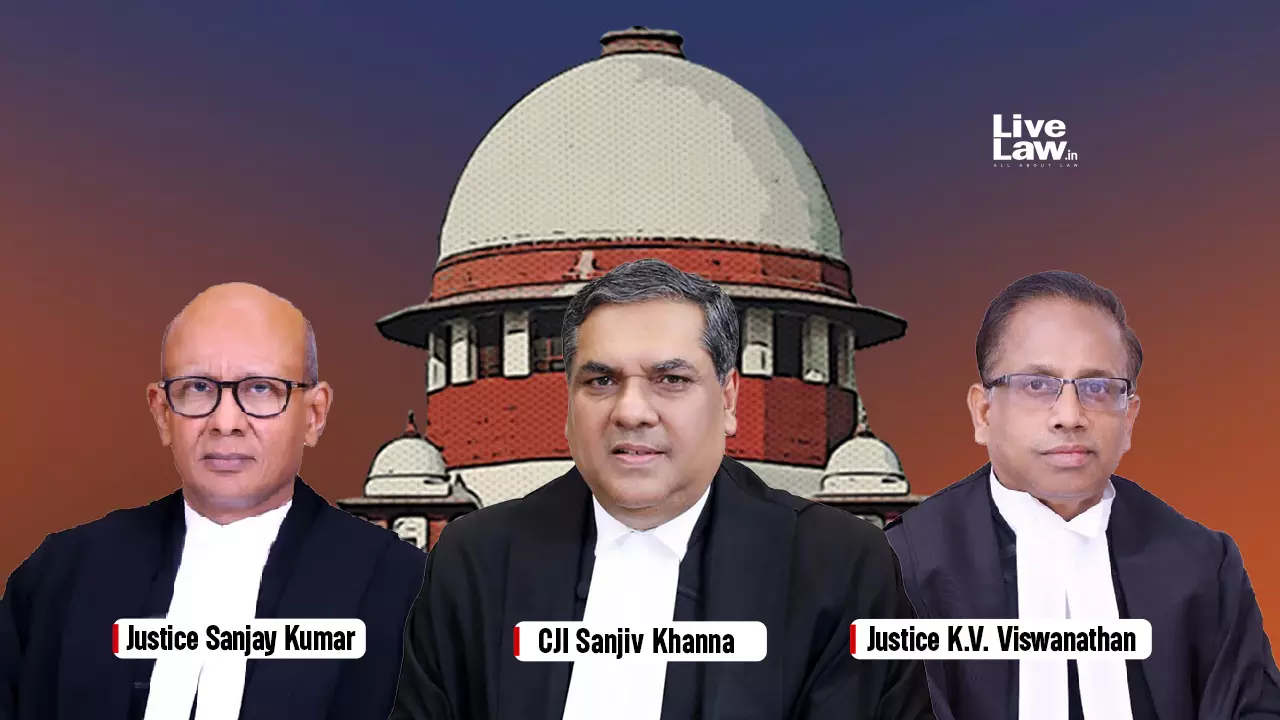
International Commercial Arbitration | How To Determine Law Governing Arbitration Agreement? Supreme Court Discusses Tests
In a significant judgment relating to International Commercial Arbitration, the Supreme Court today (March 18) ruled that in the absence of an express law governing the arbitration agreement, the applicable law should be determined based on the parties' intentions, with a strong presumption in favor of the law governing the main contract (lex contractus). The bench comprising Chief Justice Sanjiv Khanna, Justice Sanjay Kumar, and Justice KV Viswanathan heard the case where the plea was made for...
Setting Aside Of Arbitral Award Leaves It Open To Parties To Choose To Arbitrate Again: Bombay High Court
The Bombay High Court Bench of Justice Somsekhar Sundaresan has observed that once an arbitral award has been set aside by the court in the exercise of its powers under Sections 34 and 37 of the Arbitration and Conciliation Act, 1996, the parties would be restored to the original position and a fresh arbitration in such circumstances would not amount to the proverbial “second bite at the cherry”. Background In disputes between the Applicant, Batliboi Environmental Engineering Ltd....
Tendering Authority Is Best Judge To Decide T&C Of Tender, Judicial Interference Permissible Only When Terms Are Arbitrary: Calcutta HC
The Calcutta High Court bench of Chief Justice T.S. Sivagnanam and Justice Chaitali Chatterjee (Das) has held that tender issuing authority is the best judge to decide terms and conditions of a tender. Such terms and conditions cannot be tinkered with by the Judicial Authority unless they are found to be arbitrary or whimsical. Brief Facts: A writ petition was filed by the Appellant seeking a writ of mandamus to set aside, rescind or modify the e-tender issued on September 18, 2024...
Arbitral Tribunal Is Sole Judge Of Evidence, Court Not Required To Re-Evaluate Evidence U/S 34 Of Arbitration Act: Delhi High Court
The Delhi High Court bench of Justice Vibhu Bakhru and Justice Tejas Karia held that the arbitrator is the ultimate master of the quantity and quality of evidence to be relied upon when he delivers his arbitral award. An award would not be held invalid merely because the award is based on little evidence or on evidence which does not meet the quality of a trained legal mind. Also, the Court held that it is not required to reappreciate or reevaluate the evidence and reagitate the...
Application U/S 34 Of Arbitration Act Not Maintainable If Not Filed With Copy Of Arbitral Award: Delhi High Court
The Delhi High Court division bench of Justice Yashwant Varma and Justice Harish Vaidyanathan has held that an application under Section 34 of the Arbitration and Conciliation Act, 1996 is non-maintainable if it is not accompanied by a copy of the impugned award. The court held that the filing of the award is not a mere procedural requirement but a mandatory prerequisite for invoking the court's jurisdiction under Section 34. Brief Facts: The appeal before the Division Bench was...
Order Passed U/S 23(3) Of Arbitration Act Is Procedural & Not An Interim Award, Cannot Be Challenged U/S 34 Of Arbitration Act: Delhi High Court
The Delhi High Court Bench of Justice Subramonium Prasad has held that an order dismissing an application under Section 23(3) of the Arbitration & Conciliation Act is only a procedural order and does not qualify as an 'interim award' amenable to challenge under Section 34 of the Arbitration & Conciliation Act Brief Facts of the case: The petitioner issued a tender for Construction of Roads and Drains in Solapur STPP for a total order value of Rs. 22,35,16,730. Then, a Letter...